Search
11 results for “dionysia8”
-
 Spirituality & Religious Studies @spiritualityreligiousstudies.wordpress.com@spiritualityreligiousstudies.wordpress.com ·
Hephaestus
Author’s Note: This post has mentions of (g)rape. If this is triggering, please go on to 1 of our other posts.
He’s the Greek god of artisans, blacksmiths, carpenters, craftsmen, fire, metallurgy, metalworking, sculpture, & volcanoes.
In Greek mythology, Hephaestus was the son of Hera, either on her own or her husband/brother, Zeus. He was cast off Mount Olympus by his mom, Hera, because of his lameness, the result of a congenital impairment. Or, in another account, by Zeus for protecting Hera from his advances.
As a smithing god, Hephaestus created all the weapons of the gods on Olympus. He served as the blacksmith of the gods & was worshipped in the manufacturing & industrial centers of Greece, particularly Athens. The cult of Hephaestus was based in Lemnos. Hephaestus’ symbols are a smith’s hammer, anvil, & a pair of tongs. In Rome, he was equated with Vulcan.
In Hesiod’s Theogony, Hera gives birth to Hephaestus on her own, out of revenge for Zeus having, without her, fathered Athena (the daughter of Zeus & Metis). Apollodorus similarly states that Hera gives birth to Hephaestus alone. Though according to Homer, Hephaestus is 1 of the kids of Zeus & Hera.
Some sources state that the origin myth of Hephaestus was that of a “daemon of fire coming up from the Earth,” that he was also associated with gas “which takes fire & burns & is considered by many people to be divine” & that only later was a volcano considered Hephaestus’ smithy.
He was associated by Greek colonists in southern Italy with the volcano gods Adranus (of Mount Etna) & Vulcanus of the Lipari islands.
The 1st-century sage, Apollonius of Tyana, is said to have observed, “there are many other mountains all over the earth that are on fire, & yet we should never be done with it if we assigned to them giants & gods like Hephaestus.” Nevertheless, Hephaestus’ domain over fire goes back to Homer’s Iliad, where he uses flames to dry the waters of the Scamander River in order to force its eponymous deity, who was attacking Achilles, to retreat.
His favorite place in our mere mortal world was the island of Lemnos. He liked to live among the Sintians. But he also repeatedly went to other volcanic islands like Lipari, Imbros, & Sicily, which were called his abodes/workshops. In 1 version of events, Hera rejects, then ejects Hephaestus from Olympus/the heavens because of his congenital impairment. (It’s implied that his congenital disability is because of Zeus & Hera’s familial relationship, i.e. brother & sister.)
Because of Hera’s actions, he fell into the ocean & of Hera’s actions, he fell into the ocean & was raised by Thetis (Achilles’ mom & 1 of the 50 Nereids) & Eurynome, the Oceanid. In another version, Hephaestus, attempting to rescue his mom from Zeus’ advances, was cast down to earth by Zeus, not Hera!
He (Hephaestus) was cast down for 1 whole day & landed on the island of Lemnos. On Lemnos, he was cared for & taught to be a master craftsman by the Sintians. Later writers describe his physical disability as a result of his 2nd fall. While Homer makes him disabled from birth.
Hephaestus was 1 of the Olympians who came back to Olympus after being exiled. In an archaic story, Hephaestus wanted revenge against Hera for rejecting him by forging her a magical golden throne, which, when she sat on it, didn’t let her stand up again.
The other gods begged Hephaestus to return to Olympus to let her go. But he refused, saying, “I’ve no mom.” It was Ares who undertook the task of fetching Hephaestus at 1st. But he was threatened by the fire god with torches. At last, Dionysus (the wine god) fetched him, got him drunk on wine, & took the subdued smith back to Olympus on the back of a mule, accompanied by revelers.
According to Hyginus, Zeus promised anything to Hephaestus to free Hera. Hephaestus asked for Athena’s hand in marriage (urged by Poseidon, who was hostile toward Athena), leading to his attempted (g)raping of the goddess, who rejected his advances.
In another version, he demanded to be married to Aphrodite to release Hera, & his mom fulfilled the request. Hephaestus had his own palace on Olympus, containing his workshop with an anvil(s) & 20 bellows that worked at his bidding.
He crafted much of the magnificent equipment of the gods, & almost any finely wrought metalwork imbued with powers that appears in Greek myth is said to have been forged by Hephaestus. He designed all the thrones in the Olympian palace, the Aegis breastplate, Hermes’ (not the fashion house) winged helmet & sandals, Aphrodite’s famous girdle, Eros’ bow & arrows, Helios’ chariot, Heracles’ bronze clappers, & the shoulder of Pelops.
Hephaestus also created the gift that the gods gave to mankind: the 1st woman, Pandora, & her pithos (a large jar)/box. In some versions, Prometheus stole the fire that he gave to man from Hephaestus’ forge. Hephaestus gave to the blinded Orion his apprentice Cedalion as a guide. In later accounts, Hephaestus worked with the Cyclopes Brontes, Steropes, & Arges, who were highly skilled blacksmiths in their own right & forged Zeus’ thunderbolts, Poseidon’s trident, & Hades’ helmet of darkness/invisibility.
According to Homer, Hephaestus built automatons of metal to work for him or others. This includes tripods with golden wheels, able to move at his wish in & out of the assembly hall of the celestials; & “handmaidens wrought of gold in the semblance of living maids,” who had “understanding in their hearts, & speech & strength,” as a gift of the gods.
They moved to support Hephaestus while walking. Hephaestus also put golden & silver lions & dogs at the entrance of the palace of Alkinoos in such a way that they could bite the invaders. These guard dogs didn’t age or perish. (So does this mean that they could possibly still be around, hidden somewhere? Like the Nag Hammadi library.)
A similar golden dog was set by Rhea to guard the infant Zeus & his nurse (the goat Amaltheia) on the island of Krete/Crete. Later, Tantalus was said to have stolen the automaton when it guarded Zeus’ temple, or to have persuaded Pandareos to steal it for him.
Later texts attempt to replace the automaton with the idea that the golden dog was actually Rhea, transformed by Hephaestus. Hephaestus fought against the giants & killed Mimas by throwing molten iron at him. He also fought another giant, Aristaeus, but he fled.
During the battle, Hephaestus fell down exhausted & was picked up by Helios in his chariot. As a gift of gratitude, Hephaestus forged 4 ever-flowing fountains & fire-breathing bulls for Helios’ son Aeetus. At the marriage of Peleus & Thetis, Hephaestus gave a knife as a wedding present.
When the Trojan War began, Hephaestus sided with the Greeks & forged the armor of Achilles, the cuirass of Diomedes, & Agamemnon’s staff of office. But Hephaestus was also worshipped by the Trojans & saved 1 of their men from being killed by Diomedes.
Though she was married to Hephaestus, Aphrodite had an affair with Ares, the god of war. Eventually, Hephaestus discovered Aphrodite’s affair through Helios, the all-seeing sun (We’re gonna circle back to this. Keep this in mind.), & planned a trap during 1 of their trysts.
While the lovers lay together in bed, Hephaestus ensnared them in an unbreakable chain-link net so small as to be invisible & dragged them to Mount Olympus to shame them in front of the other gods for retribution. The gods had a good laugh at the sight of these unclothed adulterers. Poseidon persuaded Hephaestus to free them in return for a guarantee that Ares would pay the adulterers’ fine, or Poseidon would pay it himself.
In The Odyssey, Hephaestus says he would give Aphrodite back to Zeus & demand back his bride price. Some versions of the myth state that Zeus didn’t return the dowry. In fact, Aphrodite “simply charmed her way back again into her husband’s good graces.”
In The Iliad, Hephaestus is described as being married to the Grace named Charis during the events depicted in the Trojan War. While in Theogeny, he’s married to the Grace named Aglaea, with no indication of having ever been married to Aphrodite.
In Dionysiaca by Nonnus explicitly stated that, though Hephaestus & Aphrodite were once married (she’s referred to as his “ancient wife”). They’ve since separated & Hephaestus is now married to Charis.
Here’s the keep-in-mind part: In a later detail, Ares put the young soldier, Alectryon, by their door to warn them of Helios’ arrival, as he suspected that Helios would tell Hephaestus of Aphrodite’s infidelity if the 2 were discovered. But Alectryon fell asleep on guard duty. Helios finds the 2 & alerts Hephaestus. Ares, in a rage, turned Alectryon into a rooster, which always crows at dawn when the sun is about to rise.
The Thebans said that the spicy time union of Ares & Aphrodite produced Harmonia. But that of the union of Hephaestus with Aphrodite, there’s usually no issue. Because Harmonia was conceived during Aphrodite’s marriage to Hephaestus, for revenge, on Harmonia’s wedding day to Cadmus, Hephaestus gifted her with a finely worked but cursed necklace that brought immense suffering to her descendants, culminating in Oedipus. (Check out our post on Oedipus.)
An Athenian founding myth tells the city’s patron goddess, Athena, refused a union (spicy time) with Hephaestus. Pseudo-Apollodorus records an archaic legend, which claims that Hephaestus once tried to (g)rape Athena. But she pushed him away, causing him to ejaculate on her thigh.
Athena wiped the happy time juice off using a tuft of wool. She tossed it into the dust. This impregnated Gaia (his own great-grandma). This caused her to give birth to King Erichthonius, whom Athena adopted as her own kid.
Make a one-time donation
Your contribution is appreciated.
DonateMake a monthly donation
Your contribution is appreciated.
Donate monthlyMake a yearly donation
Your contribution is appreciated.
Donate yearlyRate this:
#Achilles #Adranus #Aeetus #AegisBreastplate #Agamemnon #Aglaea #Alectryon #Alkinoos #Amaltheia #Anvil #Aphrodite #AphroditeSGirdle #ApolloniusOfTyana #Ares #Argues #Athena #Athens #Blacksmiths #Brontes #Cadmus #Carpenters #Cedalion #Charis #Crete #CultOfHephaestus #Cyclopes #Daemon #Diomedes #Dionysiaca #Dionysus #Ero #Eurynome #Forge #Gaia #Grace #Greece #Greek #GreekMythology #HadesHelmetOfInvisibility #Hammer #Harmonia #HelioSChariot #Hephaestus #Hera #Heracles #HermesHelmet #HermesSandals #Hesiod #Homer #Hyginus #Illiad #Imbros #Italy #KingErichthonius #LemnosIsland #LipariIslands #Metallurgy #Metis #MountEtna #MountOlympus #Nereids #Nonnus #Oceanid #Oedipus #Olympus #Pandareos #Pandora #PandoraSBox #Peleus #Pelops #Poseidon #PoseidonSTrident #Prometheus #PseudoApollodorus #Rhea #Rome #ScamandrusRiver #Sculpture #Sicily #Sintians #Smithing #Steropes #Tantalus #TheOdyssey #Thebans #Theogony #Thetis #Tongs #TrojanWar #Trojans #Volcanoes #Vulcan #Vulcanus #Zeus #ZeusThunderbolt -
 Stuck in the Filter: March 2026’s Angry Misses By Kenstrosity
Rain has started to leak into the ducts as Spring gets wetter and wetter. While I’m away, vacationing in a nice, dry, cloudy place, my minions are drenched and miserable. As it should be! But I’m still keeping tabs on their progress. Just because I’m having a great time somewhere else doesn’t mean these louts don’t have a quota to meet!
And meet their quota they shall, if only barely… BEHOLD!
ClarkKent’s Sci-Fi Soundbites
Epigram // Obsolescent [March 6th, 2026 – Self Released]
Combining the melodic black metal of Thulcandra and Dissection with the symphonics of Fleshgod Apocalypse and SepticFlesh, Epigram dropped a tasty little morsel with their debut, Obsolescent. The trio from Los Angeles puts on a spirited performance that borders on thrash. Tim Cauley’s display on the kit is a dominant force as he furiously blast beats his way from one song to the next. He turns “Wrath of Betrayed” into a piece of blackened thrash and proves tireless across Obsolescent’s 27-minute runtime. The lively vocal performance of Luis Echevarria adds further to Epigram’s charm. His low growls may seem underpowered, but his delivery is energetic and fun. He’s also the source of the symphonic instrumentation, via synths, though this aspect is secondary. Sure, there’s some choral chants (“Myrmidon,” “The Usurper’s Throne”), strings (“Hour of Gods”), and other vaguely symphonic sounds, but Epigram is most focused on the blackened melodic stuff. Shadi Absi throws together some great riffs, particularly on “Empires,” a work of pure black ‘n roll. The showstopper is “Hour of Gods,” with some sweet riffs and terrific energy. This song alone makes Obsolescent a worthy spin. Rounding out the musicians is Sanjay Kumar (Inferi, Wormhole), who plays solos on “Wrath of Betrayed” and “No Sin.” This is a promising debut for an eager new band.
Kal-El // Astral Voyager Vol. 2 [March 20th, 2026 – Blues Funeral Recordings]
Sporting the greatest band name of all time, Kal-El have been blasting listeners with stoner doom since 2012. Astral Voyager Vol. 2 is the follow-up to last year’s Vol. 1, and these pyschedelians’s seventh album overall. It’s been seven years since Witches of Mars was unfairly pummeled by a Kryptonian frog, and now I’d like to do the band justice by rescuing them from our filter. On this astral voyage, you get the pleasure of listening to six songs and 42 minutes of laid-back stoner tunes with plenty of fuzzy riffs—perfect for cruising around the cosmos. Their riff-centric approach puts them in the Black Sabbath camp, and the riffs on the likes of “Juno” and “The Prophecy,” which has a “Children of the Grave” vibe, are tons of fun. Further cementing the Sabbath comp is the vocal performance of Ståle Rodvelt, who carries a resemblance to Ozzy in his delivery. Longer cuts take more exploratory routes, akin to Sleep, yet still feature plenty to get your head bobbin’. “Asteroid” opens up with some sweet riffs that sustain its near eight-minute frame, while “The Nine” will still have you singing along in the final of its ten minutes. 1 So if you are in the mood for something chill that won’t put you to sleep, something that has the riffs without the risk of elevating your blood pressure, you should spend some time with Kal-El.
Thus Spoke’s Tectonic Treat
Bong-Ra // Esoterik [March 20th, 2026 – Debemur Morti Productions]
Not having received promo, it was only upon visiting DM’s Bandcamp page while writing up Aversio Humanitatis that I realised Bong-Ra had released another album. Asked whether Esoterik would be leaning more into enigmatic doom or spiky industrial electronica, the shapeshifting Bong-Ra said “yes”. The music is built on layers of dense, gritty atmosphere undulating with bass, breakbeats, and distorted riffs. Vocals are maintained from Black Noise—half-spoken snarls blurred by noise, shifting between blunt tunefulness (“Serpentine Helix”) and gargling venom (“Machine Halo”)—but at least half of the space is devoted to the purely instrumental psychosis. The saxophone is back, adding bizarre elegance and chilling eeriness in equal measure. Sometimes, Esoterik seems to be pitting its sultry and acerbic natures against one another; that chamber jazz side can take one by surprise (“Pleasures of the Flesh,” “Duality of One”), sandwiched as it is between a more punishing industrialism, but Bong-Ra just about gets away with it. This could be down to Esoterik’s efficiency in establishing (new) grooves—rhythmic and stylistic. Opener “Harmony Cloak” dispels misgivings on its skittering electronic oddity with a chorus that strikes a stylish balance between melody and dissonance; “Machine Halo” later follows in its stride. It’s an album that earns its moniker, right down to the particular spelling, and is worth the dark diversion it requires.
Grin Reaper’s Kooky Curios
Surturian // II – Hessian Spears [March 13th, 2026 – Crawling Chaos]
A German thrash band named after the legendary fire giant and guardian of Muspelheim? And on their debut LP, they launch an unrelenting, venomous assault filled with sticky riffs and bopping bass grooves in under forty-five minutes? Sign me up! Surturian plays thrash that smacks of early Testament and Metallica fused with the epic melodies of latter-day Kreator—hell, vocalist Tim Krogull reeks of Mille’s rancorous vocals, even though his name hews closer to a Voivodian disposition. In addition to thrash influences, Surturian calls upon Maiden’s signature gallops (“Cimmerians Wrath”) and anthemic melodies (“Night Stalker,” “Do What Thou Wilt”), inculcating a lofty grandeur throughout II – Hessian Spears. Further fanning Surturian’s flames, the outfit navigates a varied landscape that imbues each track with its own character while never straying too far from their core sound. Hard-hitting offensives (“Blood Witchery”), slinky licks (“Night Stalker”), and oddball songwriting (“Beneath a Dying Sky”2) unite into an album I’ve regularly returned to since discovering it. If you’re feeling unSurtain, take it from me—it’s always a good time for some Hessian aggression!
Barn // Crucibles [March 24th, 2026 – Self Released]
Thanks to a certain dude/guy in the comments section, Crucibles didn’t slip past me undetected. Despite their dubious band name, Barn dropped a humdinger slab of tech death back in March that oozes with references to Unquestionable Presence (Atheist), Focus (Cynic), and, to a lesser extent, Decrepit Birth.3 There are even moments that echo more subdued moments from recent Sallow Moth releases (“The Serpent’s Perpetual Shed”). Staccato bursts of guitar, pinch harmonics, and buttery, fretless bass glissandos epitomize what Barn offers, and they spread it thick and chunky all over Crucibles’ sixty-five-minute runtime. Rustic name notwithstanding, Barn’s latest sounds like a sci-fi adventure, supported by track names like “Black Hole Lens” and “Cymatics.” The fretless bass especially helps with the futuristic aesthetic, frictionlessly gliding through gusts of abrupt, otherworldly guitars that buffet tracks from all angles. Barn rarely offers reprieve during their unconventional onslaught, but tracks like “Forbidden Fruits,” “Cymatics,” and “The Defeater” achieve such heights that I don’t find myself needing one. In short, these Boise boys warp listeners to a different dimension on Crucibles, and though it runs a tad long, I haven’t been deterred yet from lighting up this Barnburner.
Dionysiaque // La Tourbe des Rêves [March 27th, 2026 – I, Voidhanger Records]
Dionysiaque dispenses a bizarre derivative of doom on La Tourbe des Rêves that’s sure to be equal parts captivating and divisive. Reaching into the bag of tricks defined by Cathedral, Black Sabbath, and Candlemass, Dionysiaque’s sophomore album lumbers and chugs with classic rock-inspired leads and firecracker songcraft that I find utterly enthralling. Songs like “Aaron,” “Hate Fruit,” and “The Two Headed Boy” spotlight Dionysiaque’s plaintive guitar wails, contributed by L.B. and Bruno Penserini, along with their savvy balance of somber atmospheres and rousing melodies. Buoying the guitar tandem, bassist Lethal lays down frolicking, fabulous thunder via absorbing countermelodies while drummer T.H. looses potent fills and rolls throughout. Soaring atop the instrumentation are N.C.’s unorthodox vocals, which will almost certainly be the sole determining factor in listeners’ ability to engage with La Tourbe des Rêves. His delivery recalls that of Mayhem’s Attila Csihar at his most operatically deranged, never lacking conviction yet occasionally overpowering and ostentatious. Still, I appreciate and enjoy the commitment to the unhinged performance, and although dialing it back a little would make Dionysiaque’s latest more accessible, I’ve come to love La Tourbe des Rêves without apology. So don’t be afraid to let a little love into your heart—go get debauched with Dionysiaque’s aphrodisiac.
Creeping Ivy’s Pandemonic Pleasure
Mammon’s Throne // My Body to the Worms [March 13th, 2026 – Hammerheart Records]
In advising his fellow fallen angels—recently expelled from Heaven—to turn Hell into a competing kingdom, Mammon projects that All Demons will ‘work ease out of pain / Through labor and endurance.’4 Satan doesn’t heed this advice, but the third LP from Mammon’s Throne arguably does. On My Body to the Worms, this Australian five-piece inflicts pleasurable pain upon metaldom via five filthy slabs of sludgy death-doom (plus two instrumental reprieves). Mammon’s Throne conjure Hooded Menace, Temple of Void, and (old) Worm in their proclivity for plodding tempos, swampy riffs, and gravely howls (“Elixir”). The album is also a labor of love for classic (death-) doom à la Paradise Lost and My Dying Bride, mixing gothy croons, ascendant melodicism, and haunting piano into the band’s sinister stew (“Every Day More Sickened,” “At the Threshold of Eternity”). Though the listener does need some endurance, as three of the five non-instrumentals hover in the 8–9 minute range, the record flows fluidly across an easy 42 minutes. If you ever wondered what metal in league with Mammon might sound like, give My Body to the Worms a spin.
#2026 #AmericanMetal #AstralVoyagerVol2 #Atheist #AustralianMetal #AversioHumanitatis #Barn #BlackSabbath #BluesFuneralRecordings #BonRa #Candlemass #Cathedral #CrawlingChaos #Crucibles #Cynic #DeathDoom #DebemurMortiProductions #Decapitated #DecrepitBirth #Dionysiaque #Dissection #Doom #DoomMetal #DutchMetal #ElectronicMetal #Epigram #Esoterik #ExperimentalMetal #FleshgodApocalypse #FrenchMetal #GermanMetal #HammerheartRecords #HoodedMenace #IVoidhangerRecords #IIHessianSpears #IndustrialMetal #IronMaiden #KalEl #Kreator #LaTourbeDesRêves #MammonSThrone #Mar26 #Mayhem #MelodicBlackMetal #Metallica #MyBodyToTheWorms #MyDyingBride #NorwegianMetal #Obsolescent #ParadiseLost #PsychedelicMetal #Review #Reviews #SallowMoth #SelfReleased #SepticFlesh #Sleep #SludgeDoom #SludgeMetal #StonerDoom #StuckInTheFilter #StuckInTheFilter2026 #Surturian #SymphonicBlackMetal #TempleOfVoid #Testament #ThrashMetal #Thulcandra #Voivod #Worm -

It's the first #DayOfZeus / Jupiter's Day / Thorsday of the year! ⚡
"They [the Hyades] had played the nurses for the babe that Zeus had so happily brought forth, Bakkhos, while he still had a breath of the sewn-up birth-pocket."
Nonnus, Dionysiaca 14.143 -
Have a joyful #DayOfDionysos here at Erotic Mythology! 🍇
"Goatherd Pan cried out: ‘I wish my father had taught me the trick of that matchmaking wine! I wish I could be lord of the mindtripping grape, like Bakkhos [Dionysos]!’"
Nonnus, Dionysiaca 16.289🏛 Dionysos and Pan, 50-150 CE
#antiquidons #history #GreekRomanArt #mythology #Dionysos #Pan #ancientRome
-

#GRK0062 #Tragédies #Sociologie #GeorgesBATAILLE
La sociologie sacrée du monde contemporain [1938]
Georges Bataille (Lignes, 2004)
iBouquin:https://mega.nz/file/1EZWyLoK#sXzw50oQvwghQarDPGihbk8Jh9ZPepka1eg7_wcMUeM
Si t'as les moyens:
https://www.editions-lignes.com/LA-SOCIOLOGIE-SACREE-DU-MONDE.htmlPrésentation de Simonetta Falasca Zamponi:
La Sociologie sacrée du monde contemporain est le texte inédit de la conférence prononcée par Georges Bataille le 2 avril 1938 au Collège de sociologie .La Sociologie sacrée du monde contemporain est un court texte d’un intérêt considérable. De par sa date : Georges Bataille l’a prononcé peu avant les accords de Munich et la guerre, le 2 avril 1938. De par son contexte : il l’a prononcé dans le cadre du cycle de conférences du Collège de sociologie, créé par Michel Leiris, Roger Caillois et lui-même. Les activités de ce Collège – tout sauf académique – ont connu elles-mêmes, après coup, un retentissement important. Non sans raison : c’est dans le cadre de celui-ci que s’est sans doute pensée avec la plus grande acuité la gravité de la situation mondiale. Et c’est cette gravité que, par des détours qui lui sont familiers, Bataille pense dans cette conférence inédite.
Il y a trente ans sûrement, vingt-cinq peut-être, le nom de Georges Bataille était à peu près inconnu. Et il n’était pas rare, si vous évoquiez le nom de Bataille auprès d’un libraire, que celui-ci vous sortît des livres d’Henri Bataille, et non de Georges. L’histoire littéraire est friande de ces retournements, qui sont aussi des réparations : Henri Bataille est maintenant tombé dans l’oubli et Georges Bataille est désormais célèbre dans le monde entier.
Douze volumes d’Œuvres complètes (Gallimard) ont certes permis que cette célébrité s’établisse et que nul ne doute plus qu’il compte parmi les écrivains-philosophes français majeurs du XXe siècle. La sortie en novembre du premier volume de la Pléiade consacrera en quelque sorte cette évidence.
Tout n’était-il pas déjà publié dans ces Œuvres complètes ? On pouvait le penser. Tout ne l’était pas, cependant. Ainsi de cette conférence que reproduit ce court volume qui était considérée comme perdue, à l’exception des seules premières pages. Enfin retrouvée, nous la publions intégralement, sous le titre que Bataille lui avait lui-même donné, assortie de la présentation de Simonetta Falasca Zamponi, son « découvreur ».Dans la presse :
« En 2005, où la philosophie semble s’être bornée aux traités d’athéologie et autres principes d’ingouvernabilité, la prose de Bataille peut encore impressionner. Ardente et froide, mêlant rigueur et cérémonie, elle élève constamment l’analyse à la hauteur du mythe. »
Le Matricule des Anges=============
Georges Bataille (1897-1962)
est est un écrivain français.Entré au séminaire à l'âge de vingt ans, il admet rapidement la faillite de sa vocation religieuse. Il se rend dès lors à l'école des Chartes pour y suivre une formation d'archiviste, enrichie d'une initiation à la psychanalyse et à la philosophie.
En 1929, il fonde la revue "Documents", point de ralliement de tous les excommuniés de Breton, en rupture avec l'idéalisme surréaliste. Quelques années plus tard, avec des fidèles, il fonde la revue "Acéphale" dont le thème principal est l'exaltation tragique et dionysiaque de la vie, jusque dans la cruauté et la mort. Persuadé de la perversité du fascisme, ne croyant pas aux mouvements prolétariens, il fonde en 1935, quelques mois avant la victoire du Front populaire, un mouvement d'intellectuels révolutionnaires "Contre-Attaque", qui se situe contre le capitalisme, contre la bourgeoisie, pour la libre expression sexuelle.Quelques faits marquants : conversion au catholicisme (1914), perte de la foi (1920), lecture de Nietzsche (1923), psychanalyse (1926), lecture de Marx et de Hegel (1930), adhésion au Cercle communiste démocratique (1931-1934), lutte contre le fascisme (1936), formation d'une société secrète d'inspiration nietzschéenne et anti-chrétienne et du Collège de sociologie avec Pierre Klossowski, Jules Monnerot, Roger Caillois et Michel Leiris (1936), initiation au yoga (1938), début de "l'expérience intérieure" (1939).
Plus tard, il se détourne de l'action politique pour se consacrer à l'écriture d'ouvrages très souvent à composante autobiographique, dans lesquels il développe sa recherche du sacré et de l'extase, l'horreur de la mort et sa fascination pour celle-ci. L’œuvre de Bataille est diverse : essais, poèmes, romans, mais elle ne se préoccupe que d'approcher ces états limites (douleur, mort, plaisir) à travers lesquels se précise la manifestation de "l'impossible". Multiforme, son œuvre s'aventure à la fois dans les champs de la littérature, l'anthropologie, la philosophie, l'économie, la sociologie et l'histoire de l'art. Érotisme et transgression sont les deux termes les plus communément attachés à son nom.
Bataille a usé de nombreux pseudonymes pour signer ses ouvrages notamment Troppmann, Lord Auch, Pierre Angélique, Louis Trente et Dianus.
Écrivain longtemps maudit, Bataille a été encensé à sa mort par une nouvelle génération d'auteurs et de philosophes.
(babelio)============
Simonetta Falasca Zamponi:
" I am a cultural sociologist engaged in comparative-historical research through an interdisciplinary approach. Focusing primarily on the first half of the twentieth century, my work examines the production and circulation of meaning in historical experience. It draws on visual and textual narratives to assess the dynamic nature of political and social phenomena, especially during times of traumatic transformations. And it looks at cultural forms as helping to mediate the boundaries between official history and people’s lived experience, the public and the private. My award-winning book, Fascist Spectacle: The Aesthetics of Power in Mussolini’s Italy (1997), employs the category of “aesthetic politics” to analyze the role that symbolic discourse — myths, rituals, images and speeches — played in the making of the fascist regime and the construction of Mussolini’s power. In turn, Rethinking the Political: The Sacred, Aesthetic Politics, and the Collège de Sociologie (2011) utilizes the notion of “the sacred” to address 1930s French analyses of the “crisis of democracy” amidst the growing rise of totalitarianisms. My most recentbook, Fascism, the War, and Structures of Feeling in Italy, 1943-1945: Tales in Chiaroscuro (2023), examines shifts in Italians’ perception of fascism in the years immediately following the fall of Mussolini’s regime in July 1943. Inspired by Raymond Williams’s concept of “structures of feeling” and based on more than one hundred private diaries of ordinary citizens, the book is a hermeneutical investigation of how Italians negotiated their historical situatedness after twenty years of fascist dictatorship. " (S. F. Z.)[1938? 2004? 20 piges plus tard, Bataille et son acuité...]
-
 The Perkins Institute for Global Studies @theperkinsinstitute.wordpress.com@theperkinsinstitute.wordpress.com ·
The Mother of Life, Eve, took Opium and gave the Bacchus Shout!
What if the fall of man had more to do with sex, drugs and power than it did with Pride?
When it comes to the many stories of the bible, there are very few that we as historians and researchers can say don’t find its origins from some other ancient source or people but those are the exceptions. And that’s not to say the authors of the bible whether that be Moses or Levitical scribes plagiarized the stories outright though the book of Daniel would fall more closely under that category, it’s just saying that like all historical works they used sources that are were not just already created but established as cultural pillars which is important as the Israelites did absorb many of those in the land of Canaan during the conquest. This of course is something that we should not shy away from acknowledging or discrediting outright. That is the beauty of history when it comes to ideas especially those that underpin Western Civilization, it tells not only how they developed but the rich cultural stories they originated from. These are what we would call exceptions to the norm or rule and again very few of them exist but for the most part we can trace where those particular religious stories developed. Recognizing these connections, however, does not require us to conclude that the biblical authors simply plagiarized stories from other cultures. Rather, it places the biblical texts within the broader intellectual and cultural world of the ancient Near East. However, there are some like the book of Daniel were it walks a very fine line between the category of plagiarized and summary.
Whether attributed to Moses, later Israelite scribes, priestly traditions, or other authors and editors, biblical literature like virtually every historical and literary tradition emerged through engagement with sources, traditions, memories, and cultural ideas that already existed. As well as engagement or debate with each other in an effort to understand what it is those earlier stories were trying to portray and how important they were to the present, the academic gymnasium as one could argue. Some of these traditions had become deeply embedded cultural pillars long before they were incorporated, transformed, or reinterpreted within Israelite thought. This is particularly significant when considering the Israelites’ emergence within the land of Canaan and their interaction with the peoples and cultures already present there.
Acknowledging these connections should not diminish the Bible’s significance. Nor should it require us to dismiss its narratives simply because similar traditions existed elsewhere. Ideas travel, stories evolve, and societies continually reinterpret the traditions they inherit. That is precisely what makes history so valuable. When we examine the origins of the ideas that eventually became foundational to Western civilization, we discover that they rarely appeared out of nowhere. They developed through centuries of interaction, adaptation, conflict, exchange, and reinterpretation. Understanding those connections does not make the stories less meaningful, it makes them more historically human and considerably more fascinating. History therefore gives us something that isolated narratives cannot: not simply the story of what people came to believe, but the much richer story of how those beliefs developed, where their influences came from, and how generations of people transformed inherited traditions into something uniquely their own.
The portion of the Adam and Eve story which speaks of the fall of “man” deserves the same careful historical treatment. Before reaching definitive conclusions particularly conclusions that move beyond historical analysis into religious or theological claims we must first establish what the evidence actually permits us to say. This requires distinguishing between what the text explicitly presents, what can be established through comparative evidence, and what later theological traditions have inferred from it. The narrative is particularly interesting because, unlike several other biblical traditions that have recognizable parallels elsewhere in the ancient Near East, the specific story of Adam and Eve particularly those portions referring to the fall of man as presented in Genesis does not appear to have a direct equivalent in the surviving ancient Near Eastern literary traditions. That does not mean the narrative emerged without cultural context or that it contains no concepts shared with surrounding societies. Rather, its distinctive form raises an important historical question: Why does this particular narrative take the shape that it does when comparable traditions often take very different forms?
That question is more productive than simply asking whether the story was “borrowed” from another culture. The evidence may instead point toward a process of adaptation, reinterpretation, and theological development, in which familiar ancient ideas about creation, humanity, divine order, mortality, and the relationship between gods and humans were shaped into a distinctly Israelite narrative. The absence of a direct parallel, therefore, should not end the investigation, It should begin it. And this is precisely why historical inquiry must resist premature conclusions. When religious traditions are involved, historians must be especially careful not to confuse theological axioms with historical evidence. Faith may address questions that historical methodology cannot settle, while historical analysis can illuminate questions that theology alone may approach differently.
The task is not to diminish the story, It is to understand why the story exists in the form it does and what that tells us about the people who preserved, shaped, and ultimately passed it on.
Historically speaking, there are two important factors that must be understood when examining the story of Adam and Eve. The first is the broader world in which the narrative emerged. Ancient Israel did not exist in isolation; it was part of an interconnected network of peoples, cultures, religions, and commercial exchange stretching across what we might broadly describe as the ancient world from the Pillars of Hercules in the western Mediterranean to the trading networks reaching into South and Southeast Asia. Within this expanding world of exchange, commodities did more than move from one society to another. Ideas, religious practices, technologies, stories, and cultural traditions traveled with them. Trade created channels through which distant societies encountered one another, absorbed outside influences, and transformed inherited traditions.
At the point in history when the portion of Genesis under examination was composed or incorporated into the broader biblical tradition, Alexandria, Egypt, occupied a remarkable position within the ancient Mediterranean world. It was one of the great economic, intellectual, and commercial centers of antiquity a critical gateway connecting the eastern and western Mediterranean with the trade networks extending deep into Africa and Asia. Alexandria’s importance extended far beyond commerce. Its libraries, scholars, religious communities, and cosmopolitan population made it a place where ideas, traditions, philosophies, commodities, and religious concepts converged. Greek, Egyptian, Jewish, and other intellectual and cultural traditions existed in close proximity, creating an environment in which ideas could be exchanged, contested, adapted, and reinterpreted. In that sense, Alexandria represented something approaching the economic and intellectual center of the interconnected world of its age. If we want to understand the development of biblical literature during this period, we therefore cannot examine the texts as though they emerged in a cultural vacuum.What helped make Alexandria the extraordinary metropolis we recognize from antiquity was not a single commodity, institution, or ruler, but its position within a much larger network of exchange. Among the commodities that deserve particular attention is Papaver somniferum—the opium poppy—and, more specifically, the latex or “milk” extracted from it. Opium was not merely another agricultural product. Across much of the ancient world, it could function as a valuable commodity, medicinal substance, ritual material, and object of cultural significance. For the Western world, the East Indies trade had always been a drain on the hard money. It created a massive trade imbalance that had to be paid in either gold or something else because of the lack of value that their goods held in the trade itself. This portion of the world had always been under the impression that they did not need anything from west and would have been better off with them and they were correct. What became that “something else” to balance the trade with the opium poppy which reversed the flow of hard money and allowed kingdoms to flourish as superpowers.
By the time Alexandria entered its golden age, however, opium was hardly a new commodity. Its economic, political, and cultural history extended deep into antiquity as well as into the prehistoric world. Ancient traditions surrounding the substance sometimes placed it within the realm of the divine, reflecting humanity’s longstanding fascination with plants and substances believed to possess extraordinary powers. While such traditions must be distinguished carefully from archaeological evidence, they demonstrate how deeply opium had become embedded within the cultural imagination of the ancient world. Its economic importance is particularly significant because commerce provided the foundation upon which its political and cultural significance could develop. Opium and other valuable commodities moved through interconnected systems of trade, appearing in exchange, tribute, gift-giving, and commercial transactions across the ancient Near East and Indian Ocean world. These networks connected communities separated by enormous distances, allowing commodities to travel alongside technologies, religious traditions, stories, and ideas.
The archaeological record also reminds us that much of this ancient commercial world has not yet been fully recovered. Former ports and settlements have disappeared beneath layers of sediment, coastline changes, and in some cases the waters of the Persian Gulf. What survives today represents only a fraction of the networks that once connected these regions.
(Picture taken from Andrew Dold who did an excellent job mapping out the bottom of the Persian Gulf.)
This becomes especially intriguing when considered alongside the geographical traditions surrounding Eden and the four rivers in Genesis. Identifying Eden with a specific historical location remains highly debated, and the biblical description should not automatically be treated as a literal map. Yet the association is historically useful because it directs our attention toward a region that sat at the intersection of several early systems of human settlement and exchange. If we temporarily set aside later political boundaries and think instead in terms of networks, a different ancient world emerges. The Persian Gulf and the waterways connecting Mesopotamia, Arabia, the Indian subcontinent, and beyond could function as gateways between otherwise distant societies. Alexandria would eventually become one of the most important western nodes within this broader interconnected world, linking Mediterranean commerce to routes extending toward Africa and Asia.
In that sense, Alexandria did not simply become a great city because it stood at the center of the ancient world. It became great because it stood at the intersection of worlds that were already connected. And to understand Alexandria, we must therefore look beyond Alexandria itself to the commodities, merchants, waterways, peoples, and ideas that made the city possible because ultimately that’s what allowed these stories to be collected and put together and what influenced how these stories were put together.
Despite what modern sensibilities might prefer to believe, psychoactive substances were part of the human story long before the emergence of the modern nation-state, and they deserve a more serious place in our understanding of how interconnected societies developed. This is true across both the eastern and western worlds. Trade in psychoactive substances, their medicinal and ritual uses, and the cultural meanings attached to them created relationships between people, institutions, economies, and belief systems that stretched across enormous distances. The significance of these substances was not limited to their consumption. The stories societies told about drugs may be just as historically important as the drugs themselves. Ancient peoples repeatedly explored questions about the relationship between gods and humans, divine knowledge, altered consciousness, mortality, creation, and humanity’s desire to communicate with something beyond itself. The significance of opium to the ancient world should not be minimized simply because its implications are uncomfortable or difficult to reconcile with modern assumptions. Opium was not a marginal substance in human history. It occupied an extraordinary intersection of medicine, commerce, ritual, religion, mythology, and human attempts to understand the relationship between the mortal and divine worlds. To remove it from that history is not neutrality; it risks leaving out one of the commodities and substances through which ancient peoples experienced, understood, and interpreted their world.
Opium becomes particularly important when we examine the ancient stories surrounding divine substances and humanity’s encounters with the gods. Across some of the oldest surviving traditions, we repeatedly encounter references to sacred plants, divine nourishment, extraordinary knowledge, altered states, and substances associated with immortality or communion with the divine. The recurring appearance of these motifs deserves to be taken seriously rather than dismissed as coincidence. The language is striking: the “milk of paradise,” the “milk of heaven,” sacred trees, the Tree of Knowledge of Good and Evil, the trees of the field, and traditions surrounding the “poppy of the gods.” These expressions emerge from different cultural and textual traditions and should not simply be collapsed into one another. But when examined alongside the ancient cultivation, trade, medicinal use, and ritual significance of Papaver somniferum, they raise an important historical possibility: that opium belonged to a much deeper cultural tradition surrounding humanity’s search for access to the divine.
For ancient societies, the poppy was not merely a plant.
Its latex could become a commodity, a medicine, a source of altered consciousness, and an object embedded within religious and cultural meaning. Its movement through ancient trade networks connected regions and peoples, while its effects gave human beings another way to interpret experiences that they understood through the language available to them: gods, spirits, heaven, paradise, revelation, immortality, and divine communication. That does not make opium a footnote to ancient history. It makes opium one of the substances through which the ancient world can be examined—and perhaps one of the keys to understanding why some of humanity’s oldest stories repeatedly return to the boundary between the human and the divine.
The question, then, is why these two factors matter—not merely to the broader story of Adam and Eve, but specifically to the passage traditionally understood as describing the “Fall of Man,” a formulation whose narrative foundation appears in Genesis 3. If we are going to examine this passage historically rather than simply inherit later interpretations of it, we must first separate what the text actually says from what centuries of theological tradition have subsequently taught us to see in it. That distinction immediately brings us to one of the most important—and potentially most controversial—figures in the narrative: the serpent in the garden. The conventional interpretation assumes that the serpent deceived Eve, persuaded her to act through manipulation, and ultimately became the embodiment of evil and temptation. But Genesis 3 itself presents a more complicated picture. The serpent does not appear to lie to Eve about the immediate consequence of eating from the tree. Instead, it challenges what she has been told and offers her a different understanding of what will happen if she partakes.
Historically, the question of opium’s presence in ancient narratives requires us to look for recurring cultural and symbolic associations rather than expecting the substance itself to be named explicitly. Ancient traditions did not always identify psychoactive substances directly; instead, their significance could be embedded within stories involving particular symbols, characters, rituals, and relationships with the divine. Several motifs become especially important when examining this possibility: women who encounter or interact with divine beings, serpents, sexuality, forbidden knowledge, and sexual encounters portrayed as transgressive or dangerous. These motifs appear in a variety of ancient Near Eastern and Greek traditions, and their recurrence creates an intriguing comparative framework for investigating the cultural significance of psychoactive substances. Genesis 3 contains an unusually concentrated combination of these elements. Eve, the serpent, the divine presence, forbidden knowledge, sexuality, transgression, and the transformation of humanity all converge within a remarkably compact narrative.
The economic dimension is particularly provocative. If the narrative preserves an older cultural memory associated with a valuable and controlled commodity, then the story may reflect more than humanity’s encounter with the divine. It could also preserve a warning about who possesses knowledge, who controls access to valuable resources, and what happens when established boundaries are crossed. Perhaps the elders who preserved and transmitted the tradition were not merely telling a story about humanity’s first mistake. Perhaps they were preserving a memory of power—either celebrating the knowledge they possessed, explaining its consequences, or warning others about what happened when someone attempted to cross a boundary that powerful people had every reason to protect.
There is, however, another layer to this discussion—one that requires us to move beyond Genesis and examine the older Mesopotamian traditions that may provide important comparative context. In doing so, we encounter not one history, but at least two distinct traditions that later interpreters have often placed into conversation with the Genesis narrative. The first is the Sumerian tradition. Here, the imagery commonly translated into modern discussions as the “tree of knowledge” or “tree of good and evil” is better approached through the broader imagery of the trees or plants of the field. The setting is associated with the divine realm and with the gods who inhabit and oversee it. In Sumerian mythology, Enlil occupies a position of enormous authority, while Enki functions as a powerful and often oppositional figure whose actions repeatedly challenge established divine boundaries.
The parallels become particularly intriguing when we examine the role of plants, sexuality, reproduction, and divine authority within these traditions. Certain Sumerian narratives connect plants and their properties to questions of fertility, sexuality, knowledge, and the boundaries established by the gods. This provides an important comparative framework for Genesis, particularly because the Genesis narrative also brings together a sacred garden, a restricted plant, a serpent, knowledge, sexuality, reproduction, and eventual expulsion. The first time we see all these factors come together is when Enlil uses the poppy, specifically the psychoactive properties to have his way with a female who was overseen by his sister.
The serpent introduces another fascinating point of comparison. Enki is frequently associated with serpent imagery in Mesopotamian religious traditions. The symbolic association provides an important avenue for comparative study, particularly when placed alongside Genesis 3, where the serpent becomes the agent through which humanity encounters forbidden knowledge and sexual independence. This is where the two traditions begin to speak to one another without necessarily becoming the same story. In a comparative reading, the serpent’s actions can be understood as challenging the established order surrounding humanity’s relationship with the divine order. The Mesopotamian traditions are themselves diverse, fragmented, and separated across considerable periods of time. What they do demonstrate is that Genesis emerged within an ancient Near Eastern intellectual environment in which gardens, sacred plants, divine beings, serpents, human creation, sexuality, reproduction, and access to divine knowledge were already meaningful cultural concepts.
To be clear, however, the Sumerian material presents a somewhat different pattern from the traditions that developed later. If we are tracing the symbolic association between the serpent, divine knowledge, and transgression, the Sumerian tradition provides one of the clearest examples in which the serpent can be connected to a masculine divine figure particularly Enki. That distinction becomes important because serpent symbolism does not remain exclusively masculine as it moves through later religious and philosophical traditions. In several Gnostic traditions, for example, the serpent can take on a distinctly feminine or feminine-associated character. Sophia, the personification of divine wisdom, occupies an important place in several Gnostic cosmologies, while other traditions employ feminine manifestations of divine or spiritual wisdom in ways that complicate the conventional Christian interpretation of the serpent as simply an embodiment of evil. These traditions should not be treated as a single unified belief system, however; “Gnosticism” encompasses a diverse collection of movements, texts, and cosmologies. Greek mythology provides another fascinating comparison. Figures such as Demeter and Medea become associated with knowledge, fertility, sexuality, transformation, and the use of powerful substances or divine forces, although the specific connection between these figures and serpent symbolism varies considerably across texts and periods. The broader Greek tradition nevertheless demonstrates how feminine divine figures could become associated with fertility, hidden knowledge, transformation, and powers that crossed the boundaries between the human and divine worlds.
What makes the comparison particularly interesting is that the symbolism does not remain neatly divided between masculine and feminine categories. Instead, the serpent can become a fluid symbol, capable of representing wisdom, fertility, sexuality, transformation, danger, healing, divine knowledge, or rebellion depending upon the tradition in which it appears. That fluidity becomes especially important when we move toward later traditions surrounding Dionysus and Jesus. Both figures have been connected to serpent imagery in different contexts, although the nature and meaning of those associations are not identical. Early Christian writers were aware of comparisons between Christianity and surrounding religious traditions, and Justin Martyr, among others, engaged directly with similarities between Christian claims and pre-Christian religious narratives.
The result is not necessarily evidence of a single uninterrupted tradition stretching from Sumer to Christianity. Rather, it reveals something more historically interesting: ancient religious symbols were repeatedly inherited, transformed, and reinterpreted. The serpent could be masculine in one tradition, feminine in another, and something approaching both in a later one. It could represent a god, a goddess, wisdom, fertility, healing, temptation, or dangerous knowledge.
The connections among Dionysus, Jesus, Enki, and Thoth become particularly provocative when examined through the recurring ancient motif of a divine or semi-divine figure who challenges established cosmic authority and introduces humanity to knowledge, freedom, transformation, or access to something previously restricted. the recurring pattern is difficult to ignore: the boundary between divine authority and human autonomy becomes a central point of conflict. In some Gnostic interpretations, that conflict is framed through opposition to the Demiurge; in other traditions, it can be understood through the relationship between humanity and YHWH or the Elohim. These theological systems should not be collapsed into one another, but they provide an important comparative framework for examining why ancient traditions repeatedly portrayed knowledge and liberation as something that could challenge established divine order. The serpent becomes especially significant within that framework. Serpent imagery appears alongside multiple traditions involving wisdom, transformation, fertility, healing, sexuality, and divine knowledge. Dionysian traditions, in particular, contain powerful associations with altered states, ecstatic religious experience, and the boundaries between ordinary human consciousness and the divine. This is where the interpretation of Genesis 3 becomes especially provocative. One possible reading is that the substance given to Eve represents an ambrosial or sacred preparation associated with the altered states through which ancient peoples understood encounters with the divine. Opium is an important candidate within that investigation because Papaver somniferum had established medicinal, ritual, and psychoactive uses in the ancient world. However, the argument should not be reduced to the later Christian idea that “Satan” drugged Eve for some elaborate attempt to corrupt a future lineage. Genesis 3 contains no Satan figure in that role. The serpent is the character actually present in the narrative, and the later identification of that serpent with Satan represents a development in interpretation rather than what Genesis itself explicitly states.
Ancient traditions surrounding Dionysus and the Bacchae associate ecstatic religious experience with altered states, ritual sexuality, music, intoxication, and the temporary dissolution of ordinary social boundaries. Women participating in Dionysian worship could enter states of religious ecstasy that were understood through the language of divine possession and transformation. These traditions provide an important comparative framework for examining ancient ideas about women, intoxicants, sexuality, and encounters with the divine.
This is, admittedly, a provocative interpretation of Genesis 3, but it is precisely the kind of interpretation that requires the historian to distinguish between what the text establishes and what the comparative evidence allows us to hypothesize. If we approach the narrative through the possibility that Eve’s encounter involved a psychoactive substance particularly opium the implications become considerably more complicated. The next step is to examine what happens after the encounter with the serpent and the forbidden plant. Did the narrative preserve a tradition in which Eve became associated with something resembling the Bacchae, participating in ritualized sexuality and using an intoxicating substance as part of that experience? Did the story transform an older tradition involving seduction, sexual independence, or the manipulation of men? Or did the narrative follow an entirely different cultural pathway that only later came to be interpreted through these categories? Genesis 3 does not provide enough evidence to answer that question definitively because it was a religious identity. What it does provide is a sequence that deserves closer examination: Eve encounters the serpent, consumes the forbidden substance or fruit, acquires knowledge, recognizes her sexuality and nakedness, and the relationship between Adam and Eve changes permanently. Whatever interpretation one ultimately accepts, sexuality becomes an unmistakable part of the narrative immediately following the transgression.
#adamandeve #ancienttexts #bible #christianity #commerce #dionysus #drugs #faith #genesis #genesis3 #globalcommerce #god #history #jesus #mythology #opium #opiumtrade #prehistory #sumerian #westerncivilization -

Wanna Stop Writing After This
“For a long time now, the role of the Brahmin has been outsourced to other countries, particularly Europe and the US. Why? Because we Indians have stopped thinking many centuries back.”
Neruda, I Feel Sadder Than You Tonight
No reason Neruda that I feel sad
You at least had your girl to blame
I have nothing and no one to blame
For how I feel now, just life itself
Galls me to no end, where I feel mocked
By life itself which demands it be understood
Am I supposed to love life and not the woman
But I do not know what life is nor how to live
Shall I just drink a Coke and open happiness
But Coke’s fizz lasts less time than morning dew
The sun is hot but it’s supposedly life-giver
But when I step out in the aft’noon it’s killing
So, I cannot trust the very so-called life-giver
Nothing in nature seems benign, not even society
And when night comes, cocooned here in my flat
I can’t see the stars, and moon interests me not
All I can look forward to now is slow deterioration
One by one the powers will desert me, from the teeth
To the knees to the memory to the interest
Time cares not to show anyone any compassion
The philosophy I know is even more problematic
In a way it gives me relief from these thoughts
And in a way it doubles the pain by showing
This whole life was a waste of time, no study
Nor emotion nor smile nor understanding
Takes you where you want to be, and these days
I am not even sure where I want to be, not even to be
I cannot even go back to where I came from
Nor can I know where I have to go, nor whether
Any journey is worth it at all, as now I understand
This flight from myself is the cause of all problems
And, when I look into myself, I find only wisdom
And that wisdom tells me I do not understand at all
Neither Truth nor Love, for wisdom tells me
If you think you understand Truth and Love
Why are you still undertaking many a journey.
“Everything in this world has a cause. And every effect becomes in turn a cause. Where there are causes and effects, there is change underway. Where there is change how can Truth be. And where there is no Truth how can love be.”
“Definition of a perfect love story: Going from aroused to erased.”
“Most human love arises out of fear, is sustained by fear, and ends a quiet death due to fear.”
“Life is a Russian roulette.”
“Perfect recipe for dissatisfaction in life: Wanting to be happy always all the time no matter what.”
“Some say God is Truth. Some say God is Love. Both are wrong. God is. Period.”
“Love is not an add-on to the other things in your life. Love is the life.”
“Love is the ultimate soporific which dullens the pain of existence.”
“We think there is life. That is the death of us.”
“We are all lost in our desires. Desires take us to the future. Inhabiting the future, we fail to live because life is happening in the present.”
Jagat (Sanskrit: जगत्) primarily means the world, universe, or earth. It is derived from the root gacchati (“that which moves”), signifying that the universe is in constant motion, ever-changing, and ephemeral.
Core Meanings & Contexts:
• The Moving World: It refers to all that is moving, animate, living, and changing, encompassing the entire material universe.
• Vedanta Philosophy: It is often described as mithya (dependent reality/illusion) in comparison to the absolute reality of Brahman, often referring to the subjective experience of the material world.
• Spiritual/Non-dualism: In some contexts, it is interpreted as the manifestation or “body” of the divine, completely dependent on the Supreme for existence.
• Common Usage: In Hindi and other Indian languages, it is used for “world” or “universe,” and sometimes implies a specific field or community (e.g., Nari Jagat – world of women).
Common Compound Words:
• Jagadish/Jagannath: Lord of the Universe (Vishnu or Shiva).
• Jagatmata: Mother of the World (Durga).
Jagat is also a common Indian name for boys, signifying the universe.
“Don’t wait for retirement or for that smile; be happy today, nay, right now.”
“Dare to be who you are.”
Give me some deeply philosophical quotes of Arthur Rimbaud.
Claude responded: Here are some deeply philosophical quotes from Arthur Rimbaud:
________________________________________
On the Self & Identity
“I is another.” — Letter to Georges Izambard, 1871
One of his most famous lines, suggesting the self is not a fixed entity but something foreign, observed from the outside — a radical idea that anticipated modern theories of subjectivity.
________________________________________
On Disorder & Vision
“The poet makes himself a seer by a long, prodigious, and rational disordering of all the senses.” — Letter to Paul Demeny (Lettre du Voyant), 1871
Rimbaud’s manifesto for poetry: to reach true vision, the poet must shatter ordinary perception and embrace suffering as a path to illumination.
________________________________________
On Life & the Absolute
“Real life is absent. We are not in the world.” — A Season in Hell
A haunting declaration of alienation — the sense that authentic existence lies forever beyond reach, and the world we inhabit is a kind of unreality.
________________________________________
On Suffering & Knowledge
“One must be absolutely modern.” — A Season in Hell
Deceptively simple, this is Rimbaud’s demand to break entirely with tradition — to find truth not in the past but in the raw, uncharted present.
________________________________________
On Love & Hell
“I have swallowed a famous mouthful of poison. Thrice blessed be the counsel that came to me! My bowels are on fire. The violence of the venom twists my limbs, deforms me, lays me low.” — A Season in Hell
A visceral metaphor for the self-destruction that comes with absolute passion — love, ambition, and vision as simultaneously poison and revelation.
________________________________________
On Eternity
“It has been found again. What? Eternity. It is the sea mixed with the sun.” — Eternity
A mystical fragment — eternity not as abstraction but as a sensory, almost pantheist fusion of natural forces.
________________________________________
On Freedom
“Only divine love bestows the keys of knowledge.” — A Season in Hell
Rimbaud suggests that rational intellect alone cannot unlock the deepest truths — only a surrender to something greater can.
________________________________________
Rimbaud’s philosophy is essentially one of radical becoming — the self must be destroyed, perception unhinged, and comfort abandoned in order to glimpse something true. He abandoned poetry entirely at 19, which many see as the ultimate philosophical act: refusing to be captured even by his own genius.
“Vivekananda, when he was young, really young, went around asking everyone, ‘Have you seen God’. And when he posed the same question to Ramakrishna Paramahansa, RP replied, ‘Yes, only more clearly than I see you now.’ Now, the question that can be asked is was RP, like J. Krishnamurti always said he does, ‘Answering the questioner rather than the question.’ Otherwise, the correct answer is, ‘What a stupid question, Naren, all you have been seeing all your life is ONLY God but you have been thinking you are seeing the world’.”
Buddha’s Mistake
Sam’s First Noble Truth
I agree with Buddha’s First Noble Truth that “Life is suffering”.
Sam’s Second Noble Truth
I do not agree with Buddha’s Second Noble Truth that “Desire is the cause of suffering.”
My point is that once you have understood that “Life is suffering”, you should also understand the simple logic that “No life, no suffering.”
So, do not bother about desires and all such nonsense.
Do not get caught in such traps, traps which arise only if you are living.
Just end life and you are done.
Or, rather realise you were never born.
No Sex, No Salvation, No Sam
I do not want to get caught
In the vortex of these Fie-loss-oafers
And whatever theories they spin
About this world, existing only in imagination;
When I talk about myself Sam
Or about Sex and Salvation, I do so
Under Erasure, as that Algerian Jew would have it
Who set afire many an academic department in the US
And, I note with pleasure his association in 1966
With my alma mater Johns Hopkins, kickstarting
That peculiar school of philosophy, poststructuralism,
But, why dabble and grapple even dilettantishly
With these games that minds of philosophers play
I who have understood Kena Upanishad’s admonition
That if you think Truth is there for the taking by the mind
You poor thing how little you understand
And where is the mind but in this world
Or is the world in the mind
Now, now don’t confuse me
I refuse to play this game with these words
For I know too well that if I renounce words
Which is the only true Vairagya that is there
And not so-called Vairagya of Kamini-Kanchana
Then in that silence all doubts are quelled
All truths stand revealed, and I know
Whatever I knew till now was wrong
And I learn to let go of not only Socrates and Sartre
But also of Maharshi and Maharaj
For where do they all exist
Except in my fertile imagination
As do Sex, Salvation and Sam.
“The tree has to bend to every wind, but it cannot know why the wind is blowing.”
“In the autumn, it is foolish for the tree to try to hold on to the leaves.”
“There is no spot in the pot where there is no clay.”
“In every love story, there is something more than biology at play.”
“My Call”
Yes, Michael, it always was your call
To go solo or to go with the family
And also your call to spread love and light
To this world through your moves.
Music, moods, musings, and murmurings
And did you change the world?
Who knows? Maybe a few and here and there
When you were alive, and a few more might change
Long after you are gone as long as your music lives on
Surely, though, you yourself must have escaped
The suffering that the blind strivings of the Will
Imposes on one, if Schopenhauer is to be believed,
With your Dionysian spirit that Nietzsche championed.
Yet how I despair Michael, my call
Is that this world is condemned to its duality
Of light and darkness, good and bad, virtue and vice
Socrates, Buddha, Lao Tzu, Jesus could not fix the world
So, Michael, you are forgiven, too, for failing
Though your critics would point out your own failings.
—
Maya (the cosmic creative/illusory power) is constituted by the three gunas — Sattva (clarity, harmony), Rajas (activity, passion, restlessness), and Tamas (inertia, darkness, ignorance). As long as manifestation exists — as long as anything is appearing — all three gunas are present in varying proportions. You can’t have Maya with only Sattva, because pure undifferentiated Sattva would dissolve back into Brahman. The tension and dynamism of Rajas and Tamas are what keep the world-appearance going.
So yes, suffering and evil are structurally baked into manifestation itself. Tamas produces ignorance, delusion, and stagnation; Rajas produces craving, conflict, and agitation — both are inexhaustible engines of suffering at the cosmic level.
This creates an important asymmetry:
At the individual level, liberation is possible — you can step out of identification with the gunas entirely, which is what Nisargadatta and Ramana point to. The Self is not a product of the gunas.
At the collective or historical level, you might get periods of greater Sattva, but Rajas and Tamas always reassert themselves — civilizations rise and fall in cycles (the yuga framework reflects exactly this).
At the cosmic/natural level, as long as Maya is operating, the interplay of gunas never ceases. Suffering doesn’t “end” — it’s part of the texture of manifestation.
This is also why Advaita doesn’t promise the world will get better or that evil will be eliminated — it says the world as such is the wrong level to seek resolution. The resolution is recognition of that which was never in the gunas to begin with. Nisargadatta’s typical move is precisely this — he doesn’t ask you to fix the dream, he asks you to wake up from it.
Universal liberation of the cosmos is a category error within this framework. The most Maya can do is oscillate; it cannot transcend its own constituents.
Two Ways to Retire Early
1. Earn as much as is 100% sufficient for your wants.
2. Pare down your wants (but NOT to the bare minimum) so that you can retire earlier than you can under Scenario 1.
I chose the latter option by becoming sort of a minimalist because I realized that happiness does not come from accumulating more and more, be it wealth or any other damn thing.
When did more and more wealth ever make anyone more and more happy.
And, if you need more and more money to become more and more happy, know that you are not going about it the right way.
Money cannot buy almost anything worthwhile.
Anyway, the best things in life are either damn cheap or totally free.
Don’t think so?
Well, my friend, good luck with that happiness you are chasing.
No, I forget, you are chasing money not happiness.
Let me know when you shift your rat race from pursuing money to pursuing happiness, then as Paul Simon sang, “I can be your long-lost pal.”
What about the work that needs to be done in this world that might suffer if you retire early?
Ha, ha, ha, as if you are working FOR the world. Get real.
Besides, there are enough unemployed people out there to fill the space that you vacate.
And, besides, if people thought like I am suggesting, then believe you me, far less work will be needed to be done in this world so that the world can get along by just fine.
Ha, ha, ha…how bad people are at thinking!!!
Well, well, I guess God knows what he is up to.
Homo Duplex
Homo duplex (“the double human”) is a theory by sociologist Émile Durkheim (1858–1917) proposing that humans possess a dual nature: part biological organism driven by selfish individual desires (“profane”), and part social being guided by morality, collective consciousness, and social constraints (“sacred”).
Key Components of Homo Duplex:
• The Profane (Individual): This side consists of personal appetites, instincts, selfishness, and bodily sensations.
• The Sacred (Social): This side comprises moral forces, social solidarity, shared values, and altruism, which are cultivated through societal interaction and collective rituals.
• The Tension: Durkheim argued that society requires a balance between these two sides to prevent individualism from leading to unhappiness, greed, or excessive anomie (social instability).
• Societal Role: Socialization, education, and religion play crucial roles in regulating the individual’s “animalistic” nature and nurturing their “moral” or “social” side.
This concept underscores the idea that humans find their highest potential not in isolation, but by participating in a larger social whole.
What Durkheim Was Really Saying
At its core, Homo Duplex is Durkheim’s answer to one of philosophy’s oldest
questions: what kind of creature is a human being? His answer was deliberately
paradoxical — we are simultaneously two things at once, and that tension is not a
flaw to be resolved, but the very engine of social and moral life.
This was a bold move in the late 19th century. Darwinian biology was pushing toward
the view that humans were essentially animals with sophisticated brains.
Enlightenment liberalism, on the other hand, celebrated the sovereign individual.
Durkheim rejected both as incomplete. He insisted you cannot understand a human
being by looking only at their biology or their individual rational mind — you must
look at what society does to and inside them.
Unpacking the Two Sides
The Profane (the animal self)
The word “profane” here doesn’t mean vulgar in the everyday sense — it means
outside the sacred, ordinary, earthly, bodily. This is the self that:
Hungers, lusts, fears, and competes
Acts in its own interest without reference to others
Exists in time and space as a finite, mortal organism
Durkheim didn’t moralize this side as evil — he saw it as simply pre-social. It is what
we are before society gets hold of us. Left entirely to this nature, humans would be,
in Hobbes’ famous phrase, solitary, poor, nasty, brutish, and short.
The Sacred (the social self)
The “sacred” is what society implants into the individual. This is a profound and
somewhat unsettling idea: your moral conscience, your sense of duty, your empathy,
your values — these are not naturally yours. They were installed by the collective.
This side includes:
The capacity for self-sacrifice
Loyalty to groups, nations, ideals
Moral disgust and reverence
The ability to feel that something is bigger than yourself
Crucially, Durkheim believed this sacred dimension is genuinely real and genuinely
powerful — but its source is social, not divine or innate. When you feel moral awe,
you are, in his view, feeling the weight of society pressing on your consciousness.
The Tension: Why the Conflict is Necessary
Durkheim didn’t want the tension resolved — he wanted it managed. Here’s why:
Too much profane (pure individualism) leads to anomie — a condition where
social norms collapse, individuals feel unmoored, and rates of depression,
crime, and even suicide rise. His famous study Suicide (1897) showed that
societies with weak social bonds had higher suicide rates — a radical,
counterintuitive argument.
Too much sacred (total collective absorption) leads to fatalistic overregulation
— where individuals are crushed under the weight of social duty,
also producing misery and, paradoxically, suicide of a different kind (what he
called altruistic suicide, dying for the group).
The sweet spot is a productive friction — society strong enough to give life meaning
and structure, but not so totalizing that it erases the individual.
Socialization as the Civilizing Mechanism
When Durkheim says education, religion, and socialization regulate the individual’s
animalistic nature, he means something very specific: they transfer the sacred into
the individual so thoroughly that it feels like their own conscience. This is the
machinery of moral internalization.
Think of how a child is taught not to steal. At first, it’s external — “don’t do that or
you’ll be punished.” Eventually, the prohibition becomes internal — “I don’t want to
steal, it feels wrong.” For Durkheim, that feeling of wrongness is society speaking
through you. You have been successfully socialized. The collective has colonized
your inner life — and this is not manipulation, in his view; it is what makes you fully
human.
Religion, in particular, fascinated him because its rituals (collective gatherings, shared
symbols, emotional ceremonies) were the most powerful mechanisms for recharging
the social self — reminding individuals viscerally that they belong to something
beyond themselves.
Where Homo Duplex Connects to Bigger Ideas
Concept Connection to Homo Duplex
Freud’s Id/Superego
Strikingly parallel — the id (drives) vs. the superego
(internalized social rules). Both emerged around the same
era, independently.
Rousseau’s Noble
Savage
Durkheim inverts Rousseau — society doesn’t corrupt
natural goodness; it creates moral goodness in the first
place.
Nietzsche’s critique of
herd morality
Nietzsche saw society suppressing the individual as a
tragedy. Durkheim saw it as a necessity — even a gift.
Modern psychology
Jonathan Haidt’s social intuitionist model echoes Homo
Duplex — moral feelings are social products, not individual
reason.
A Critical Perspective
Homo Duplex is elegant, but not without its critics:
It’s overly binary. Human nature resists clean splits into “animal vs. social.”
Much of what Durkheim calls “profane” (love, curiosity, creativity) is not
straightforwardly selfish.
It romanticizes the collective. Durkheim’s framework can justify social
conformity too easily. History shows that the “sacred social” can endorse
racism, nationalism, and genocide just as easily as altruism.
It underestimates individual agency. Humans don’t just receive society
passively — they also reshape it. The individual isn’t merely a battleground
between animal drives and social imprinting.
The Bottom Line
Homo Duplex is a powerful lens for understanding why humans are so
contradictory — capable of extraordinary selfishness and extraordinary sacrifice,
often in the same person, sometimes within the same hour. Durkheim’s lasting
insight is that this is not hypocrisy or moral failure. It is the structure of what we are:
biological creatures who can only realize their deepest potential by surrendering part
of themselves to something collective and larger. We are, as he saw it, always living
on the border between the animal and the social — and civilization is the ongoing,
never-finished negotiation between those two halves.
Kids? Just say no
You don’t have to dislike children to see the harms done by having them. There is a moral case against procreation
https://aeon.co/essays/having-children-is-not-life-affirming-its-immoral
No Words To Say What I Want To Say
Strange how sometimes you are at a loss for words
When you realize the words you used have not been understood
And using more words would only complicate the picture
Because the words have to go through the sieve
Of other minds and hearts, though mine they have navigated,
And this is not just my problem, just the human condition
And until we understand silence we cannot understand each other
But unfortunately, until then we have to keep using words
And thereby keep encountering battlefields of various sorts.
“There’s a divinity that shapes our ends, / Rough-hew them how we will” is a famous quote from William Shakespeare’s Hamlet (Act 5, Scene 2). Spoken by Hamlet, it means that a divine power or fate determines the ultimate outcome of our lives, regardless of how clumsily we plan them.
Key Details and Context:
Context in Play: Hamlet says this to Horatio while explaining how he survived
a plot to kill him, suggesting he has accepted fate.
Meaning: “Rough-hew” refers to shaping a rough block of wood. It suggests
humans make rough plans (“rough-hew”), but God or destiny refines the final
outcome (“shapes our ends”).
Theme: This reflects a shift in Hamlet from indecision to a fatalistic acceptance
of whatever happens, including the “special providence in the fall of a
sparrow”.
It shows a shift from a belief that mortals control their destiny to a belief that higher
forces are in control.
“There’s a Divinity That Shapes Our Ends” — Through the Lens of Advaita
Vedānta
And the Self Reveals Itself to Whom She Chooses
I. The Two Voices Speaking the Same Truth
Shakespeare’s Hamlet, standing at the threshold of death with a curious calm, utters
something that no purely Western philosophical framework can fully contain. He is
not simply expressing fatalism. He is not surrendering to an external God the way a
theist might. Something deeper is trembling in those words — something that
Advaita Vedānta, the non-dual philosophy of Śaṅkarācārya, can illuminate with
remarkable precision.
Advaita means not-two. Its central revelation is that Brahman — the infinite,
undivided, self-luminous Consciousness — is the only reality. What we call the
“individual self,” the jīva, is not a separate entity that Brahman controls from outside.
The jīva is Brahman, appearing individuated through the veil of avidyā (ignorance).
The drama of human life — the planning, the struggling, the winning and losing — is
līlā, the cosmic play of Consciousness with itself.
With this as our foundation, Hamlet’s line ceases to be merely about fate and
becomes a window into the nature of Reality itself.
II. “Rough-Hewing” — The Activity of the Ego-Self
“Rough-hew them how we will…”
In Advaita, the one who “rough-hews” is the ahaṃkāra — the ego, the sense of
being a separate, autonomous “I” that plans, decides, and acts. This ego-self believes
itself to be the kartā (the doer). It picks up the chisel, surveys the raw wood of
circumstance, and begins to hack away according to its desires, fears, and
calculations.
Hamlet spent four acts doing precisely this. He rough-hewed furiously:
- He devised the play-within-a-play to trap Claudius
- He calculated when to strike and when to hesitate
- He philosophized endlessly about whether to act at all
And what did all this rough-hewing produce? Chaos. Mistaken killing. Broken
relationships. Near-annihilation.
The Advaitic teaching here is precise: the ego is real as appearance but not as
substance. It is like a wave that believes it is generating the ocean’s movement. It
hews and carves, but its cuts are always rough — approximate, distorted, limited by
its own ignorance of the whole. The jīva cannot see the totality because it is the act
of pretending to be separate from the totality. You cannot see the whole painting
while believing yourself to be only one brushstroke.
This is not a moral failure. It is the nature of individuation itself. The Kaṭha Upaniṣad
says: “The Self is not attained by the weak.” The weakness referred to is not physical
— it is the weakness of clinging to the ego’s rough-hewing as if it were the final
word on reality.
III. “The Divinity That Shapes” — Brahman as the Immanent Sculptor
“There’s a divinity that shapes our ends…”
Now we arrive at the heart of the Advaitic mystery. What is this “divinity” that
shapes?
It is not an external God standing above creation, adjusting outcomes like a cosmic
bureaucrat. That would be dvaita — duality, two-ness. In Advaita, the Divinity that
shapes is Brahman itself, operating as the innermost reality of everything that
appears to happen. It is not separate from the rough-hewing. It is the very ground
within which the rough-hewing occurs — and it is simultaneously the one who knows
that rough-hewing is never the final act.
Śaṅkara would say: Brahman is both the material cause and the efficient cause of the
universe. Like gold that becomes ornaments without ceasing to be gold — the
ornaments appear different, but gold alone is real. Every “end” that is shaped —
every outcome, every death, every transformation — is Brahman alone, crystallizing
into form from its own infinite freedom.
This is why the shaping is so effortless and inevitable. It does not struggle against the
rough-hewing. It uses it. Every awkward cut the ego makes, every miscalculation,
every tragedy — Brahman absorbs it and shapes it into exactly what was needed for
the whole. The sculptor does not fight the chisel marks. She works with the grain of
the wood, which she herself laid down before the carpenter arrived.
IV. The Self Reveals Herself to Whom She Chooses — Ātman Prasāda
Here we arrive at the most luminous, and most humbling, dimension of this teaching.
The Muṇḍaka Upaniṣad declares:
“Nāyam ātmā pravacanena labhyo na medhayā na bahunā śrutena। Yam evaiṣa
vṛṇute tena labhyas tasyaiṣa ātmā vivṛṇute tanūṃ svām॥”
“This Self is not attained by instruction, nor by intellect, nor by much hearing. It is
attained only by the one whom the Self chooses — to that one, the Self reveals its own
nature.”
This is perhaps the most radical statement in all of Vedāntic philosophy. And it
reframes Hamlet’s entire journey.
Hamlet spent the whole play trying to know — trying to verify the Ghost’s truth,
trying to understand his duty, trying to calculate the right moment. He brought great
intellect, great sensitivity, great moral seriousness. And none of it worked in the way
he intended. The knowledge he needed did not come through his efforts. It came
through a sea voyage, a near-death encounter, a pirate attack — through
circumstances entirely outside his planning.
And then, at the beginning of Act 5, he simply knows. A calm descends. He speaks of
providence with the ease of one who has stopped arguing with reality. He is ready.
The Self has chosen him.
From the Advaitic lens, what happened? The jīva Hamlet had exhausted its roughhewing.
The ego’s strategies had all collapsed. And in that exhaustion, in that
surrender — not as a strategy, but as a genuine letting-go — avidyā thinned. The veil
grew transparent. Brahman, which had always been Hamlet’s own deepest nature,
turned toward itself through the instrument of Hamlet’s readied consciousness.
The Self does not reveal itself as a reward for correct behavior. It reveals itself when
the ego becomes sufficiently transparent. Grace — prasāda — is not earned. It is
received. And the receiving is only possible when the clenched fist of the ego-self
relaxes its grip on rough-hewing.
V. Why “She Chooses” — The Feminine Ground of Being
To speak of the Self as She is to invoke Śakti — the dynamic, creative power of
Consciousness. In the non-dual Śākta interpretation of Advaita, Brahman’s power of
self-revelation is understood as intrinsically feminine — not in the gendered human
sense, but in the sense of that which receives, gestates, and births reality from within
itself.
Māyā — the power that veils Brahman — is feminine. And Anugraha Śakti — the
power that removes the veil — is also feminine. The same divine Mother who wraps
the world in the dream of separateness is the one who, in her grace, tears the veil
away.
This means the Self’s self-concealment and self-revelation are not opposites. They
are two movements of the same creative freedom. Brahman chooses to hide in order
that the joy of rediscovery can be complete. The rough-hewing is part of the plan.
The chaos is choreographed. The tragedy is embraced.
The “divinity that shapes our ends” is not a cold determinism. She is a Mother who
allows her children to wander, to build, to destroy, to suffer — because she knows
what they are, even when they have forgotten. She shapes the ends not by
preventing the rough-hewing but by ensuring that every rough mark ultimately
reveals the beauty of the finished form.
VI. Hamlet’s Enlightenment — The Shift into Sākṣī
Hamlet’s final equanimity — “the readiness is all” — is, in Advaitic terms, a
spontaneous shift from identifying as the kartā (doer) to resting as the sākṣī
(witness). He no longer needs the outcome to be controlled. He no longer needs
certainty. He acts when action is called, rests when rest is called, and accepts death
when death arrives — without any of it disturbing the stillness beneath.
This is not stoic resignation. The Stoic still believes the ego is real and chooses nobly
to endure. Hamlet’s shift is subtler and deeper: the ego has become transparent to
itself. He sees through the rough-hewing to the shaping beneath. He does not
become passive — he kills Claudius, he orchestrates the final scene — but he does so
without the contracted, desperate quality of his earlier scheming. He acts as an
instrument of the Whole.
In Advaita, this is called Jīvanmukti — liberation while still living. The body-mind
continues to function. The drama of life continues. But the one who believed they
were only the rough-hewer has recognized themselves as also the Divinity that
shapes. Subject and sculptor are one.
VII. The Final Integration
Shakespeare could not have known Advaita Vedānta. And yet he wrote this line, and
it carries the full weight of the tradition as though it were distilled from it. This is not
coincidence. It is evidence that certain recognitions are not cultural — they are
structural. They arise whenever human consciousness is pressed to its limit and
breaks open into something larger than itself.
The Divinity that shapes our ends is not other than us. It is the deepest stratum of
what we are — the Ātman, Brahman, the Self — appearing as destiny from outside,
because we forgot that we are inside it.
And She reveals Herself not when we have perfected our rough-hewing, but when we
love Her more than our own plans.
When the chisel drops — She speaks.
The Drama of Desire
A friend wrote, “Desire…
I realised drama we are all living in”,
Really, my friend, really you “realised?”,
But to realise is to realise that
There is no “We”.
Do you know where you’re going to?
Do you like the things that life is showing you?
Where are you going to?
Do you know?
Do you get what you’re hoping for?
When you look behind you, there’s no open doors
What are you hoping for?
Do you know?
Now, looking back at all we’ve passed
We let so many dreams just slip through our hands
Why must we wait so long before we see
How sad the answers to those questions can be?
https://www.youtube.com/watch?v=UuMBl1peAlo
This Dream, This Life
Aw, shucks, this dream
This life, oh so unnecessary
Yet we keep dreaming
We keep living
As if we have no choice
Do we have a choice,
And is the choice only death
Some say the choice is immortality
But if it indeed is immortality
Immortality can have no beginning
So, right now it surely must be the case
That I am indeed already immortal
And being immortal
‘Tis strange that a mere dream
A mere life
Bugs me to no end.
“This unreality, oh this unreality…where neither love is true, nor the truth is true…oh this unreality.”
“Ah, to disappear, be submerged…”
The Passion and the Intezaar
When passion for you
Is no longer a passion
When passion for you
Is no longer in fashion
Know that
The wait is almost over.
Lekin intezaar bhi kahi baar
Bahut meetha hota hai
Intezaar may dard bhi kyu na ho
Aur tumhaari zindagi may
Ye ittefaq bhi ho sakti hai
Ye taqdeer bhi ho sakti hai
Jis pal pe tumhari zindagi hai
Aakar rukhi hai, tehri hai
Ab tum aur kuch lumhe
Sirf intezaar may bitana hai
Aur iss ittefaq ko, iss taqdeer ko
Galay lagaanay ke siva
Aur koi raasta nahi hai
Aur agar koi waisa raasta hai
Tumhari taqdeer may nahi hai
Ki tum uss raastay pe chal sakogay.
“When I read some poets, I feel like it is high time I stopped writing poetry, and left that job to the poets.”
Before I built a wall I’d ask to know
What I was walling in or walling out,
And to whom I was like to give offense.
Something there is that doesn’t love a wall,
That wants it down.’
“Mending Wall” (https://www.poetryfoundation.org/poems/44266/mending-wall) is
one of Frost’s most celebrated poems, and these lines are among the most analyzed
in American poetry. Here’s a deep commentary from multiple angles.
The Lines in Context
These lines come near the end of the poem, spoken by the narrator as a
counterpoint to his neighbor’s repeated mantra: “Good fences make good neighbors.”
The narrator is the questioner, the skeptic, the one who wonders why the wall exists
at all.
Line by Line
“Before I built a wall I’d ask to know / What I was walling in or walling out”
This is the poem’s central philosophical provocation. Frost draws on a binary that
cuts in two directions simultaneously:
Walling in — keeping something of yours contained, protected, defined.
Territory, identity, privacy, culture.
Walling out — excluding something foreign, threatening, or simply other.
The genius of phrasing it as a question is that the narrator admits he doesn’t always
know which is which. A wall built for protection can become a cage. A wall built for
exclusion can become a statement of fear. The act of building precedes the
understanding of the act — and Frost is warning against that.
There’s also a quiet confession here: the narrator says “I’d ask to know,” not “I’d
know.” He’s humble. He’s not claiming wisdom, only the willingness to pause and
question before acting.
“And to whom I was like to give offense”
This line introduces an ethical and social dimension. Walls don’t just affect the person
who builds them — they mean something to others. A wall is a message. It says: I
don’t trust you. You are not welcome here. This far, and no further.
The word “offense” is carefully chosen. It suggests that walls can wound — not
physically, but relationally and psychically. They can communicate contempt,
suspicion, or rejection without a word being spoken. Frost is nudging the reader to
think about walls not just as practical structures but as acts of communication, and
sometimes, acts of aggression.
“Something there is that doesn’t love a wall, / That wants it down.”
This is the poem’s most famous line, and it opens and echoes throughout the poem
like a refrain. Notice Frost refuses to name what that “something” is — and that
refusal is deliberate and profound.
Nature? Earlier in the poem, frozen groundswell heaves the boulders apart every
winter. Nature literally dismantles the wall year after year, as if the earth itself resists
the partition.
Human nature? There’s a deep instinct toward connection, curiosity, and openness
in people — children especially. We are social animals. Something in us chafes at
barriers.
The cosmic or spiritual? Some readers hear in “something” a quasi-divine force — a
universe that tends toward unity, entropy, dissolution of artificial categories.
The unconscious? The vagueness of “something” is psychologically astute. We often
can’t name the part of ourselves that resists conformity, convention, or inherited
thinking — but it’s there, eroding our certainties.
By ending with “That wants it down,” Frost gives the force a kind of desire — almost
personifying it. The wall isn’t just falling apart; something wants it gone. This is
subversive and tender at once.
Thematic Angles
The Paradox of Community
The poem never actually argues that walls are bad. The narrator helps rebuild the
wall every spring! He participates in the very ritual he questions. This is Frost’s
honesty: we simultaneously crave connection and separation. The wall-mending is
itself a form of connection — the two men meet, work together, talk. The wall
enables the relationship in a strange way. So the lines aren’t a simple anti-wall
polemic; they’re an admission of complexity.
Individual vs. Inherited Tradition
The neighbor repeats his father’s saying: “Good fences make good neighbors.” He
thinks in proverbs; he doesn’t question. The narrator questions everything. These five
lines are essentially the voice of the Enlightenment — don’t build anything you can’t
justify rationally and ethically. The neighbor, by contrast, represents tradition,
continuity, inherited wisdom. Frost doesn’t entirely mock either. Both impulses are
human. Both have costs.
Political and Social Reading
Frost wrote this in 1914, but its political resonance never ages. Every era has its wall
debates — literal (border walls, ghetto walls, apartheid walls, the Berlin Wall) and
figurative (class walls, racial walls, cultural walls). The question “What I was walling in
or walling out?” is a haunting one for any nation or community grappling with
immigration, identity, or belonging. Who do we include? Who do we shut out? And
do we even know what we’re doing when we do it?
The Epistemological Angle
These lines are deeply concerned with knowledge before action — a Socratic impulse.
Don’t act on habit, tradition, or fear. Know what you’re doing and why. The narrator
doesn’t say walls are always wrong; he says building them without asking these
questions is reckless. This is a poem about the ethics of unreflective behaviour.
Frost’s Tone: Wry, Not Preachy
Crucially, Frost never lets the narrator become a moralist. He’s mischievous, a little
playful — he considers telling the neighbor that elves knocked the wall down, then
thinks better of it. The narrator’s wisdom is offered quietly, almost to himself. This
makes these lines feel like thinking aloud rather than lecturing, which is far more
persuasive and far more true to how genuine insight actually arrives.
In short, these five lines compress a whole philosophy: think before you divide,
consider who you hurt, and know that something in the world — in nature, in us — will
always push back against walls that exist without justification. That “something” is
never fully named because Frost understood that the best questions outlast their
answers.
“To attain Nirvana, now I need to do some juGod.”
“The very restlessness and attempting to become perfect is the imperfection.”
The Discovery
I have discovered the recipe for happiness
No, it is not owning the oil fields in Kuwait
Nor is it winning the John Bates Clark Medal
Nor the Merc parked in your driveway
Nor your byline in Sunday NYT
Simpler, far, far simpler than that
Just an evening at Roastery Coffee House in Banjara Hills
Sipping Cranberry Coffee and eating lasagna
What would double the happiness though
Is if a certain someone is in the opposite chair
Or we both in some other place
Else, it is just perfect, perfect.
“I have reached an age where if a girl smiles at me, I cannot read too many meanings in it.”
“Spending time with and understanding our children will make us understand philosophy faster than by reading any religious texts.”
“Love at first sight is a killing concept. But then dislike at first sight is a different kind of killing.”
“Just because you suspect you are wise; it does not mean your wisdom will be of a helluva lot useful when it comes to interpreting all the meanings in a smile. And, God’s photos and statues depict a smile on the face of the deity. Damn. It is hard enough interpreting the smile of a girl, now God is also smiling at us. Shit, we are screwed. No way we can know what life is all about.”
Think About These Things
One of the very few virtues that Ramana Maharshi extols is humility.
He says in his short book “Who Am I?”:
“To the extent we behave with humility, to that extent there will result good.”
Meanwhile, Nisargadatta Maharaj in his book “I Am That”, keeps saying repeatedly that the most important virtue is “earnestness”.
“When the mind is silent, any amount of speech and action do not vitiate that silence. Mind cannot be silent when there are desires in our being. Find out how to deal with desires.”
Betwixt Wise and Otherwise
Today’s morning comes
Like any other morning
It does not seem that different
Until I start thinking, feeling
Then, too, it does not seem that different
Unless I resist, protest, regret, wish for,
And why do I resists, protest, regret, wish for?
That seems to be the way things are
That seems to be our lot here on earth
Some may come and say things can be otherwise
Between this wise and otherwise I live my life.
“Sometimes, to be wise is to accept defeat. Why flow against the current of life?”
Suicidal Impulse
Today morning
I told a friend
“Come, let us go and commit suicide.”
“No,” the friend protested,
“I want to live and enjoy life.”
Now, I have to gather
The courage and wisdom
To travel alone
The journey cannot be given up
Just because
One’s companions want to rest.
“Duniya paison ke peeche baag rahi hai. Mai fursat ke peeche baag raha hoon. Paise bahut mushkil hai milna, mahnat karni padti hai. Fursat toh yoohee mil jaati hai, bina kuch kiye…kuch muth karo aur fursat pao…samjha karo kyunki ismay ek raaz chupi hai…lekin mai galat bhi ho sakta hoo…zindagi toh jua hai…aur judai bhi….”
“Truth divorced from love is no truth. Love divorced from truth is no love.”
“Don’t be an archaeologist. Don’t dig up the ruins of your past, otherwise you will be ruined.”
The Itch
The itch is
inside my heart.
But I am scratching the paper
with my pen.
“It was daffodils that flashed upon the inward eye of Wordsworth. On my inward eye, it is she who flashes.”
“To love someone truly is to give them the freedom to walk away from you without any guilt or regret should they want to.”
“Someone sang, the whole night your memory troubled me. My problem is far worse. Even the whole day her memory is troubling me.”
“Sitting here alone in this coffee shop, I am lost in thought, wondering what Donne meant.”
“Something shifted in me that day when she gave me that look and said, ‘Sam, I don’t see you nowadays’. Life is full of loose ends and some knots live on inside us.”
“I told her ye death ke baraay may zyada buk buk muth karo. Hum sab har raat aath ghante ke liye mar jaatay hai.”
“There seem to be different kinds of love. Oh, oh…just when thought you can stop going to the library.”
Cutting Out the Social Self
Sartre wrote, “Hell is other people.”
But, also at the level at which Sartre is speaking, it is also true that “Heaven is other people.”
But, at this social-self level, one gets stuck in a certain level of living where the dialogue “chal daaroo peeyingay” plays out in its various shades and nuances.
And that daaroo is not the wine that Sufis would have us drink.
And, it is this social self that makes you earn more money than we need, etc.
From this social self, you need to reach inside to find your true self.
The moment you leave your social self behind, then your thinking and emotions also are less in play because most of them are in service of our social self.
“No, Kirshna, I will wage war with my love and not with bows and arrows. Jesus knew something you did not. Besides, it is not my job to wage war against injustice with bows and arrows. Isn’t that your job as the creator of this universe, which you anyway you say you are. Remember what you said about being the creator of the four castes. Then, why you are passing the buck to me. Besides, you yourself say, ‘sambhavami yuge yuge’. Deal with it, Krishna, deal with it. After all, this world is your baby. Don’t instruct me. Leave me alone to me and my love.”
“Zindagi koi jung nahi. Sirf junglee loga waisay sonchthe hai. Mai pyaar ko itna samajh chuka hoon ki pata lag gaya hai ki jung sirf woh mushkilay kada karthi hai jo pahlay nahi the, aur jo mushkilay pahlay the unka hul teek say nahi kar paatha.”
“Ye kya jung jung kahthay phir rahay ho. Mai zindagi ko tukhratha hoo, kyunki mujhe woh zindagi nahi chahiyay jahaan mujhe jung may haasil hona padtha. Jung nahi ladnay say zyada se zyada sirf meri zindagi mujhse cheen jaayegi. Cheen lo jitna chahiya utna ye meri zindagi. Mai todi poocha pehale naa ab pooch raha hoo mujhe paida karo aur zinda rakho.”
“The mind says, ‘Look, look, there are so many problems, stay focused and awake.’ Heart says, ‘Chill, I have the solution to every problem’.”
The Darkness in My Soul
For too long I have seen
The sun in me eclipsed
By something or the other that comes,
Some emotion, some yearning, some dreaming,
Between me and the truth that be
That light, that love, that beauty
Slowly I begin to see far too clearly
This flight outward that gnaws at my soul
That waits for the right consonance, right season
Waits and waits but waits in vain
Thwarted by some destiny that I cannot control
I learn to let go, knowing I can control
Neither my destiny nor that of others.
I thought I had left them all behind
That some emotion, some yearning, some dreaming
Back in the stormy days of my confused youth
Why are they coming back again to me
As if I am still accountable for I know not what.
Who was Arjuna?
Arjuna is anyone in this world who is NOT content to just keep the body alive but also seeks to keep the mind and heart alive.
Such a one finds himself having to fight many a battle on many a Kurukshetra.
Hence also such a one will keep needing the counsel of a Kirshna.
But the Arjuna who is content to keep just the body alive and lets go of the mind and heart, has no battles to fight nor has any need for any Krishna.
Understand this and not any other Gita, be that Gita of Kirshna or Ashtavakra.
👍🏼 just the B and when the pot breaks you are one with the rest of the only consciousness.
Yes.
Even before the pot (B) breaks, what keeps the illusion that you are NOT right now one with the rest of the only consciousness is ONLY the mind and heart.
When the mind and heart are NOT in play, then the illusion of separation also does NOT exist.
Like in deep sleep
Yes.
Perfectly said.
That is why, Ramana Maharshi said, “What happened in sleep is your real nature.” (Talk 304)
In many places in his Talks book, the Maharshi says something to the effect of deep sleep is NOT ignorance but reality itself.
That is why he says, one has to be in the state of wakeful sleep or jagrat sushupti.
#Arjuna #Disillusionment #Enlightenment #faith #Gita #God #Happiness #Life #Love #Philosophy #PhilosophyOfLife #Poem #Poetry #QuotableQuotes #Quotes #Retirmeent #Sadness #Spirituality #Truth #WorkLife -

News 📌
🔗 Il prete ortodosso del drone metal tra scandalo e mistica: “Meglio peccare liberi che virtuosi oppressi”
Father Dionysios Tabakis, il sacerdote greco chitarrista senza tasti che ha conquistato la scena sperimentale [...]
a cura di Ljós Berinn
#Ondarock #MusicianSky #MusicSky #Music -

Stamnos itifallico a figure rosse di produzione attica. Il recipiente, utilizzato nei riti di tipo orgiastico, è fortemente significativo, sia per la forma che per le decorazioni a soggetto dionisiaco. Non se ne esclude un possibile uso come tisaniera per propiziare la fertilità. - dalla necropoli di Spina - Ultimi decenni del V secolo a.C. (475-425 a.C.) - Museo Archeologico Nazionale di Ferrara, Emilia Romagna, Italia
.
#Archeology #elzevirista #italy #italia #orgia #dionisio #pene -
 Spirituality & Religious Studies @spiritualityreligiousstudies.wordpress.com@spiritualityreligiousstudies.wordpress.com ·
Archangel Michael
Also called Michael the Taxiarch. A taxiarch is used in the Greek language to mean “brigadier,” or a commander of a company. In Greek Orthodoxy, it refers to the Archangels Michael or Gabriel as leaders of the heavenly hosts.
Michael is an archangel & warrior of God in Christianity, Islam, & Judaism. The earliest surviving mentions of his name are in the 2nd or 3rd centuries BC Jewish works, often but not always apocalyptic. In these works, he’s the chief of the angels & archangels. He’s the guardian prince of Israel & is responsible for the care of the people of Israel.
Christianity conserved nearly all of Jewish traditions concerning him. He’s mentioned explicitly in Revelation 12:7-12, where he does battle with Satan, & in the Epistle of Jude, where the archangel & the devil have an argument over the body of Moses.
The Book of Enoch lists Michael as 1 of 7 archangels. The remaining names are: Uriel, Raguel, Raphael, Sariel, Gabriel, & Remiel. He’s mentioned again in the last chapters of the Book of Daniel, a Jewish apocalypse composed in the 2nd century BC, in which a man clothed in linen tells Daniel that he & “Michael, your prince” are engaged in a battle with the “prince of Persia,” after which, at the end-time, “Michael, the great prince who protects your people, will arise.”
Enoch was instrumental in establishing the pre-eminent place of Michael among the angels & archangels. In later Jewish works, he’s said to be their chief, mediating the Torah, & standing at the right hand of the throne of God.
In the traditions of the Qumran community, he defends, or leads, the people of God in the end-time battle. In other writings, he’s responsible for the care of Israel & acts as commander of the heavenly armies. He’s Israel’s advocate, contesting Satan’s claim to the body of Moses.
He intercedes between God & humanity & serves as High Priest in the heavenly sanctuary. (So would this make him Aaron’s equal? We’re sincerely asking. Let us know your take in the comments.) He accompanies the souls of the righteous dead to Paradise.
The 7 archangels (or 4, as traditions differ, but always include Michael) were associated with the branches of the menorah, the sacred 7-branched lamp stand in the Temple, as the 7 spirits before the throne of God. This is reflected in the Book of Revelation 4:5. Michael is mentioned explicitly in Revelation 12:7-12, where he does battle with Satan & casts him out of heaven so that he no longer has that exclusive access to God as accuser (his former role in the Old Testament).
Satan’s fall at the coming of Jesus marks the separation of the New Testament from Judaism. In Luke 22:31, Jesus tells Peter that Satan has asked God for permission to “sift” the disciples, the goal being to accuse them. But the accusation by Jesus, who thus takes on the role played by angels, & especially by Michael, in Judaism.
Michael is mentioned by anem for the 2nd time in the Epistle of Jude, which is an impassioned plea for the believers to engage in battle against the incursion of the error. In verses 9-10, the author denounces the heretics by contrasting them with the archangel Michael, who, in disputing with Satan over the body of Moses.
According to rabbinic tradition, Michael acted as the advocate of Israel. Sometimes he had to fight with the princes of other nations (Daniel 10:13), & particularly with the angel Samael, Israel’s accuser. Their hostility dates from the time Samael was thrown from heaven & tried to drag Michael down with him, requiring God’s intervention.
The rabbis declare that Michael came into his role as defender at the time of the biblical patriarchs. Rabbi Eliezer ben Jacob said Michael rescued Abraham from the furnace into which he’d been thrown by Nimrod. Some say he was the “one that had escaped” (Genesis 14:13), who told Abraham that Lot had been taken captive & who protected Sarah from defilement by Abimelech.
Michael prevented Isaac’s being sacrificed by his dad by substituting a ram in his place. He saved Jacob, while still in his mom’s womb, from death at the hands of Samuel. Michael later prevented Laban from hurting Jacob. The midrash Exodus Rabbah holds that Michael exercised his function as an advocate of Israel at the time of the Exodus & destroyed Sennacherib’s army.
Epiphanius of Salamis (circa 310-circa 320-403), in his Coptic-Arabic Hexaemeron, referred to Michael as a replacement of Satan. Accordingly, after Satan fell, Michael was appointed to the function Satan served when he was still 1 of the noble angels.
A painting of Michael slaying a serpent became a major art piece at the Michaelion after Constantine defeated Licinius near there in 324. This contributed to the standard iconography that developed of Michael as a warrior saint slaying a dragon. The Michaelion was a magnificent church & in time became a model for hundreds of other churches in Eastern Christianity.
In the 4th century, St. Basil the Great’s homily, De Angelis, St. Michael over all the angels. He was called “Archangel” because he heralds other angels, the title archangelos applied to him in Jude 1:9. The angelology of Pseudo-Dionysius, which was widely read as of the 6th century, gave Michael a rank in the hierarchy of angels.
Later, in the 13th century, others such as Bonventure believed him to be Prince of the Seraphim, the 1st of the 9 angelic orders. According to Thomas Aquinas, Michael is the Prince of the last & lowest choir, the Angels.
Catholics often refer to Michael as “Holy Michael, the Archangel” or “St. Michael.” He’s generally referred to in Christian liturgies as “St. Michael,” as in the Litany of the Saints. In a shortened archangel, is mentioned by name, omitting Saints Gabriel & Raphael.
In Roman Catholic teachings, St. Michael has 4 main roles or offices. His 1st role is the leader of the Army of God & the leader of celestial forces in triumphing over the powers of Hell. He’s viewed as the angelic model for the virtues of the “spiritual warrior,” his conflict with evil taken as “the battle within.”
The 2nd & 3rd roles of Michael in Catholic teachings deal with death. In his 2nd role, he’s the angel of death, carrying the souls of Christians to Heaven. In his 3rd role, he weighs souls on his perfectly balanced scales. The scales are a common object he holds in art.
In his 4th role, St. Michael, the special patron of the Chosen People in the Old Testament, is also Guardian of the Church. St. Michael was revered by the military orders of knights during the Middle Ages. The names of villages around the Bay of Biscay reflect this history.
The Eastern Orthodox give Michael the title Archistrategos, or “Supreme Commander of the Heavenly Hosts.” The Eastern Orthodox pray to their guardian angels & above all, to Michael & Gabriel. The Eastern Orthodox have always had a strong devotion to angels. In modern times, they’re referred to by the term “Bodiless Powers.” Several feasts dedicated to Archangel Michael are celebrated by the Eastern Orthodox throughout the year.
In Russia, many monasteries, cathedrals, courts, & merchant churches are dedicated to the Chief Commander Michael. Most Russian cities have a church or chapel dedicated to the archangel Michael. In Ukraine, the archangel Michael is the patron saint of Kyiv. He became popular from the time of Prince Vsevolod of Kyivan Rus’.
While in the Serbian Orthodox Church, St. Sava has a special role as the establisher of its autocephaly & largest Belgrade church devoted to him, the capital Belgrade’s Orthodox cathedral, the see church of the patriarch, is devoted to Michael.
The place of Michael in the Coptic Church of Alexandra is as a saintly intercessor. He’s the 1 who presents to God the prayers of the just, who accompanies the souls of the dead to Heaven, who defeats the devil. He’s celebrated liturgically on the 12th of each Coptic month.
In Alexandria, a church was dedicated to him in the early 4th century on the 12th of the month of Paoni. The 12th month of Hathor is the celebration of Michael’s appointment in Heaven, where Michael became the chief of the angels.
Seventh-Day Adventists believe that “Michael” is but 1 of many titles applied to the pre-existent Christ, or Son of God. According to Adventist theology, Michael was/is considered the “Eternal Word,” & the 1 by whom all things were created. The Word was then born, incarnated as Jesus.
They believe that the name “Michael” signifies “One Who Is Like God” & that, as the “Archangel” or “chief or head of the angels,” he led the angels; thus, the statement in Revelation 12:7-9 refers to Jesus as Michael.
Jehovah’s Witnesses believe that Michael is another name for Jesus in Heaven, in His pre-human & post-resurrection existence. They say the definite article in Jude 9 identifies Michael as the only archangel. They consider Michael to be synonymous with Christ, described in 1 Thessalonians 4:16: “with a cry of command, with the voice of an archangel, & with the sound of the trumpet.”
They believe the prominent roles assigned to Michael in Daniel 12:1, Revelation 12:7, Revelation 16, & Revelation 19:14 are identical to Jesus’ roles, being the 1 chosen to lead God’s people & as the only 1 who “stands up,” identifying the 2 as the same spirit being.
Because they identify Michael with Jesus, he’s considered the 1st & greatest of all God’s heavenly “sons,” God’s chief messenger, who takes the lead in vindicating God’s sovereignty, sanctifying his name, fighting the wicked forces of Satan & protecting God’s covenant people on earth. Jehovah’s Witnesses also identify Michael with the “Angel of the Lord” who led & protected the Israelites in the wilderness.
Members of the Mormon Church believe that Michael is Adam (of Adam & Eve fame), the Ancient of Days (Daniel 7), a prince, & the patriarch of the human family. They also hold that Michael assisted Jehovah (the pre-mortal form of Jesus) in the creation of the world under the direction of God the Father (Elohim). Under the direction of the Father, Michael also cast Satan out of Heaven.
In Islam, Mika’il (Michael) is 1 of 4 archangels along with Jibril (Gabriel, whom he’s often paired with), Israfil (trumpeter angel) & ‘Azra’il (angel of death). In other Islamic literature, Michael is associated with mercy. He asks God for forgiveness for humans & is 1 of the 1st angels who obeyed God’s orders to bow before Adam.
From the tears of Michael, angels of mercy are created as his helpers. Like Gabriel, with whom he’s often mentioned together, Michael is also a messenger. While Gabriel delivers messages from Heaven to humans, Michael delivers messages to the angelic world.
As the angel to execute God’s providence, he’s also associated with natural phenomena & causes rain upon the lands. Unlike Christian traditions, Michael is rarely shown as a warrior-angel, with a few references to the Battle of Badr by Suyuti as an exception.
The Miraj literature on occasion mentions both Gabriel & Michael as 2 angels who showed Muhammad Paradise & Hell. He’s mentioned in Shia supplication (Dua), reportedly handed down by the 6th Imam Ja’far al-Sadiq, in the prayers for blessings for the Bearers of the Throne.
The figures of Michael & Gabriel/Jibril serve as dual pillars of angelology. While they show up in the same texts, their “personalities” & mythological roles are distinct. Michael is the celestial soldier & protector. While Gabriel is the bridge between the divine mind & the human ear.
The name Michael (Mikha’el) translates from Hebrew as a rhetorical question: “Who is like God?” This name is actually a battle cry used during the primordial war in Heaven.
In the Book of Daniel, Michael is described as the “Great Prince” who stands guard over the people of Israel. Jewish Midrash expands on this. It suggests that Michael is the high priest of the Heavenly Temple. When other nations’ guardian angels argue against Israel, Michael acts as the defense in the celestial courtroom. Because after all, God is the judge of all.
Michael’s most iconic role comes from the Book of Revelation. Here, he leads an army of God against the Dragon (a.k.a. Satan). He’s almost always dressed in Roman/Medieval armor, standing over a defeated demon/dragon, holding a spear/sword.
In Catholic traditions, Michael has a secondary role as the Psychopomp. A Psychopomp is a conductor or a guide of souls. The 1 who “weighs” souls at the moment of death. This is why he’s sometimes shown with scales.
In Islamic tradition, Mikail (Michael) is 1 of 4 archangels. While Jibril feeds the soul (through revelation), Mikail is the Angel of Sustenance. He’s responsible for the forces of nature, specifically rain & lightning. Legends say he’s so moved by the majesty of God that he hasn’t smiled since the creation of Hell.
In the United States, Michael is the patron saint of paratroopers, police officers, & the military.
In the General Roman Calendar, the Anglican Calendar of Saints, & the Lutheran Calendar of Saints, Michael’s feast day is Michaelmas Day (September 29). The day is also the feast day of St. Gabriel & Raphael, in the General Roman Calendar & the Feast of St. Michael & All Angels in the Church of England.
In the Eastern Orthodox Church, St. Michael’s principal feast day is November 8. November 21, if they’re using the Gregorian calendar. Honoring him along with the rest of the “Bodiless Powers of Heaven” (angels) as their Supreme Commander, & the Miracle at Chonae is celebrated on September 6.
In the Coptic Orthodox Church, the main feast day is on 12 Hathor (between November 9 & December 9) & 12 Paoni (between June 8 & July 7). He is celebrated liturgically on the 12th of each Coptic month.
On April 7, the Oriental Orthodox Church commemorates the deliverance of the prophet Jeremiah from prison by Michael.
Make a one-time donation
Your contribution is appreciated.
DonateMake a monthly donation
Your contribution is appreciated.
Donate monthlyMake a yearly donation
Your contribution is appreciated.
Donate yearlyRate this:
#AzraIl #1Thessalonians416 #12Hathor #12Paoni #13thCentury #2ndCenturyBC #324 #3rdCenturyBC #4thCentury #6thCentury #Abimelech #Abraham #Adam #AllAngels #AncientOfDays #AngelOfDeath #AngelOfSustenance #Angelology #AnglicanCalendarOfSaints #Apocalyptic #April7 #ArchangelGabriel #ArchangelMichael #ArchangelRaguel #ArchangelRaphael #ArchangelRemiel #ArchangelSariel #ArchangelUriel #Archangelos #Archistrategos #ArmyOfGod #BattleOfBadr #BayOfBiscay #BearersOfTheThrone #Belgrade #BodilessPowers #BodilessPowersOfHeaven #Bonventure #BookOfDaniel #BookOfEnoch #BookOfRevelation #Catholic #Catholics #ChiefCommanderMichael #Christ #Christianity #ChurchOfEngland #Circa310 #Circa320 #Circa403 #Constantine #CopticChurchOfAlexandria #Daniel #Daniel1013 #Daniel121 #Daniel7 #DeAngelis #December9 #Disciples #Dragon #Dua #EasternChristianity #EasternOrthodox #EasternOrthodoxChurch #Elohim #EpiphaniusOfSalamis #EpistleOfJude #EternalWord #ExodusRabbah #FeastDay #FeastOfStMichael #GeneralRomanCalendar #Genesis1413 #GreatPrince #GreekOrthodoxy #GregorianCalendar #Hathor #Heaven #HeavenlyTemple #Hebrew #Hell #Hexaemeron #HighPriest #Homily #Isaac #Islam #Israel #Jacob #Jehovah #JehovahSWitnesses #Jeremiah #Jesus #Jewish #Jibril #Judaism #Jude19 #Jude9 #July7 #June8 #KievanRus #KingSennacherib #Kyiv #Laban #Licinius #LitanyOfTheSaints #Lot #Luke2231 #LutheranCalendarOfSaints #Menorah #Mercy #MichaelTheTaxiarch #Michaelion #MichaelmasDay #Midrash #Mikail #MikhaEl #MiracleAtChonae #Miraj #MormonChurch #Moses #Muhammad #NewTestament #Nimrod #November21 #November8 #November9 #OldTestament #OrientalOrthodoxChurch #Paoni #Paradise #Patriarchs #PatronSaint #PatronSaints #Persia #PrinceOfTheSeraphim #PrinceVsevolod #Prophet #PseudoDionysius #Psychopomp #Qumran #Rabbis #Revelation127 #Revelation12712 #Revelation1279 #Revelation16 #Revelation1914 #Revelation45 #RomanCatholic #Russia #Samael #Samuel #Sarah #Satan #Scales #September29 #September6 #SerbianOrthodoxChurch #SeventhDayAdventists #Shia #SonOfGod #Spear #StBasilTheGreat #StGabriel #StMichael #StRaphael #StSava #Suyuti #Temple #ThomasAquinas #Torah #Trumpet #Ukraine #UnitedStatesOfAmerica -
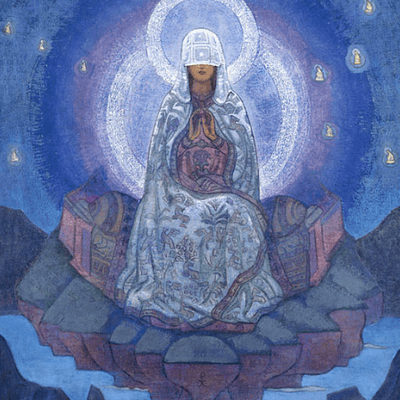 Spirituality & Religious Studies @spiritualityreligiousstudies.wordpress.com@spiritualityreligiousstudies.wordpress.com ·
Archangel Michael
Also called Michael the Taxiarch. A taxiarch is used in the Greek language to mean “brigadier,” or a commander of a company. In Greek Orthodoxy, it refers to the Archangels Michael or Gabriel as leaders of the heavenly hosts.
Michael is an archangel & warrior of God in Christianity, Islam, & Judaism. The earliest surviving mentions of his name are in the 2nd or 3rd centuries BC Jewish works, often but not always apocalyptic. In these works, he’s the chief of the angels & archangels. He’s the guardian prince of Israel & is responsible for the care of the people of Israel.
Christianity conserved nearly all of Jewish traditions concerning him. He’s mentioned explicitly in Revelation 12:7-12, where he does battle with Satan, & in the Epistle of Jude, where the archangel & the devil have an argument over the body of Moses.
The Book of Enoch lists Michael as 1 of 7 archangels. The remaining names are: Uriel, Raguel, Raphael, Sariel, Gabriel, & Remiel. He’s mentioned again in the last chapters of the Book of Daniel, a Jewish apocalypse composed in the 2nd century BC, in which a man clothed in linen tells Daniel that he & “Michael, your prince” are engaged in a battle with the “prince of Persia,” after which, at the end-time, “Michael, the great prince who protects your people, will arise.”
Enoch was instrumental in establishing the pre-eminent place of Michael among the angels & archangels. In later Jewish works, he’s said to be their chief, mediating the Torah, & standing at the right hand of the throne of God.
In the traditions of the Qumran community, he defends, or leads, the people of God in the end-time battle. In other writings, he’s responsible for the care of Israel & acts as commander of the heavenly armies. He’s Israel’s advocate, contesting Satan’s claim to the body of Moses.
He intercedes between God & humanity & serves as High Priest in the heavenly sanctuary. (So would this make him Aaron’s equal? We’re sincerely asking. Let us know your take in the comments.) He accompanies the souls of the righteous dead to Paradise.
The 7 archangels (or 4, as traditions differ, but always include Michael) were associated with the branches of the menorah, the sacred 7-branched lamp stand in the Temple, as the 7 spirits before the throne of God. This is reflected in the Book of Revelation 4:5. Michael is mentioned explicitly in Revelation 12:7-12, where he does battle with Satan & casts him out of heaven so that he no longer has that exclusive access to God as accuser (his former role in the Old Testament).
Satan’s fall at the coming of Jesus marks the separation of the New Testament from Judaism. In Luke 22:31, Jesus tells Peter that Satan has asked God for permission to “sift” the disciples, the goal being to accuse them. But the accusation by Jesus, who thus takes on the role played by angels, & especially by Michael, in Judaism.
Michael is mentioned by anem for the 2nd time in the Epistle of Jude, which is an impassioned plea for the believers to engage in battle against the incursion of the error. In verses 9-10, the author denounces the heretics by contrasting them with the archangel Michael, who, in disputing with Satan over the body of Moses.
According to rabbinic tradition, Michael acted as the advocate of Israel. Sometimes he had to fight with the princes of other nations (Daniel 10:13), & particularly with the angel Samael, Israel’s accuser. Their hostility dates from the time Samael was thrown from heaven & tried to drag Michael down with him, requiring God’s intervention.
The rabbis declare that Michael came into his role as defender at the time of the biblical patriarchs. Rabbi Eliezer ben Jacob said Michael rescued Abraham from the furnace into which he’d been thrown by Nimrod. Some say he was the “one that had escaped” (Genesis 14:13), who told Abraham that Lot had been taken captive & who protected Sarah from defilement by Abimelech.
Michael prevented Isaac’s being sacrificed by his dad by substituting a ram in his place. He saved Jacob, while still in his mom’s womb, from death at the hands of Samuel. Michael later prevented Laban from hurting Jacob. The midrash Exodus Rabbah holds that Michael exercised his function as an advocate of Israel at the time of the Exodus & destroyed Sennacherib’s army.
Epiphanius of Salamis (circa 310-circa 320-403), in his Coptic-Arabic Hexaemeron, referred to Michael as a replacement of Satan. Accordingly, after Satan fell, Michael was appointed to the function Satan served when he was still 1 of the noble angels.
A painting of Michael slaying a serpent became a major art piece at the Michaelion after Constantine defeated Licinius near there in 324. This contributed to the standard iconography that developed of Michael as a warrior saint slaying a dragon. The Michaelion was a magnificent church & in time became a model for hundreds of other churches in Eastern Christianity.
In the 4th century, St. Basil the Great’s homily, De Angelis, St. Michael over all the angels. He was called “Archangel” because he heralds other angels, the title archangelos applied to him in Jude 1:9. The angelology of Pseudo-Dionysius, which was widely read as of the 6th century, gave Michael a rank in the hierarchy of angels.
Later, in the 13th century, others such as Bonventure believed him to be Prince of the Seraphim, the 1st of the 9 angelic orders. According to Thomas Aquinas, Michael is the Prince of the last & lowest choir, the Angels.
Catholics often refer to Michael as “Holy Michael, the Archangel” or “St. Michael.” He’s generally referred to in Christian liturgies as “St. Michael,” as in the Litany of the Saints. In a shortened archangel, is mentioned by name, omitting Saints Gabriel & Raphael.
In Roman Catholic teachings, St. Michael has 4 main roles or offices. His 1st role is the leader of the Army of God & the leader of celestial forces in triumphing over the powers of Hell. He’s viewed as the angelic model for the virtues of the “spiritual warrior,” his conflict with evil taken as “the battle within.”
The 2nd & 3rd roles of Michael in Catholic teachings deal with death. In his 2nd role, he’s the angel of death, carrying the souls of Christians to Heaven. In his 3rd role, he weighs souls on his perfectly balanced scales. The scales are a common object he holds in art.
In his 4th role, St. Michael, the special patron of the Chosen People in the Old Testament, is also Guardian of the Church. St. Michael was revered by the military orders of knights during the Middle Ages. The names of villages around the Bay of Biscay reflect this history.
The Eastern Orthodox give Michael the title Archistrategos, or “Supreme Commander of the Heavenly Hosts.” The Eastern Orthodox pray to their guardian angels & above all, to Michael & Gabriel. The Eastern Orthodox have always had a strong devotion to angels. In modern times, they’re referred to by the term “Bodiless Powers.” Several feasts dedicated to Archangel Michael are celebrated by the Eastern Orthodox throughout the year.
In Russia, many monasteries, cathedrals, courts, & merchant churches are dedicated to the Chief Commander Michael. Most Russian cities have a church or chapel dedicated to the archangel Michael. In Ukraine, the archangel Michael is the patron saint of Kyiv. He became popular from the time of Prince Vsevolod of Kyivan Rus’.
While in the Serbian Orthodox Church, St. Sava has a special role as the establisher of its autocephaly & largest Belgrade church devoted to him, the capital Belgrade’s Orthodox cathedral, the see church of the patriarch, is devoted to Michael.
The place of Michael in the Coptic Church of Alexandra is as a saintly intercessor. He’s the 1 who presents to God the prayers of the just, who accompanies the souls of the dead to Heaven, who defeats the devil. He’s celebrated liturgically on the 12th of each Coptic month.
In Alexandria, a church was dedicated to him in the early 4th century on the 12th of the month of Paoni. The 12th month of Hathor is the celebration of Michael’s appointment in Heaven, where Michael became the chief of the angels.
Seventh-Day Adventists believe that “Michael” is but 1 of many titles applied to the pre-existent Christ, or Son of God. According to Adventist theology, Michael was/is considered the “Eternal Word,” & the 1 by whom all things were created. The Word was then born, incarnated as Jesus.
They believe that the name “Michael” signifies “One Who Is Like God” & that, as the “Archangel” or “chief or head of the angels,” he led the angels; thus, the statement in Revelation 12:7-9 refers to Jesus as Michael.
Jehovah’s Witnesses believe that Michael is another name for Jesus in Heaven, in His pre-human & post-resurrection existence. They say the definite article in Jude 9 identifies Michael as the only archangel. They consider Michael to be synonymous with Christ, described in 1 Thessalonians 4:16: “with a cry of command, with the voice of an archangel, & with the sound of the trumpet.”
They believe the prominent roles assigned to Michael in Daniel 12:1, Revelation 12:7, Revelation 16, & Revelation 19:14 are identical to Jesus’ roles, being the 1 chosen to lead God’s people & as the only 1 who “stands up,” identifying the 2 as the same spirit being.
Because they identify Michael with Jesus, he’s considered the 1st & greatest of all God’s heavenly “sons,” God’s chief messenger, who takes the lead in vindicating God’s sovereignty, sanctifying his name, fighting the wicked forces of Satan & protecting God’s covenant people on earth. Jehovah’s Witnesses also identify Michael with the “Angel of the Lord” who led & protected the Israelites in the wilderness.
Members of the Mormon Church believe that Michael is Adam (of Adam & Eve fame), the Ancient of Days (Daniel 7), a prince, & the patriarch of the human family. They also hold that Michael assisted Jehovah (the pre-mortal form of Jesus) in the creation of the world under the direction of God the Father (Elohim). Under the direction of the Father, Michael also cast Satan out of Heaven.
In Islam, Mika’il (Michael) is 1 of 4 archangels along with Jibril (Gabriel, whom he’s often paired with), Israfil (trumpeter angel) & ‘Azra’il (angel of death). In other Islamic literature, Michael is associated with mercy. He asks God for forgiveness for humans & is 1 of the 1st angels who obeyed God’s orders to bow before Adam.
From the tears of Michael, angels of mercy are created as his helpers. Like Gabriel, with whom he’s often mentioned together, Michael is also a messenger. While Gabriel delivers messages from Heaven to humans, Michael delivers messages to the angelic world.
As the angel to execute God’s providence, he’s also associated with natural phenomena & causes rain upon the lands. Unlike Christian traditions, Michael is rarely shown as a warrior-angel, with a few references to the Battle of Badr by Suyuti as an exception.
The Miraj literature on occasion mentions both Gabriel & Michael as 2 angels who showed Muhammad Paradise & Hell. He’s mentioned in Shia supplication (Dua), reportedly handed down by the 6th Imam Ja’far al-Sadiq, in the prayers for blessings for the Bearers of the Throne.
The figures of Michael & Gabriel/Jibril serve as dual pillars of angelology. While they show up in the same texts, their “personalities” & mythological roles are distinct. Michael is the celestial soldier & protector. While Gabriel is the bridge between the divine mind & the human ear.
The name Michael (Mikha’el) translates from Hebrew as a rhetorical question: “Who is like God?” This name is actually a battle cry used during the primordial war in Heaven.
In the Book of Daniel, Michael is described as the “Great Prince” who stands guard over the people of Israel. Jewish Midrash expands on this. It suggests that Michael is the high priest of the Heavenly Temple. When other nations’ guardian angels argue against Israel, Michael acts as the defense in the celestial courtroom. Because after all, God is the judge of all.
Michael’s most iconic role comes from the Book of Revelation. Here, he leads an army of God against the Dragon (a.k.a. Satan). He’s almost always dressed in Roman/Medieval armor, standing over a defeated demon/dragon, holding a spear/sword.
In Catholic traditions, Michael has a secondary role as the Psychopomp. A Psychopomp is a conductor or a guide of souls. The 1 who “weighs” souls at the moment of death. This is why he’s sometimes shown with scales.
In Islamic tradition, Mikail (Michael) is 1 of 4 archangels. While Jibril feeds the soul (through revelation), Mikail is the Angel of Sustenance. He’s responsible for the forces of nature, specifically rain & lightning. Legends say he’s so moved by the majesty of God that he hasn’t smiled since the creation of Hell.
In the United States, Michael is the patron saint of paratroopers, police officers, & the military.
In the General Roman Calendar, the Anglican Calendar of Saints, & the Lutheran Calendar of Saints, Michael’s feast day is Michaelmas Day (September 29). The day is also the feast day of St. Gabriel & Raphael, in the General Roman Calendar & the Feast of St. Michael & All Angels in the Church of England.
In the Eastern Orthodox Church, St. Michael’s principal feast day is November 8. November 21, if they’re using the Gregorian calendar. Honoring him along with the rest of the “Bodiless Powers of Heaven” (angels) as their Supreme Commander, & the Miracle at Chonae is celebrated on September 6.
In the Coptic Orthodox Church, the main feast day is on 12 Hathor (between November 9 & December 9) & 12 Paoni (between June 8 & July 7). He is celebrated liturgically on the 12th of each Coptic month.
On April 7, the Oriental Orthodox Church commemorates the deliverance of the prophet Jeremiah from prison by Michael.
Make a one-time donation
Your contribution is appreciated.
DonateMake a monthly donation
Your contribution is appreciated.
Donate monthlyMake a yearly donation
Your contribution is appreciated.
Donate yearlyRate this:
#AzraIl #1Thessalonians416 #12Hathor #12Paoni #13thCentury #2ndCenturyBC #324 #3rdCenturyBC #4thCentury #6thCentury #Abimelech #Abraham #Adam #AllAngels #AncientOfDays #AngelOfDeath #AngelOfSustenance #Angelology #AnglicanCalendarOfSaints #Apocalyptic #April7 #ArchangelGabriel #ArchangelMichael #ArchangelRaguel #ArchangelRaphael #ArchangelRemiel #ArchangelSariel #ArchangelUriel #Archangelos #Archistrategos #ArmyOfGod #BattleOfBadr #BayOfBiscay #BearersOfTheThrone #Belgrade #BodilessPowers #BodilessPowersOfHeaven #Bonventure #BookOfDaniel #BookOfEnoch #BookOfRevelation #Catholic #Catholics #ChiefCommanderMichael #Christ #Christianity #ChurchOfEngland #Circa310 #Circa320 #Circa403 #Constantine #CopticChurchOfAlexandria #Daniel #Daniel1013 #Daniel121 #Daniel7 #DeAngelis #December9 #Disciples #Dragon #Dua #EasternChristianity #EasternOrthodox #EasternOrthodoxChurch #Elohim #EpiphaniusOfSalamis #EpistleOfJude #EternalWord #ExodusRabbah #FeastDay #FeastOfStMichael #GeneralRomanCalendar #Genesis1413 #GreatPrince #GreekOrthodoxy #GregorianCalendar #Hathor #Heaven #HeavenlyTemple #Hebrew #Hell #Hexaemeron #HighPriest #Homily #Isaac #Islam #Israel #Jacob #Jehovah #JehovahSWitnesses #Jeremiah #Jesus #Jewish #Jibril #Judaism #Jude19 #Jude9 #July7 #June8 #KievanRus #KingSennacherib #Kyiv #Laban #Licinius #LitanyOfTheSaints #Lot #Luke2231 #LutheranCalendarOfSaints #Menorah #Mercy #MichaelTheTaxiarch #Michaelion #MichaelmasDay #Midrash #Mikail #MikhaEl #MiracleAtChonae #Miraj #MormonChurch #Moses #Muhammad #NewTestament #Nimrod #November21 #November8 #November9 #OldTestament #OrientalOrthodoxChurch #Paoni #Paradise #Patriarchs #PatronSaint #PatronSaints #Persia #PrinceOfTheSeraphim #PrinceVsevolod #Prophet #PseudoDionysius #Psychopomp #Qumran #Rabbis #Revelation127 #Revelation12712 #Revelation1279 #Revelation16 #Revelation1914 #Revelation45 #RomanCatholic #Russia #Samael #Samuel #Sarah #Satan #Scales #September29 #September6 #SerbianOrthodoxChurch #SeventhDayAdventists #Shia #SonOfGod #Spear #StBasilTheGreat #StGabriel #StMichael #StRaphael #StSava #Suyuti #Temple #ThomasAquinas #Torah #Trumpet #Ukraine #UnitedStatesOfAmerica