Search
612 results for “BassCan”
-

In 15 minutes, a #Swärd's world premiere #Tomasi & #Bassman with Svensson and #Tchaikovsky's First from #Norrköping https://www.worldconcerthall.com/en/schedule/a_swards_world_premiere_tomasi__bassman_with_svensson_and_tchaikovskys_first_from_norrkoping/76569/ #wch
-

In 15 minutes, a #Swärd's world premiere #Tomasi & #Bassman with Svensson and #Tchaikovsky's First from #Norrköping https://www.worldconcerthall.com/en/schedule/a_swards_world_premiere_tomasi__bassman_with_svensson_and_tchaikovskys_first_from_norrkoping/76569/ #wch
-

In 15 minutes, a #Swärd's world premiere #Tomasi & #Bassman with Svensson and #Tchaikovsky's First from #Norrköping https://www.worldconcerthall.com/en/schedule/a_swards_world_premiere_tomasi__bassman_with_svensson_and_tchaikovskys_first_from_norrkoping/76569/ #wch
-

In 15 minutes, a #Swärd's world premiere #Tomasi & #Bassman with Svensson and #Tchaikovsky's First from #Norrköping https://www.worldconcerthall.com/en/schedule/a_swards_world_premiere_tomasi__bassman_with_svensson_and_tchaikovskys_first_from_norrkoping/76569/ #wch
-

In 15 minutes, a #Swärd's world premiere #Tomasi & #Bassman with Svensson and #Tchaikovsky's First from #Norrköping https://www.worldconcerthall.com/en/schedule/a_swards_world_premiere_tomasi__bassman_with_svensson_and_tchaikovskys_first_from_norrkoping/76569/ #wch
-

Alles Gute zum Geburtstag Ralph! 🥳🤩🎉☺️
#ralphgeburtstag #ralphhatgeburtstag #ralphbach #ralphjbo #ralphbachjbo #ralphbass #ralphundvito #bassman #bass #bassist #ddjev #djeuresvertrauens -

'Thus, here we asked whether B. bassiana could damage the Drosophila brain via Toll-1, Wek and Sarm. We show that exposure to B. bassiana reduced fly lifespan and impaired locomotion. B. bassiana entered the brain and induced the up-regulation of AMPs, as well as wek and sarm, within the brain. Exposure to B. bassiana caused neuronal and glial loss in the adult Drosophilabrain. Importantly, RNAi knockdown of Toll-1, wek or sarm concomitantly with infection prevented B. bassiana induced cell loss.'
#Immunology #InnateImmunity
#Preprint
https://www.biorxiv.org/content/10.1101/2024.04.29.591341v1 -

Everybody on board! #johncoltrane is your conductor but Paul Chambers’ bassand Philly Joe Jones’ drumming are feeding the fire that keeps this train moving.
#jazz #jazzdrummer #vinyl #vinylrecords #vinylcollection #vinylcommunity #nowplaying #recordcollecting #records #music #coltrane
#recordsinmylife #album #albums @vinylrecords @Great_Albums -
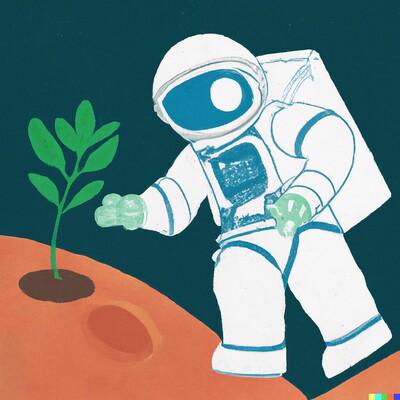
At first glance, there's nothing special about the sea bass circling around a tank in the small scientific facility on the outskirts of Palavas-les-Flots in southern France. But these fish are on a mission.
Their offspring will be the first to be launched into space as part of a scientific project called Lunar Hatch that is exploring whether sea bass can be farmed on the moon – and eventually Mars – as food for future astronauts.
-
Tacksam för en morgon på Frösön med rehabbad! Vilken fin bassäng med jetmaskin som masserade nacken och bastu efteråt. Känner mig som en nästan ny människa.
Dessutom de här eldkorgarna längs hela Frösö strand så här i advent.
Mysigt.
#konstnärsvardag #slöjdlärare #sjukskrivning #rehab -

#Arachtober 26: a very flat crab spider, maybe a bark crab spider (_Bassaniana_) or the like. Note the ⟨ ° • • ° ⟩ eye arrangement and long front legs.
#DailySpiderPic #spiders #CrabSpiders #Araneae #Thomisidae #macro
-

#Arachtober 26: a very flat crab spider, maybe a bark crab spider (_Bassaniana_) or the like. Note the ⟨ ° • • ° ⟩ eye arrangement and long front legs.
#DailySpiderPic #spiders #CrabSpiders #Araneae #Thomisidae #macro
-

#Arachtober 26: a very flat crab spider, maybe a bark crab spider (_Bassaniana_) or the like. Note the ⟨ ° • • ° ⟩ eye arrangement and long front legs.
#DailySpiderPic #spiders #CrabSpiders #Araneae #Thomisidae #macro
-

#Arachtober 26: a very flat crab spider, maybe a bark crab spider (_Bassaniana_) or the like. Note the ⟨ ° • • ° ⟩ eye arrangement and long front legs.
#DailySpiderPic #spiders #CrabSpiders #Araneae #Thomisidae #macro
-

Il giardino dei Finzi Contini. L’Italia e le leggi razziali
Dal romanzo di Giorgio Bassani l'ultimo capolavoro di Vittorio De Sica
https://www.lasinistraquotidiana.it/il-giardino-dei-finzi-contini-litalia-e-le-leggi-razziali/#ilgiardinodeifinzicontini #giorgiobassani #vittoriodesica #linocapolicchio #shoah #giornodellamemoria #cinemagram #cinema #cinéma #cinematography #cinemalover #cinematographer #movie #movies #moviescenes #filmscene #film #filmphotography #filmphoto #filmcommunity #unocinema
-

Il giardino dei Finzi Contini. L’Italia e le leggi razziali
Dal romanzo di Giorgio Bassani l'ultimo capolavoro di Vittorio De Sica
https://www.lasinistraquotidiana.it/il-giardino-dei-finzi-contini-litalia-e-le-leggi-razziali/#ilgiardinodeifinzicontini #giorgiobassani #vittoriodesica #linocapolicchio #shoah #giornodellamemoria #cinemagram #cinema #cinéma #cinematography #cinemalover #cinematographer #movie #movies #moviescenes #filmscene #film #filmphotography #filmphoto #filmcommunity #unocinema
-

Il giardino dei Finzi Contini. L’Italia e le leggi razziali
Dal romanzo di Giorgio Bassani l'ultimo capolavoro di Vittorio De Sica
https://www.lasinistraquotidiana.it/il-giardino-dei-finzi-contini-litalia-e-le-leggi-razziali/#ilgiardinodeifinzicontini #giorgiobassani #vittoriodesica #linocapolicchio #shoah #giornodellamemoria #cinemagram #cinema #cinéma #cinematography #cinemalover #cinematographer #movie #movies #moviescenes #filmscene #film #filmphotography #filmphoto #filmcommunity #unocinema
-

Il giardino dei Finzi Contini. L’Italia e le leggi razziali
Dal romanzo di Giorgio Bassani l'ultimo capolavoro di Vittorio De Sica
https://www.lasinistraquotidiana.it/il-giardino-dei-finzi-contini-litalia-e-le-leggi-razziali/#ilgiardinodeifinzicontini #giorgiobassani #vittoriodesica #linocapolicchio #shoah #giornodellamemoria #cinemagram #cinema #cinéma #cinematography #cinemalover #cinematographer #movie #movies #moviescenes #filmscene #film #filmphotography #filmphoto #filmcommunity #unocinema
-

Minimisant la présence autochtone, cette carte du Saguenay–Lac-Saint-Jean dressée par Adolphe Larue en 1825 vise à démontrer que ce vaste territoire est propice à la colonisation et à l’agriculture. Carte décrite dans l’Atlas du Québec en Amérique et dans le monde :
http://monde.ccdmd.qc.ca/ressource/?id=137859Image : BAnQ
#Saguenay #BasCanada #Québec #colonisation #colons #Autochtones #Canada #BAnQ #peuplement #science #cartography #cartographie #carte #maps #économie #agriculture #nature #histoire #géographie -

'Thus, here we asked whether B. bassiana could damage the Drosophila brain via Toll-1, Wek and Sarm. We show that exposure to B. bassiana reduced fly lifespan and impaired locomotion. B. bassiana entered the brain and induced the up-regulation of AMPs, as well as wek and sarm, within the brain. Exposure to B. bassiana caused neuronal and glial loss in the adult Drosophilabrain. Importantly, RNAi knockdown of Toll-1, wek or sarm concomitantly with infection prevented B. bassiana induced cell loss.'
#Immunology #InnateImmunity
#Preprint
https://www.biorxiv.org/content/10.1101/2024.04.29.591341v1 -

'Thus, here we asked whether B. bassiana could damage the Drosophila brain via Toll-1, Wek and Sarm. We show that exposure to B. bassiana reduced fly lifespan and impaired locomotion. B. bassiana entered the brain and induced the up-regulation of AMPs, as well as wek and sarm, within the brain. Exposure to B. bassiana caused neuronal and glial loss in the adult Drosophilabrain. Importantly, RNAi knockdown of Toll-1, wek or sarm concomitantly with infection prevented B. bassiana induced cell loss.'
#Immunology #InnateImmunity
#Preprint
https://www.biorxiv.org/content/10.1101/2024.04.29.591341v1 -

'Thus, here we asked whether B. bassiana could damage the Drosophila brain via Toll-1, Wek and Sarm. We show that exposure to B. bassiana reduced fly lifespan and impaired locomotion. B. bassiana entered the brain and induced the up-regulation of AMPs, as well as wek and sarm, within the brain. Exposure to B. bassiana caused neuronal and glial loss in the adult Drosophilabrain. Importantly, RNAi knockdown of Toll-1, wek or sarm concomitantly with infection prevented B. bassiana induced cell loss.'
#Immunology #InnateImmunity
#Preprint
https://www.biorxiv.org/content/10.1101/2024.04.29.591341v1 -

🎷 THE DEFINITIVE COUNTDOWN. > Your Sunday afternoon just got an upgrade. The Cool Jazz Countdown with Marcellus Sheppard and Kyle LaRoux is LIVE in 15!
We’re counting down the Top 10 jazz tracks in the country, bringing you the charts that matter with the "Bassman" himself leading the charge. This is high-fidelity radio at its absolute peak. Don't just listen—witness the charts. 🕶️✨
🔗 JOIN THE COUNTDOWN: https://retrorockradio.com #JazzCountdown #CoolJazz #Live365 #TheBassman #SundayAfternoon
-
🎷 THE DEFINITIVE COUNTDOWN.
Your Sunday afternoon just got an upgrade. The Cool Jazz Countdown with Marcellus Sheppard and Kyle LaRoux is officially LIVE.We’re counting down the Top 10 jazz tracks in the country, bringing you the charts that matter with the "Bassman" himself leading the charge. This is high-fidelity radio at its absolute peak. Don't just listen—witness the charts. ✨
🔗 JOIN THE COUNTDOWN: https://retrorockradio.com #JazzCountdown #CoolJazz #Live365 #TheBassman #SundayAfternoon
-

Ocksters, Oxscares and Oxcars: the thread about the islands of the Forth and what some of their names mean
Oxcars. A lump of rock crowned by a lighthouse in the Firth of Forth. I was interested to see that a 17th century variation of the name was Ocksters – the Scots word for armpit!
Ocksters – Excerpt from Greenville Collins’ map of the Firth of Forth, 1693. Reproduced with the permission of the National Library of ScotlandA few years previously it’s down as Ockstairs on the original sketches for John Adair’s map of the Forth, but then in a 1703 imprint it has been amended to Oxscares. The oldest variation is recorded in 1621 as Oixtaris in the Register of the Privy Council on the subject of the need for a beacon on these rocks, which are submerged at high tides.
Oxscares – Adair’s map of 1703. Reproduced with the permission of the National Library of ScotlandIf you are wondering where these variations come from, then wonder no more. The root is Ox Scaris, as in ox skerries; ox being the animal and skerries being intertidal rocks. Ocksters etc. are simply phonetic variations. It’s likely this animal theme lent its name to the neighbouring rock of Cow(s) & Calves, which was traditionally Muckriestone as it lies off the north on Admiralty coastal charts.
Cows and Calves off of Inchmickery, OS 1 inch map of 1895. Reproduced with the permission of the National Library of ScotlandWorking our way down the Forth from it’s outer reaches, we can explore the toponymy of the islands; the meanings of their place names. The Isle of May, at the eastern extreme, is likely from the old Norse, Má ey or gull island. Stands to obvious reason. The Gaelic Magh, an open field, is less likely.
Isle of May – Excerpt from Adair’s map of the Firth of Forth, 1703. Excerpt from Greenville Collins’ map of the Firth of Forth, 1693. Reproduced with the permission of the National Library of ScotlandAbout 8 miles south, and a little west, of the May is the Bass Rock, whose unmistakable outline is prominent along the East Lothian coast. The origin of its name has been lost to history, John Milne suggests a relation to death, from the Gaelic bàs, as it was long a place of banishment and execution, but that’s just conjecture and some of Milne’s use of Gaelic is often a little bit too convenient. But we do know that the Bass gives the scientific species name to the Northern Gannet – Morus bassanus – for which it is the largest colony. These animals were scientifically described as far back as the 16th century as Anser bassanus, and later in the 18th by Linnaeus as Sula bassana. The Scots word for them was however the solendguse or solen goose. In the spring and summer, the Bass takes on a white appearance, caked in the birds and their droppings.
The Bass Rock, John Gabriel Stedman, 1780. Collection of the National Galleries of ScotlandMoving west, the next island is Craigleith. Milne suggests the Gaelic Creag Liath – the grey rock. (In Gaelic, Liath – is the colour of a blue sky, but when used in reference to the landscape it refers to something being greyish. This is a feature of the Gaelic language when dealing with place names; the colour use is subjective and descriptive, not literal). However Craigleith is actually comprised of very dark, volcanic rocks – it needs to be squinted at in combination with the stains of guano to take on a greyish hue. It should also be noted that in Gaelic the word liath does not have the soft “th” ending that Leith does in English. Notice on the 18th century map below that the earliest spelling is Lieth, with the I before the E, which was also the case at this time for maps showing the port and town of Leith along the coast.
Craig Lieth. Excerpt from Adair’s map of the Firth of Forth, 1703. Reproduced with the permission of the National Library of ScotlandNext up is The Lamb. Milne goes for the easy Gaelic Làmh for an arm or handle, one assumes for the shape, but in that language the –mh sounds like an English –v. As I said before, sometimes Milne’s use of Gaelic for the roots of place names seems to be just too convenient. There might also be a Norse origin for the name, or it may simply be named after the animal (see already Oxcars, Cows & Calves). It is after all flanked by the North andSouth Dog rocks. This island was bought by Uri Geller (yes, that Uri Geller) in 2009 so he could dowse for Egyptian treasure on it. Yes, I’m being serious, he described that it’s an analogue for the layout of the Egyptian pyramids and holds the buried treasure of Princess Scota. He recently told the BBC that he has spent a single night on his island and didn’t enjoy it one bit and was declaring the island a micronation, the Republic of Lamb. In January 2026 Mr Geller again made the headlines when he declared Donald Trump an honorary citizen and president of the island.
Lamb, North Dog and South Dog, from OS 6 inch map, 1853. Reproduced with the permission of the National Library of ScotlandMoving west is Fidra, for which Milne once again gives a fanciful Gaelic derivation, but it’s now believed to be Old Norse, from Fiðrey or Feather Island as a result of all the seabirds. Eider feathers would have been gathered here in yore for use in bedding. Robert Louis Stevenson based his plan for Treasure Island on Fidra (amongst other islands). Like its eastern neighbour, Fidra too is guarded by North and South Dogs.
Fidra as shown on the OS 6-inch map, 1854. Reproduced with the permission of the National Library of ScotlandNext along is Eyebroughy, the fourth and final of the basalt islands between North Berwick and Aberlady. It is shown as Ibris in Adair’s 18th century chart and the 1850s Ordnance Survey place name book for East Lothian also gives Eyebrochy. The Old Norse Ey for island seems an obvious start for the word, but I cannot find a reference explaning the second part.
Ibris. Excerpt from Adair’s map of the Firth of Forth, 1703. Reproduced with the permission of the National Library of ScotlandThere is now something of a gap until the next major island; it is 12.5 miles from Eyebroughy to Inchkeith, which looms large in the centre of the Firth. Its etymology gets a whole chapter on its Wikipedia page, but the logical explanation may be Innse Coit, a hybrid of old Gaelic (Island) and Welsh (wooded); a wooded island. The oldest recorded form is Ked in the 13th century, but as the Place Names of Fife points out, its an unlikely candidate to be known for being wooded, so once again we probably just don’t know. It was used to quarantine victims of syphilis from Leith and Edinburgh in the 15th century, of that we do know. The Grandgore (syphilis) Act of 1497, saw the island made a place of “Compulsory Retirement” for sufferers, obliged to board a ship at Leith and to remain on their island “till God provide for their health“.
“Inchkeith on the Forth in a Fresh Gale”, John Gabriel Stedman, 1781. Collection of the National Galleries of ScotlandInterestingly, the Georgian mapmaker extraordinaire of Scotland, William Roy, left Inchkeith off his Great Maps of both the Lowlands and Highlands, with the Forth forming the boundary between these two geographical divisions in the east of the country. But there is a square that looks like a repair where it should be…
Here be… nothing? The position of Inchkeith on Roy’s map. Reproduced with the permission of the National Library of ScotlandNext up is Oxcars, 5.5 miles west of Inchkeith, where we started this thread. If we move south from there we get to Inchmickery and Mickrystone (now Cows & Calves, as previously mentioned also). The derivation of Mickery may be from the Gaelic Innis nam Bhiocaire, island of vicars, as like most of the islands of the Forth it has been a Christian retreat at one time or another. The island was fortified during both World Wars, and it’s not without good reason that there’s a legend that its outline was deliberately made to look like an anchored battleship. The logic is that any U-boat commander who made it into the Forth would pop up his periscope, be taken in by the cunningly disguised island and would have fired his torpedoes and disappeared before realising he’d wasted them on a rock. If you know your Royal Navy ships, the fortifications are a reasonably good likeness to HMS Nelson and Rodney, but I have it on expert authority that the legend is precisely that, a legend.
Inchmickery. CC-BY-SA 2.0, Anne Burgess and HMS Nelson. Move the slider to compare the outlines.North of Cows & Calves is Inchcolm; probably the best known of the Forth Islands and certainly the most visited. It is named for Saint Columba (Colum Cille in Gaelic) who reputedly visited it in the 6th century. The modern name is from the Gaelic Innis Choluim orColumba’s Island. The old joke goes “how many inches are there in the Forth?” and you’re meant to count the islands. In The Scottish Play, Shakespeare refers to the place as Saint Colmes Ynch.
“Inchcolm on the Forth in a Summer Shower”, John Gabriel Stedman, 1781. Collection of the National Galleries ScotlandJust off Inchcolm lies Inchgnome, but the jury of the best minds in Scottish placenames is still out on where that one might come from. Probably from some obscure Gaelic saint.
https://www.flickr.com/photos/wwshack/26451815521
South and west lies Cramond Island, which obviously takes its name from the village off which it lies. That in turn comes from Caer Amond, Caer being old British for a fortification (referring to Roman fort on the site), and Amond or Almond is the river of that name. Like the rivers Esk and Avon (and others), River Almond is a tautology as the latter word simply means river.
Cramond IslandAnother tautological place name is the island of Carcraig , just northwest of Inchcolm. The Car element is an Scots word for rock (from the Old English Carr) and the Craig bit is the Scots word for the same, from the Gaelic Creag.
Carcraig, from OS 6 inch map, 1853. Reproduced with the permission of the National Library of ScotlandThe other principal islet off of Inchcolm is Meadulse. This rock is entirely covered by the tide which makes it an excellent growing place for seaweed and the name likely comes from the edible dulse which grows there and is known to have been a medieval food source.
The final, and westernmost, of the Inches of the Forth is Inchgarvie, that convenient supporting foothold for the Forth Bridge. Its name is likely from the Gaelic Innse Garbh, or rough island, the –bh sound in Gaelic sounding like a –v in English. This is on account of its rugged appearance (and perhaps its legendary population of giant rats!).
Inchgarvie, OS 25 inch map of 1892. Reproduced with the permission of the National Library of ScotlandUpstream of the Forth Bridge there are fewer islands. The Beamer Rock‘s name is quite literal, and refers to an early beacon that was there from time immemorial to guard ships from it. The older form was Bimar or Bymerskyrr, the –skyrr from the Scots skerry, for a low islet or sea rock. This islet suffered the indignity of having the very beacon it was named for demolished (the base was blown up with explosives) in 2011 to make way for a tower of the Queensferry Crossing.
Beamer Rock in 2010. CC-BY-SA 2.0 Simon Johnston.I won’t move any further west than this, as this site is principally concerned with the geography of Edinburgh, Leith and the Lothians. However there are of course countless other islets and named rocks in the Forth. Many of these are simply a variation on Craig, Carr and Bush, all words referring to rocks. Selected others in the Edinburgh area include:
- Birnies, a collection of tidal rocks at Granton. I cannot find a description of the name, but the –birnie in the placename Kilbirnie comes from the Gaelic Cill Bhraonaigh, or Saint Brendan.
- Another rock near the Birnies, Chestnut logically takes its name from its similarity of appearance to the fruit of that tree
- General’s Rock on the Granton Foreshore, allegedly where English forces under Lord Hertford (Edward Seymour, 1st Duke of Somerset) landed in 1544 before the burning of Edinburgh and Leith.
- Gunnet Ledge, a navigational hazard directly north of the entrance to the Port of Leith and west of Inchkeith, marked by a pair of bouys called the East and West Gunnet since at least the start of the 19th century. Probably a variation of Gannet, alternative older spellings include Dunnet and Guneet.
- Martello Rocks, sitting at the old tidal entrance to the Port of Leith and named retrospectively for the Martello Tower that was constructed upon them to defend the approaches
- Megmillar another intertidal rock off of the Granton foreshore, whose name I can find no explanation for.
The names of many of these islands were given to Council housing tower blocks built in the north of the city in the 1950s and 60s. There re are of course many more, but I hope this whistle stop tour has been of some interest.
Note to readers: unfortunately in April 2026, a third-party plug-in more than exceeded its authority and broke many of the image links on this site. No images were lost but I will have to restore them page-by-page, which may take some time. In the meantime please bear with me while I go about rectifying this issue.
If you have found this site useful, informative or amusing then you can help contribute towards its running costs by supporting me on ko-fi. This includes my commitment to keeping it 100% advert and AI free for all time coming, and in helping to find further unusual stories to bring you by acquiring books and paying for research.
Or please do just share this post on social media or amongst friends and like-minded people, sites like this thrive on being shared.Explore Threadinburgh by map:
Travelers' Map is loading...
If you see this after your page is loaded completely, leafletJS files are missing.These threads © 2017-2026, Andy Arthur.
NO AI TRAINING: Any use of the contents of this website to “train” generative artificial intelligence (AI) technologies to generate text is expressly prohibited. The author reserves all rights to license uses of this work for generative AI training and development of machine learning language models.
#Lochend #Logan #Restalrig #StMargaret -

#MEAN
La missione del Movimento europeo di azione non violenta in #Ucraina
https://www.lavitadelpopolo.it/esteri/dal-mondo/ucraina-michela-piccoli-di-bassano-partecipante-alla-missione-del-movimento-europeo-di-azione-non-violenta-presenti-per-riaccendere-la-speranza-FL490373 -

I'm trying out a new mosquito-control contraption made by Ortho. It features a landing pad laced with powderized, lethal fungus spores (Beauveria bassiana) that can be transferred via tarsi to standing water elsewhere in the yard or in your neighbors' yards. The water in the container also has an insecticide (pyriproxyfen) to kill any larvae that might develop from eggs left by females. It's the home version of the expensive In2Care trap that can only be purchased by licensed pest-control folks. #mosquitoes #ortho #in2care
-

I'm trying out a new mosquito-control contraption made by Ortho. It features a landing pad laced with powderized, lethal fungus spores (Beauveria bassiana) that can be transferred via tarsi to standing water elsewhere in the yard or in your neighbors' yards. The water in the container also has an insecticide (pyriproxyfen) to kill any larvae that might develop from eggs left by females. It's the home version of the expensive In2Care trap that can only be purchased by licensed pest-control folks. #mosquitoes #ortho #in2care
-

I'm trying out a new mosquito-control contraption made by Ortho. It features a landing pad laced with powderized, lethal fungus spores (Beauveria bassiana) that can be transferred via tarsi to standing water elsewhere in the yard or in your neighbors' yards. The water in the container also has an insecticide (pyriproxyfen) to kill any larvae that might develop from eggs left by females. It's the home version of the expensive In2Care trap that can only be purchased by licensed pest-control folks. #mosquitoes #ortho #in2care
-

I'm trying out a new mosquito-control contraption made by Ortho. It features a landing pad laced with powderized, lethal fungus spores (Beauveria bassiana) that can be transferred via tarsi to standing water elsewhere in the yard or in your neighbors' yards. The water in the container also has an insecticide (pyriproxyfen) to kill any larvae that might develop from eggs left by females. It's the home version of the expensive In2Care trap that can only be purchased by licensed pest-control folks. #mosquitoes #ortho #in2care