Search
1000 results for “philosopher”
-

Review: Nightfell
I recently discovered and became enamored with a grimdark setting for D&D 5E called Nightfell. So much 5E material ends up looking alike both in rules and art style, but Nightfell is a game that attempts to do something new with the 5E rules and presents a stunning dark fantasy look, which I find very refreshing!
#DnD #Nightfell #ttrpg #rpg #GrimDark #lycanthropy #horror #moon
https://philosopherzeus.wordpress.com/2023/03/19/review-nightfell/ -
GM Diary: Bringing Grim Hollow and Nightfell into Aufstrag Homebrew
Topics: Grimdark, Grim Hollow, Nightfell, Aufstrag, Ghoul Empire (Darakhul), two moons and their effects on beasts and culture and how I plan on merging these settings to create something new.
#CastlesAndCrusades #Grimhollow #Nightfell #Aufstrag #DnD #ttrpg #rpg #grimdark
https://philosopherzeus.wordpress.com/2023/03/06/gm-diary-bringing-grim-hollow-and-nightfell-into-aufstrag-homebrew/ -

Full house (barn) for the annual Rilax Writers' Meeting in Bromarv featuring Esa Saarinen (known as the Punk Philosopher back in the 80s) + novelists Maria Turtschaninoff and Karin Collins
#Raasepori #Raseborg #Finland #writers #finnishliterature #MariaTurtschaninoff #KarinCollins #EsaSaarinen #philosopher
-

Full house (barn) for the annual Rilax Writers' Meeting in Bromarv featuring Esa Saarinen (known as the Punk Philosopher back in the 80s) + novelists Maria Turtschaninoff and Karin Collins
#Raasepori #Raseborg #Finland #writers #finnishliterature #MariaTurtschaninoff #KarinCollins #EsaSaarinen #philosopher
-

On Godel (Wadsworth Philosophers Series) 1st Edition by Jaakko Hintikka (PDF)
Author: Jaakko Hintikka
File Type: PDF
Download at https://sci-books.com/on-godel-wadsworth-philosophers-series-1st-edition-0534575951/
#Philosopher, #JaakkoHintikka -

I started an account at BlueSky because so many other academic #philosophers had signed up, but there is even less activity than here.
I'm especially interested in #GreekPhilosophy but also #philosophyofmind and #metaphysics.
Any others out there?
-

#Philosophers of the City, have a look at the amazing programme of our #AnnualConference! 10 year #PhilosophyOfTheCity in #Brooklyn . (And my co-director’s address.) Register now! https://www.potcrg.org/conference
-

#Philosophers of the City, have a look at the amazing programme of our #AnnualConference! 10 year #PhilosophyOfTheCity in #Brooklyn . (And my co-director’s address.) Register now! https://www.potcrg.org/conference
-

#Philosophers of the City, have a look at the amazing programme of our #AnnualConference! 10 year #PhilosophyOfTheCity in #Brooklyn . (And my co-director’s address.) Register now! https://www.potcrg.org/conference
-

#Philosophers of the City, have a look at the amazing programme of our #AnnualConference! 10 year #PhilosophyOfTheCity in #Brooklyn . (And my co-director’s address.) Register now! https://www.potcrg.org/conference
-
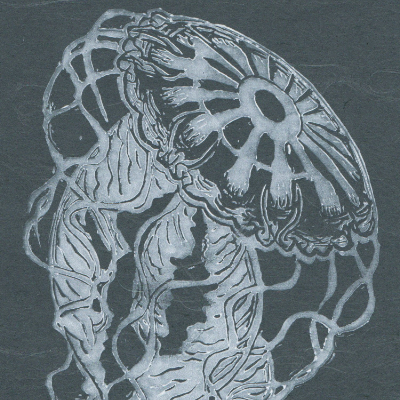
Happy birthday to #philosopher Bertrand Russell (1872-1970) who, amongst other things speculated about a teapot orbiting in space.
This lino block print of Russell's Teapot is part of my series of Imaginary Friends of Science of charismatic thought experiments. In this case, the alledged china teapot, in orbit between Earth and Mars is an analogy….
1/n
#linocut #printmaking #SciArt #RussellsTeapot #CelestialTeapot #teapot #space #planets #philosophy #skepticism #Imaginary #MastoArt -
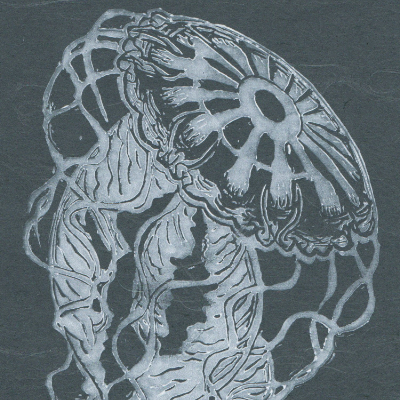
Happy birthday to #philosopher Bertrand Russell (1872-1970) who, amongst other things speculated about a teapot orbiting in space.
This lino block print of Russell's Teapot is part of my series of Imaginary Friends of Science of charismatic thought experiments. In this case, the alledged china teapot, in orbit between Earth and Mars is an analogy….
1/n
#linocut #printmaking #SciArt #RussellsTeapot #CelestialTeapot #teapot #space #planets #philosophy #skepticism #Imaginary #MastoArt -
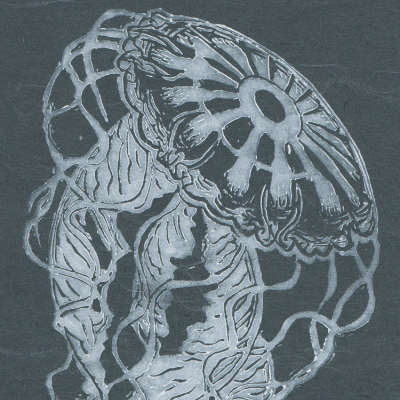
Happy birthday to #philosopher Bertrand Russell (1872-1970) who, amongst other things speculated about a teapot orbiting in space.
This lino block print of Russell's Teapot is part of my series of Imaginary Friends of Science of charismatic thought experiments. In this case, the alledged china teapot, in orbit between Earth and Mars is an analogy….
1/n
#linocut #printmaking #SciArt #RussellsTeapot #CelestialTeapot #teapot #space #planets #philosophy #skepticism #Imaginary #MastoArt -

On this week's episode of #TheCancelledPodcast Elliott (IG: @philosopherscholar) & Darius (aka Jay, @legendarii_mg) are here to discuss PC (Political Correctness) & Cancel Culture with special guests Niko Centeno-Monroy (IG: @niko_frito, okin_muzic) and Cody Grunwald (IG: @codythesloth). We'll be discussing how both movements are intertwined, why they are supported/hated, and why each are considered so controversial.
https://youtu.be/vWDbVVslrds
#PC #cancelCulture #politicalCorrectness #genocide -

Philosopher Ludwig Wittgenstein honoured with blue plaque at Langland Bay
The plaque has been installed on the promenade wall near the Hole in the Wall Café — a spot the philosopher is believed to have walked past many times during his visits to the area.
It is the latest addition to Swansea Council’s blue plaque scheme, which celebrates the city’s heritage and has now been running for 12 years.
Wittgenstein’s Swansea connection
Born in Vienna in 1889, Wittgenstein is widely regarded as one of the greatest philosophers of the modern era, best known for his work in logic, mathematics, the philosophy of mind and language.
His visits to Swansea were prompted by his close friendship with philosopher Rush Rhees, who taught at Swansea University from 1940 to 1966. Wittgenstein often stayed at guest houses in Langland and Uplands, spending time walking the Gower coastline and developing ideas that would shape his later work.
It is believed these summers had a profound influence on his thinking. In a 1945 letter to his friend Norman Malcolm, Wittgenstein reflected warmly on his time in Swansea, writing:
“I know quite a number of people here whom I like. I seem to find it more easy to get along with them here than in England. I feel much more often like smiling.”
Recognition and legacy
The plaque was proposed by Dr Alan Sandry, Senior Lecturer in the School of Management at Swansea University.
Cllr Elliott King, Swansea Council’s Cabinet Member for Culture, said:
“Ludwig Wittgenstein’s connection to Swansea is a remarkable story that links our city to one of the greatest minds of the 20th century. His time here influenced his thinking and helped inspire a generation of philosophers at Swansea University. The blue plaque scheme allows us to celebrate these powerful connections and share them with residents and visitors, helping shine a light on the people who have shaped our city’s cultural and intellectual heritage.”
Swansea’s blue plaque scheme
The scheme is open to nominations from the public for people and places of historic interest. Other recipients include architect Glendenning Moxham, musician Pete Ham, novelist Ann of Swansea, anti‑slavery campaigner Jessie Donaldson, polar explorer Edgar Evans, and the Vetch Field.
#bluePlaque #cllrElliottKing #drAlanSandry #heritage #holeInTheWallCafe #langlandBay #ludwigWittgenstein #philosopher #schoolOfManagement #swansea #swanseaCouncil #swanseaUniversity
-

Towards the middle of April parts of the canal beside the Philosopher's Path (哲学の道) become a river of petals.
The phrases 'hana-no-ukibashi' (花の浮橋 'floating bridge of flowers') and 'hanaikada' (花筏 'flower raft') both describe water thick with petals. -

Building a Small Scale #WoodFiredKiln, Steve Mills Backyard Philosophers Kiln , pt1 the Big Picture
by Tending a Handmade Life
March 21, 2024"On the New Moon of February 9th, 2024, I fired up my very own small scale wood fired kiln!
It's been a long held dream of 35 years and, when I finally got up the gumption to go for it, it took almost a full 2 years to collect all the materials, get the pole barn built and to finally construct the kiln.
I was first introduced to wood fired kilns back in the spring of 1989 when we were living in Davenport, CA. I got invited to participate in the firing of pottery legend Daniel Rhodes' two chamber Noborigama. For a variety of reasons, that firing turned out to be a life changing event, establishing my love of wood fired pots and setting me onto the creative, Tending a Handmade Life path I travel today.
The seed was planted ... so I waited and waited and knew when we bought our current little cabin and 7 acres in the mountains of Western North Carolina, this would be the place for my wood fired kiln dreams to come true.
But what would that kiln look like? Pretty much everything I could find online or in books revolved around complex designs and construction. About 3 years ago, I found a link to plans for a small scale wood fired kiln called the Backyard Kiln, designed by the late Steve Mills. Also known as the Philosopher's Kiln, it's a top loading/coffin style, designed to be easily and inexpensively constructed with regular house bricks and to be fired in one day with one or two people.
Amazingly, there was a free PDF with very precise details including a thorough materials list. Turns out the PDF had been turned into a little book as well [links below].
I very much wanted to build my kiln on the cheap, but was reluctant to use house bricks. New fire bricks for even such a small kiln would have run close to $2500 for just the bricks; shipping or driving hours to pick them up added even more to the cost. Feeling like a blessing from the Universe, I am fortunate enough to have a potter friend/benefactor/mentor gift me with all the bricks, a combination of hard and soft brick in a variety of sizes and shapes, as well as the kiln door plus several cordierite shelves for the damper and extra insulation inside the chamber.
The next big hurdle was getting a pole barn constructed. Thankfully, my husband Dave is a pretty decent carpenter. He retired from his full-time job last spring and we finally got to work on the barn last summer. A bigger challenge was finding budget silicon carbide kiln shelves. New ones in the size I needed run about $150 each plus shipping, which is a dicey proposition and very expensive. I scoured FB Marketplace, Craigslist and all other avenues I could think of. I finally connected with a regional FaceBook clay group and found my budget shelves for inside the kiln chamber, the lid and fire box lintels.
With my hodge-podge of bricks and materials, it took quite a bit of trial and error and a lot of angle-grinder cutting to make the best use of everything and configure how to use the handmade kiln door. I got started on building the kiln in mid-December and, after holiday and weather delays, finished the first week of February."
Learn more / watch:
https://www.youtube.com/watch?v=iAUSZoijbwoFree PDF: https://stevemillsmudslinger.weebly.c...
https://stevemillsmudslinger.weebly.com/uploads/1/8/9/8/18980597/backyard_kilns_steve_mills_(1).pdfBook with better pictures and easy to use layout: https://www.amazon.com/Backyard-Kilns-guide-build-Philosophers/dp/1511846453/ref=sr_1_1?asc_source=01HFY6QA7FYP0YEFD1ZY3XMFP8&tag=snx78-20
#SolarPunkSunday #Goals #DIYGoals #DIY #Kilns #Homesteading #Pottery #BackyardKilns #PhilosophersKiln
-

Philosopher of Bosnia-Herzegovina: Alija Izetbegovic at 100 https://www.byteseu.com/1264386/ #AlijaIzetbegovic #BALKANS #Bosnia #BosniaAndHerzegovina #BosniaHerzegovina #Herzegovina #Sarajevo
-

CW: XC3 DLC thoughts, spoilerinos
I know that trying to guess what's gonna happen in the #xenoblade #XC3 DLC is futile and I am nowhere near powerful enough as a philosopher to try to grok what is going on, but here's my thoughts about what could be going on:
If there was a free space in a Xeno series bingo card, it would be "Gnostic references". You can analyze the entire series from the Gnosticism angle and then a lot of the weirdness will just fundamentally make sense.
One of the big things that Xenoblade 3 seems to focus on is the fall of the Archons and their leader the Demiurge. In Gnostic thinking, Yahweh is actually the force of evil, the Demiurge, and is itself beneath a greater power that sent Christ and the Holy Spirit to help save humanity.
Jesus Christ is regularly known as Logos, one of the cores in the trinity processor. A purple core. The one that Malos uses.
The Holy Spirit is also known as Pneuma, the core of the trinity processor that Rex parties with in Xenoblade 2. The one that pleads with a higher power (The Architect) to let her life end.
If Malos is the word, Pyra/Mythra is the spirit, then that leaves one conclusion: Alvis is the demiurge.
I'm not sure why Z would be fighting Alvis with Shulk and Rex, but I think that may end up being explained very early or very late into the DLC. Xeno games dump like 50% of the plot details in the last chapter of the game, so I suspect that Z's involvement will become clear then.
Of course, it's Xeno, so we have to assume that all the information we have been given was intentionally chosen to mislead us as much as possible.
Watch all of this be fantastically wrong, but I suspect that this will be the true "kill God" end to Rex and Shulk's character arcs.
Pyra and Mythra are probably dead from Moebius killing them. Same with Reyn, Sharla, Zeke, Morag, and Tora. We might end up seeing a lot of that in flashbacks or it'll be a core part of the plot.
I suspect this will take place fairly soon after the Infinite Now begins (though at that point time is so fucky that it doesn't make a meaningful difference probably). Probably also going to have some lore dumping about the reincarnation system of Aionios. Probably gonna also get some fanservice for the Aegis by a painting in Rex's house or something.
Dude became a DILF tho.
-

CW: XC3 DLC thoughts, spoilerinos
I know that trying to guess what's gonna happen in the #xenoblade #XC3 DLC is futile and I am nowhere near powerful enough as a philosopher to try to grok what is going on, but here's my thoughts about what could be going on:
If there was a free space in a Xeno series bingo card, it would be "Gnostic references". You can analyze the entire series from the Gnosticism angle and then a lot of the weirdness will just fundamentally make sense.
One of the big things that Xenoblade 3 seems to focus on is the fall of the Archons and their leader the Demiurge. In Gnostic thinking, Yahweh is actually the force of evil, the Demiurge, and is itself beneath a greater power that sent Christ and the Holy Spirit to help save humanity.
Jesus Christ is regularly known as Logos, one of the cores in the trinity processor. A purple core. The one that Malos uses.
The Holy Spirit is also known as Pneuma, the core of the trinity processor that Rex parties with in Xenoblade 2. The one that pleads with a higher power (The Architect) to let her life end.
If Malos is the word, Pyra/Mythra is the spirit, then that leaves one conclusion: Alvis is the demiurge.
I'm not sure why Z would be fighting Alvis with Shulk and Rex, but I think that may end up being explained very early or very late into the DLC. Xeno games dump like 50% of the plot details in the last chapter of the game, so I suspect that Z's involvement will become clear then.
Of course, it's Xeno, so we have to assume that all the information we have been given was intentionally chosen to mislead us as much as possible.
Watch all of this be fantastically wrong, but I suspect that this will be the true "kill God" end to Rex and Shulk's character arcs.
Pyra and Mythra are probably dead from Moebius killing them. Same with Reyn, Sharla, Zeke, Morag, and Tora. We might end up seeing a lot of that in flashbacks or it'll be a core part of the plot.
I suspect this will take place fairly soon after the Infinite Now begins (though at that point time is so fucky that it doesn't make a meaningful difference probably). Probably also going to have some lore dumping about the reincarnation system of Aionios. Probably gonna also get some fanservice for the Aegis by a painting in Rex's house or something.
Dude became a DILF tho.
-

CW: XC3 DLC thoughts, spoilerinos
I know that trying to guess what's gonna happen in the #xenoblade #XC3 DLC is futile and I am nowhere near powerful enough as a philosopher to try to grok what is going on, but here's my thoughts about what could be going on:
If there was a free space in a Xeno series bingo card, it would be "Gnostic references". You can analyze the entire series from the Gnosticism angle and then a lot of the weirdness will just fundamentally make sense.
One of the big things that Xenoblade 3 seems to focus on is the fall of the Archons and their leader the Demiurge. In Gnostic thinking, Yahweh is actually the force of evil, the Demiurge, and is itself beneath a greater power that sent Christ and the Holy Spirit to help save humanity.
Jesus Christ is regularly known as Logos, one of the cores in the trinity processor. A purple core. The one that Malos uses.
The Holy Spirit is also known as Pneuma, the core of the trinity processor that Rex parties with in Xenoblade 2. The one that pleads with a higher power (The Architect) to let her life end.
If Malos is the word, Pyra/Mythra is the spirit, then that leaves one conclusion: Alvis is the demiurge.
I'm not sure why Z would be fighting Alvis with Shulk and Rex, but I think that may end up being explained very early or very late into the DLC. Xeno games dump like 50% of the plot details in the last chapter of the game, so I suspect that Z's involvement will become clear then.
Of course, it's Xeno, so we have to assume that all the information we have been given was intentionally chosen to mislead us as much as possible.
Watch all of this be fantastically wrong, but I suspect that this will be the true "kill God" end to Rex and Shulk's character arcs.
Pyra and Mythra are probably dead from Moebius killing them. Same with Reyn, Sharla, Zeke, Morag, and Tora. We might end up seeing a lot of that in flashbacks or it'll be a core part of the plot.
I suspect this will take place fairly soon after the Infinite Now begins (though at that point time is so fucky that it doesn't make a meaningful difference probably). Probably also going to have some lore dumping about the reincarnation system of Aionios. Probably gonna also get some fanservice for the Aegis by a painting in Rex's house or something.
Dude became a DILF tho.
-

Hands as the Language of Thought: Correcting a Kant Attribution
There is a line about hands that travels well. It reads cleanly, carries an air of philosophical dignity, and arrives in print wearing the name of Immanuel Kant. “The hand is the visible part of the brain,” runs the most common English form, or, in an older rendering, “the hand is the outer brain of man.” The phrase appears in publishing copy, in teaching materials, on Goodreads quotation pages, in popular psychology, in surgical textbooks, in neurology lectures, and in essays on sign language and gesture. It has the shape of something Kant should have said. The difficulty is that no reliable evidence supports treating it as a verified Kant statement.
This is a small instance in the larger pathology of quotation culture, where an author’s prestige is borrowed to underwrite a sentence he never wrote. The case of the hand, though, carries particular weight, because the sentence is invoked precisely where philosophical authority is wanted, in discussions of embodiment, cognition, touch, manual skill, and the expressive life of the hand. Writers reach for Kant when they want to seal the argument. If the seal is counterfeit, the argument has to stand on its own, and the discipline has to notice the forgery.
What Kant Actually Wrote About Hands
Kant wrote about hands more than once, and he wrote about them carefully. In 1768, in his short essay Von dem ersten Grunde des Unterschiedes der Gegenden im Raume, he uses the human hand as his signature example of incongruent counterparts, two objects that share all internal geometric properties and still cannot be superimposed on one another. A right hand and a left hand have identical measurements, identical topology, identical internal relations, and still they will not coincide. The example exposes something about absolute space that relational accounts cannot accommodate. The hand, in this essay, functions as a philosophical instrument, a test case for the metaphysics of orientation.
Thirty years later, in the Anthropologie in pragmatischer Hinsicht of 1798, Kant returns to the hand through a different doorway. There he treats the sense of touch, seated in the fingertips and their nerve endings, as the sense that allows the human being to work out the three-dimensional shape of a solid body through direct contact. Kant goes so far as to say that without this organ-sense no concept of corporeal shape could be formed at all. Touch, in the Anthropology, carries a cognitive load that vision alone cannot sustain.
These are recognizable Kant passages, and they are philosophically rich. They give the hand a significant role in his thinking about space, orientation, embodiment, and the conditions under which objects become objects for us. What they do not give us is the famous sentence now repeated in his name.
The Authority Behind the Attribution
The trail of the attribution leads to a specific book published in 1925 by David Katz. A biographical note earns its place here, because Katz’s authority is what carried the Kant line forward for a century, and the weight of that authority bears directly on how the legend survived.
Katz was born in Kassel on 1 October 1884 into a Jewish family, and he studied at Göttingen from 1902 under Georg Elias Müller, whose institute was among the leading centers of experimental psychology in Europe. He took his doctorate at Göttingen in 1906 with a dissertation on the psychology of temporal comparison, and he served as Müller’s assistant from 1907 to 1919, with his volunteer service in the First World War interrupting that work from 1914 to 1918. His 1911 habilitation on color perception, later published as Die Erscheinungsweisen der Farben, was examined by Müller and by Edmund Husserl. That second reviewer matters here, because it places Katz directly inside the phenomenological tradition at its source, with Husserl himself certifying the 1911 work. After the First World War, Katz spent a short stretch at the Technical University of Hannover on the psychology of prosthetic limbs for wounded veterans, a subject that bears on the concerns of the 1925 book more than has generally been noticed.
From 1919 until 1933, Katz held the chair of psychology and education at Rostock, and in 1933 the Nazi regime stripped him of that position. He moved first to Manchester, where he worked in T. H. Pear’s laboratory on tactile and gustatory perception, then briefly in London, and in 1937 he took the first Swedish chair of psychology at Stockholm University, the Eneroth chair, becoming a Swedish citizen the same year. He presided over the Thirteenth International Congress of Psychology in Stockholm in 1951 and died there on 2 February 1953. The figure whose 1925 sentence about Kant and the hand has been circulating, unchecked, for a century was a serious psychologist with phenomenological credentials certified by Husserl and a research record that runs from color to touch to prosthetics to Gestalt. That is the weight the undocumented attribution has been carrying.
Where the Quotation Actually Comes From
In Der Aufbau der Tastwelt, or The World of Touch, Katz writes that Kant once called the hand das äußere Gehirn des Menschen, the outer brain of man. That passage is where most modern quotation chains terminate when traced backward with any rigor. The English variant “the visible part of the brain” appears to be a loose later translation of the Katz-transmitted German phrase, carrying the same undocumented attribution into new languages without retrieving a new source.
Two features of the Katz passage matter. First, Katz supplies no citation to any Kant text. He provides no volume, no essay, no letter, no lecture transcript. He states the attribution as received wisdom and moves on. Second, the footnote that sits at precisely that point in the Katz text does not lead the reader to Kant at all. It leads to Gerhart Hauptmann, the Nobel-laureate playwright, whose prose passage on the hand Katz quotes in an exalted, almost liturgical register. The Kant attribution and the Hauptmann citation share a footnote, and the Kant portion of that pairing goes undocumented.
That is the entire basis, so far as the scholarship can currently establish, for the modern circulation of the line as a Kant quotation. A single undocumented attribution in a 1925 monograph on touch, carrying all the authority of a Husserl-certified Göttingen psychologist with a major research record, absorbed into the secondary literature, and repeated without verification for a century.
Why the Quotation Travels So Well
The sentence survives because it sounds like Kant. The compression is Kantian in style. Sensation, cognition, and anatomy bind together in a single gesture. The cadence matches the tone of the Anthropology passage on touch closely enough that a reader who encounters both in the same afternoon will remember them as a single thought. The line also carries the epigrammatic finish that quotation culture demands.
The phrase travels because it pays an intellectual tax that many writers want paid. When someone argues that the hand is a thinking organ, or that manual skill shapes cognition, or that touch is constitutive of our grasp of the world, Kant’s name closes the argument faster than a paragraph of evidence. The quotation does the work of a citation without requiring a citation to exist.
There is a further, less obvious reason for the sentence’s stubborn life. It has a ready home in at least four disciplines that want it to be Kantian. Philosophers of embodied cognition cite it against Cartesian disembodiment. Hand surgeons and occupational therapists lean on the line to dignify their practice. Neurology textbooks reach for it in their introductions to motor cortex maps. Teachers of signed languages sometimes mobilize a version of it in arguments that signed languages are languages of the hand as the mind’s direct instrument. Each of these fields has a stake in keeping the line in circulation, and none of them has a native incentive to audit its provenance.
The Scholarly Correction
A careful study of the hand in Kant, published in a Hungarian philosophical journal at Eszterházy Károly University, observes that the hand never becomes an explicit, thematic center of Kant’s philosophy in the way that later phenomenology would make it. Merleau-Ponty takes up the hand as a chiasmic site of touching and being touched. Heidegger develops handedness, Zuhandenheit, as a defining feature of the being of equipment. Husserl analyzes the double sensation of one hand touching the other. These are explicit philosophical theses about the hand. The hand, in Kant, plays a different role from the thematic centrality later phenomenology will give it. It appears as an example, a test case, and a sense-organ of decisive cognitive importance, which is already a great deal, though it falls short of the hand-centered metaphysics the misattributed quotation implies.
The quotation legend, though small, distorts philosophy. It suggests that Kant produced a compressed aphorism on the hand as the extension of the mind. What the actual texts show is something else: a careful argument about incongruent counterparts in 1768, and a careful account of touch as shape-sense in 1798. The misattributed sentence flattens both arguments into a Hallmark version of themselves, and then hangs the name Kant on the flattened version.
The Responsible Formula
Writers who want Kantian authority without philological error have a narrow path open to them. The 1768 essay on incongruent counterparts grounds the claim that Kant treated the hand as a philosophically significant object. The Anthropology of 1798 grounds the claim that Kant treated touch, seated in the fingertips, as cognitively constitutive of our concept of bodily shape. Writers who wish to credit Kant with the aphorism about the outer brain can honestly describe it as a twentieth-century attribution traceable at least to David Katz in 1925, for which no secure primary Kant passage has yet been established. The formula runs longer than the elegant false quotation, and it will not fit on a poster, though it has the advantage of being accurate.
The broader point reaches past Kant. Quotation legends grow because the citation economy rewards speed and punishes verification. A writer who takes the time to trace a line to its actual source pays a cost in word count, in footnotes, and in the appearance of pedantry. A writer who accepts the received attribution on trust pays no such cost, and the received attribution grows stronger with every unverified repetition. Over a century, a footnote in a book on touch becomes a Kant quotation in a surgical textbook, and the discipline stops noticing.
Hands, Thought, and Signed Languages
One further reason to care about this correction comes from the linguistics of American Sign Language and the other signed languages of the world. The proposition that the hand is the mind’s instrument is no idle metaphor in Deaf communities or among sign linguists. The hand is the articulatory site of natural human languages with their own phonology, morphology, and syntax, documented since William Stokoe’s 1960 Sign Language Structure opened the field of sign linguistics. Signed languages are languages of the hand in a literal, structural sense, and the evidence for that structural status is empirical and extensive.
When the falsely attributed Kant line is imported into defenses of signed language, or into gestural theories of cognition, it smuggles in a spurious authority and obscures the actual argument. The work has what it needs already, which is the record of the languages themselves and the descriptive and theoretical work of the linguists who study them. Kant’s signature adds nothing to that record. A fake Kant quotation weakens the record by mortgaging the argument to a line that will not survive a footnote check. Signed languages deserve better citation hygiene than quotation culture has given them.
Conclusion
The hand has a real place in Kant’s philosophy. It is the example that cracks open absolute space in 1768. It becomes the organ of touch that makes three-dimensional shape thinkable in 1798. Those two passages are worth reading and worth quoting in Kant’s name. The third sentence, the famous one about the hand as the visible or outer part of the brain, is a twentieth-century attribution that has outrun its evidence. Responsible writing can name it for what it is, a Katz-transmitted attribution from 1925 with no verified Kant source behind it. The legend will keep moving, because legends do, though it does not have to move through our pages unchallenged. A sentence about hands deserves to be held in the hand and checked.
#asl #attribution #concept #hands #history #kant #knowing #meaning #philosophy #research #thought -

Hands as the Language of Thought: Correcting a Kant Attribution
There is a line about hands that travels well. It reads cleanly, carries an air of philosophical dignity, and arrives in print wearing the name of Immanuel Kant. “The hand is the visible part of the brain,” runs the most common English form, or, in an older rendering, “the hand is the outer brain of man.” The phrase appears in publishing copy, in teaching materials, on Goodreads quotation pages, in popular psychology, in surgical textbooks, in neurology lectures, and in essays on sign language and gesture. It has the shape of something Kant should have said. The difficulty is that no reliable evidence supports treating it as a verified Kant statement.
This is a small instance in the larger pathology of quotation culture, where an author’s prestige is borrowed to underwrite a sentence he never wrote. The case of the hand, though, carries particular weight, because the sentence is invoked precisely where philosophical authority is wanted, in discussions of embodiment, cognition, touch, manual skill, and the expressive life of the hand. Writers reach for Kant when they want to seal the argument. If the seal is counterfeit, the argument has to stand on its own, and the discipline has to notice the forgery.
What Kant Actually Wrote About Hands
Kant wrote about hands more than once, and he wrote about them carefully. In 1768, in his short essay Von dem ersten Grunde des Unterschiedes der Gegenden im Raume, he uses the human hand as his signature example of incongruent counterparts, two objects that share all internal geometric properties and still cannot be superimposed on one another. A right hand and a left hand have identical measurements, identical topology, identical internal relations, and still they will not coincide. The example exposes something about absolute space that relational accounts cannot accommodate. The hand, in this essay, functions as a philosophical instrument, a test case for the metaphysics of orientation.
Thirty years later, in the Anthropologie in pragmatischer Hinsicht of 1798, Kant returns to the hand through a different doorway. There he treats the sense of touch, seated in the fingertips and their nerve endings, as the sense that allows the human being to work out the three-dimensional shape of a solid body through direct contact. Kant goes so far as to say that without this organ-sense no concept of corporeal shape could be formed at all. Touch, in the Anthropology, carries a cognitive load that vision alone cannot sustain.
These are recognizable Kant passages, and they are philosophically rich. They give the hand a significant role in his thinking about space, orientation, embodiment, and the conditions under which objects become objects for us. What they do not give us is the famous sentence now repeated in his name.
The Authority Behind the Attribution
The trail of the attribution leads to a specific book published in 1925 by David Katz. A biographical note earns its place here, because Katz’s authority is what carried the Kant line forward for a century, and the weight of that authority bears directly on how the legend survived.
Katz was born in Kassel on 1 October 1884 into a Jewish family, and he studied at Göttingen from 1902 under Georg Elias Müller, whose institute was among the leading centers of experimental psychology in Europe. He took his doctorate at Göttingen in 1906 with a dissertation on the psychology of temporal comparison, and he served as Müller’s assistant from 1907 to 1919, with his volunteer service in the First World War interrupting that work from 1914 to 1918. His 1911 habilitation on color perception, later published as Die Erscheinungsweisen der Farben, was examined by Müller and by Edmund Husserl. That second reviewer matters here, because it places Katz directly inside the phenomenological tradition at its source, with Husserl himself certifying the 1911 work. After the First World War, Katz spent a short stretch at the Technical University of Hannover on the psychology of prosthetic limbs for wounded veterans, a subject that bears on the concerns of the 1925 book more than has generally been noticed.
From 1919 until 1933, Katz held the chair of psychology and education at Rostock, and in 1933 the Nazi regime stripped him of that position. He moved first to Manchester, where he worked in T. H. Pear’s laboratory on tactile and gustatory perception, then briefly in London, and in 1937 he took the first Swedish chair of psychology at Stockholm University, the Eneroth chair, becoming a Swedish citizen the same year. He presided over the Thirteenth International Congress of Psychology in Stockholm in 1951 and died there on 2 February 1953. The figure whose 1925 sentence about Kant and the hand has been circulating, unchecked, for a century was a serious psychologist with phenomenological credentials certified by Husserl and a research record that runs from color to touch to prosthetics to Gestalt. That is the weight the undocumented attribution has been carrying.
Where the Quotation Actually Comes From
In Der Aufbau der Tastwelt, or The World of Touch, Katz writes that Kant once called the hand das äußere Gehirn des Menschen, the outer brain of man. That passage is where most modern quotation chains terminate when traced backward with any rigor. The English variant “the visible part of the brain” appears to be a loose later translation of the Katz-transmitted German phrase, carrying the same undocumented attribution into new languages without retrieving a new source.
Two features of the Katz passage matter. First, Katz supplies no citation to any Kant text. He provides no volume, no essay, no letter, no lecture transcript. He states the attribution as received wisdom and moves on. Second, the footnote that sits at precisely that point in the Katz text does not lead the reader to Kant at all. It leads to Gerhart Hauptmann, the Nobel-laureate playwright, whose prose passage on the hand Katz quotes in an exalted, almost liturgical register. The Kant attribution and the Hauptmann citation share a footnote, and the Kant portion of that pairing goes undocumented.
That is the entire basis, so far as the scholarship can currently establish, for the modern circulation of the line as a Kant quotation. A single undocumented attribution in a 1925 monograph on touch, carrying all the authority of a Husserl-certified Göttingen psychologist with a major research record, absorbed into the secondary literature, and repeated without verification for a century.
Why the Quotation Travels So Well
The sentence survives because it sounds like Kant. The compression is Kantian in style. Sensation, cognition, and anatomy bind together in a single gesture. The cadence matches the tone of the Anthropology passage on touch closely enough that a reader who encounters both in the same afternoon will remember them as a single thought. The line also carries the epigrammatic finish that quotation culture demands.
The phrase travels because it pays an intellectual tax that many writers want paid. When someone argues that the hand is a thinking organ, or that manual skill shapes cognition, or that touch is constitutive of our grasp of the world, Kant’s name closes the argument faster than a paragraph of evidence. The quotation does the work of a citation without requiring a citation to exist.
There is a further, less obvious reason for the sentence’s stubborn life. It has a ready home in at least four disciplines that want it to be Kantian. Philosophers of embodied cognition cite it against Cartesian disembodiment. Hand surgeons and occupational therapists lean on the line to dignify their practice. Neurology textbooks reach for it in their introductions to motor cortex maps. Teachers of signed languages sometimes mobilize a version of it in arguments that signed languages are languages of the hand as the mind’s direct instrument. Each of these fields has a stake in keeping the line in circulation, and none of them has a native incentive to audit its provenance.
The Scholarly Correction
A careful study of the hand in Kant, published in a Hungarian philosophical journal at Eszterházy Károly University, observes that the hand never becomes an explicit, thematic center of Kant’s philosophy in the way that later phenomenology would make it. Merleau-Ponty takes up the hand as a chiasmic site of touching and being touched. Heidegger develops handedness, Zuhandenheit, as a defining feature of the being of equipment. Husserl analyzes the double sensation of one hand touching the other. These are explicit philosophical theses about the hand. The hand, in Kant, plays a different role from the thematic centrality later phenomenology will give it. It appears as an example, a test case, and a sense-organ of decisive cognitive importance, which is already a great deal, though it falls short of the hand-centered metaphysics the misattributed quotation implies.
The quotation legend, though small, distorts philosophy. It suggests that Kant produced a compressed aphorism on the hand as the extension of the mind. What the actual texts show is something else: a careful argument about incongruent counterparts in 1768, and a careful account of touch as shape-sense in 1798. The misattributed sentence flattens both arguments into a Hallmark version of themselves, and then hangs the name Kant on the flattened version.
The Responsible Formula
Writers who want Kantian authority without philological error have a narrow path open to them. The 1768 essay on incongruent counterparts grounds the claim that Kant treated the hand as a philosophically significant object. The Anthropology of 1798 grounds the claim that Kant treated touch, seated in the fingertips, as cognitively constitutive of our concept of bodily shape. Writers who wish to credit Kant with the aphorism about the outer brain can honestly describe it as a twentieth-century attribution traceable at least to David Katz in 1925, for which no secure primary Kant passage has yet been established. The formula runs longer than the elegant false quotation, and it will not fit on a poster, though it has the advantage of being accurate.
The broader point reaches past Kant. Quotation legends grow because the citation economy rewards speed and punishes verification. A writer who takes the time to trace a line to its actual source pays a cost in word count, in footnotes, and in the appearance of pedantry. A writer who accepts the received attribution on trust pays no such cost, and the received attribution grows stronger with every unverified repetition. Over a century, a footnote in a book on touch becomes a Kant quotation in a surgical textbook, and the discipline stops noticing.
Hands, Thought, and Signed Languages
One further reason to care about this correction comes from the linguistics of American Sign Language and the other signed languages of the world. The proposition that the hand is the mind’s instrument is no idle metaphor in Deaf communities or among sign linguists. The hand is the articulatory site of natural human languages with their own phonology, morphology, and syntax, documented since William Stokoe’s 1960 Sign Language Structure opened the field of sign linguistics. Signed languages are languages of the hand in a literal, structural sense, and the evidence for that structural status is empirical and extensive.
When the falsely attributed Kant line is imported into defenses of signed language, or into gestural theories of cognition, it smuggles in a spurious authority and obscures the actual argument. The work has what it needs already, which is the record of the languages themselves and the descriptive and theoretical work of the linguists who study them. Kant’s signature adds nothing to that record. A fake Kant quotation weakens the record by mortgaging the argument to a line that will not survive a footnote check. Signed languages deserve better citation hygiene than quotation culture has given them.
Conclusion
The hand has a real place in Kant’s philosophy. It is the example that cracks open absolute space in 1768. It becomes the organ of touch that makes three-dimensional shape thinkable in 1798. Those two passages are worth reading and worth quoting in Kant’s name. The third sentence, the famous one about the hand as the visible or outer part of the brain, is a twentieth-century attribution that has outrun its evidence. Responsible writing can name it for what it is, a Katz-transmitted attribution from 1925 with no verified Kant source behind it. The legend will keep moving, because legends do, though it does not have to move through our pages unchallenged. A sentence about hands deserves to be held in the hand and checked.
#asl #attribution #concept #hands #history #kant #knowing #meaning #philosophy #research #thought -

Hands as the Language of Thought: Correcting a Kant Attribution
There is a line about hands that travels well. It reads cleanly, carries an air of philosophical dignity, and arrives in print wearing the name of Immanuel Kant. “The hand is the visible part of the brain,” runs the most common English form, or, in an older rendering, “the hand is the outer brain of man.” The phrase appears in publishing copy, in teaching materials, on Goodreads quotation pages, in popular psychology, in surgical textbooks, in neurology lectures, and in essays on sign language and gesture. It has the shape of something Kant should have said. The difficulty is that no reliable evidence supports treating it as a verified Kant statement.
This is a small instance in the larger pathology of quotation culture, where an author’s prestige is borrowed to underwrite a sentence he never wrote. The case of the hand, though, carries particular weight, because the sentence is invoked precisely where philosophical authority is wanted, in discussions of embodiment, cognition, touch, manual skill, and the expressive life of the hand. Writers reach for Kant when they want to seal the argument. If the seal is counterfeit, the argument has to stand on its own, and the discipline has to notice the forgery.
What Kant Actually Wrote About Hands
Kant wrote about hands more than once, and he wrote about them carefully. In 1768, in his short essay Von dem ersten Grunde des Unterschiedes der Gegenden im Raume, he uses the human hand as his signature example of incongruent counterparts, two objects that share all internal geometric properties and still cannot be superimposed on one another. A right hand and a left hand have identical measurements, identical topology, identical internal relations, and still they will not coincide. The example exposes something about absolute space that relational accounts cannot accommodate. The hand, in this essay, functions as a philosophical instrument, a test case for the metaphysics of orientation.
Thirty years later, in the Anthropologie in pragmatischer Hinsicht of 1798, Kant returns to the hand through a different doorway. There he treats the sense of touch, seated in the fingertips and their nerve endings, as the sense that allows the human being to work out the three-dimensional shape of a solid body through direct contact. Kant goes so far as to say that without this organ-sense no concept of corporeal shape could be formed at all. Touch, in the Anthropology, carries a cognitive load that vision alone cannot sustain.
These are recognizable Kant passages, and they are philosophically rich. They give the hand a significant role in his thinking about space, orientation, embodiment, and the conditions under which objects become objects for us. What they do not give us is the famous sentence now repeated in his name.
The Authority Behind the Attribution
The trail of the attribution leads to a specific book published in 1925 by David Katz. A biographical note earns its place here, because Katz’s authority is what carried the Kant line forward for a century, and the weight of that authority bears directly on how the legend survived.
Katz was born in Kassel on 1 October 1884 into a Jewish family, and he studied at Göttingen from 1902 under Georg Elias Müller, whose institute was among the leading centers of experimental psychology in Europe. He took his doctorate at Göttingen in 1906 with a dissertation on the psychology of temporal comparison, and he served as Müller’s assistant from 1907 to 1919, with his volunteer service in the First World War interrupting that work from 1914 to 1918. His 1911 habilitation on color perception, later published as Die Erscheinungsweisen der Farben, was examined by Müller and by Edmund Husserl. That second reviewer matters here, because it places Katz directly inside the phenomenological tradition at its source, with Husserl himself certifying the 1911 work. After the First World War, Katz spent a short stretch at the Technical University of Hannover on the psychology of prosthetic limbs for wounded veterans, a subject that bears on the concerns of the 1925 book more than has generally been noticed.
From 1919 until 1933, Katz held the chair of psychology and education at Rostock, and in 1933 the Nazi regime stripped him of that position. He moved first to Manchester, where he worked in T. H. Pear’s laboratory on tactile and gustatory perception, then briefly in London, and in 1937 he took the first Swedish chair of psychology at Stockholm University, the Eneroth chair, becoming a Swedish citizen the same year. He presided over the Thirteenth International Congress of Psychology in Stockholm in 1951 and died there on 2 February 1953. The figure whose 1925 sentence about Kant and the hand has been circulating, unchecked, for a century was a serious psychologist with phenomenological credentials certified by Husserl and a research record that runs from color to touch to prosthetics to Gestalt. That is the weight the undocumented attribution has been carrying.
Where the Quotation Actually Comes From
In Der Aufbau der Tastwelt, or The World of Touch, Katz writes that Kant once called the hand das äußere Gehirn des Menschen, the outer brain of man. That passage is where most modern quotation chains terminate when traced backward with any rigor. The English variant “the visible part of the brain” appears to be a loose later translation of the Katz-transmitted German phrase, carrying the same undocumented attribution into new languages without retrieving a new source.
Two features of the Katz passage matter. First, Katz supplies no citation to any Kant text. He provides no volume, no essay, no letter, no lecture transcript. He states the attribution as received wisdom and moves on. Second, the footnote that sits at precisely that point in the Katz text does not lead the reader to Kant at all. It leads to Gerhart Hauptmann, the Nobel-laureate playwright, whose prose passage on the hand Katz quotes in an exalted, almost liturgical register. The Kant attribution and the Hauptmann citation share a footnote, and the Kant portion of that pairing goes undocumented.
That is the entire basis, so far as the scholarship can currently establish, for the modern circulation of the line as a Kant quotation. A single undocumented attribution in a 1925 monograph on touch, carrying all the authority of a Husserl-certified Göttingen psychologist with a major research record, absorbed into the secondary literature, and repeated without verification for a century.
Why the Quotation Travels So Well
The sentence survives because it sounds like Kant. The compression is Kantian in style. Sensation, cognition, and anatomy bind together in a single gesture. The cadence matches the tone of the Anthropology passage on touch closely enough that a reader who encounters both in the same afternoon will remember them as a single thought. The line also carries the epigrammatic finish that quotation culture demands.
The phrase travels because it pays an intellectual tax that many writers want paid. When someone argues that the hand is a thinking organ, or that manual skill shapes cognition, or that touch is constitutive of our grasp of the world, Kant’s name closes the argument faster than a paragraph of evidence. The quotation does the work of a citation without requiring a citation to exist.
There is a further, less obvious reason for the sentence’s stubborn life. It has a ready home in at least four disciplines that want it to be Kantian. Philosophers of embodied cognition cite it against Cartesian disembodiment. Hand surgeons and occupational therapists lean on the line to dignify their practice. Neurology textbooks reach for it in their introductions to motor cortex maps. Teachers of signed languages sometimes mobilize a version of it in arguments that signed languages are languages of the hand as the mind’s direct instrument. Each of these fields has a stake in keeping the line in circulation, and none of them has a native incentive to audit its provenance.
The Scholarly Correction
A careful study of the hand in Kant, published in a Hungarian philosophical journal at Eszterházy Károly University, observes that the hand never becomes an explicit, thematic center of Kant’s philosophy in the way that later phenomenology would make it. Merleau-Ponty takes up the hand as a chiasmic site of touching and being touched. Heidegger develops handedness, Zuhandenheit, as a defining feature of the being of equipment. Husserl analyzes the double sensation of one hand touching the other. These are explicit philosophical theses about the hand. The hand, in Kant, plays a different role from the thematic centrality later phenomenology will give it. It appears as an example, a test case, and a sense-organ of decisive cognitive importance, which is already a great deal, though it falls short of the hand-centered metaphysics the misattributed quotation implies.
The quotation legend, though small, distorts philosophy. It suggests that Kant produced a compressed aphorism on the hand as the extension of the mind. What the actual texts show is something else: a careful argument about incongruent counterparts in 1768, and a careful account of touch as shape-sense in 1798. The misattributed sentence flattens both arguments into a Hallmark version of themselves, and then hangs the name Kant on the flattened version.
The Responsible Formula
Writers who want Kantian authority without philological error have a narrow path open to them. The 1768 essay on incongruent counterparts grounds the claim that Kant treated the hand as a philosophically significant object. The Anthropology of 1798 grounds the claim that Kant treated touch, seated in the fingertips, as cognitively constitutive of our concept of bodily shape. Writers who wish to credit Kant with the aphorism about the outer brain can honestly describe it as a twentieth-century attribution traceable at least to David Katz in 1925, for which no secure primary Kant passage has yet been established. The formula runs longer than the elegant false quotation, and it will not fit on a poster, though it has the advantage of being accurate.
The broader point reaches past Kant. Quotation legends grow because the citation economy rewards speed and punishes verification. A writer who takes the time to trace a line to its actual source pays a cost in word count, in footnotes, and in the appearance of pedantry. A writer who accepts the received attribution on trust pays no such cost, and the received attribution grows stronger with every unverified repetition. Over a century, a footnote in a book on touch becomes a Kant quotation in a surgical textbook, and the discipline stops noticing.
Hands, Thought, and Signed Languages
One further reason to care about this correction comes from the linguistics of American Sign Language and the other signed languages of the world. The proposition that the hand is the mind’s instrument is no idle metaphor in Deaf communities or among sign linguists. The hand is the articulatory site of natural human languages with their own phonology, morphology, and syntax, documented since William Stokoe’s 1960 Sign Language Structure opened the field of sign linguistics. Signed languages are languages of the hand in a literal, structural sense, and the evidence for that structural status is empirical and extensive.
When the falsely attributed Kant line is imported into defenses of signed language, or into gestural theories of cognition, it smuggles in a spurious authority and obscures the actual argument. The work has what it needs already, which is the record of the languages themselves and the descriptive and theoretical work of the linguists who study them. Kant’s signature adds nothing to that record. A fake Kant quotation weakens the record by mortgaging the argument to a line that will not survive a footnote check. Signed languages deserve better citation hygiene than quotation culture has given them.
Conclusion
The hand has a real place in Kant’s philosophy. It is the example that cracks open absolute space in 1768. It becomes the organ of touch that makes three-dimensional shape thinkable in 1798. Those two passages are worth reading and worth quoting in Kant’s name. The third sentence, the famous one about the hand as the visible or outer part of the brain, is a twentieth-century attribution that has outrun its evidence. Responsible writing can name it for what it is, a Katz-transmitted attribution from 1925 with no verified Kant source behind it. The legend will keep moving, because legends do, though it does not have to move through our pages unchallenged. A sentence about hands deserves to be held in the hand and checked.
#asl #attribution #concept #hands #history #kant #knowing #meaning #philosophy #research #thought -

Hands as the Language of Thought: Correcting a Kant Attribution
There is a line about hands that travels well. It reads cleanly, carries an air of philosophical dignity, and arrives in print wearing the name of Immanuel Kant. “The hand is the visible part of the brain,” runs the most common English form, or, in an older rendering, “the hand is the outer brain of man.” The phrase appears in publishing copy, in teaching materials, on Goodreads quotation pages, in popular psychology, in surgical textbooks, in neurology lectures, and in essays on sign language and gesture. It has the shape of something Kant should have said. The difficulty is that no reliable evidence supports treating it as a verified Kant statement.
This is a small instance in the larger pathology of quotation culture, where an author’s prestige is borrowed to underwrite a sentence he never wrote. The case of the hand, though, carries particular weight, because the sentence is invoked precisely where philosophical authority is wanted, in discussions of embodiment, cognition, touch, manual skill, and the expressive life of the hand. Writers reach for Kant when they want to seal the argument. If the seal is counterfeit, the argument has to stand on its own, and the discipline has to notice the forgery.
What Kant Actually Wrote About Hands
Kant wrote about hands more than once, and he wrote about them carefully. In 1768, in his short essay Von dem ersten Grunde des Unterschiedes der Gegenden im Raume, he uses the human hand as his signature example of incongruent counterparts, two objects that share all internal geometric properties and still cannot be superimposed on one another. A right hand and a left hand have identical measurements, identical topology, identical internal relations, and still they will not coincide. The example exposes something about absolute space that relational accounts cannot accommodate. The hand, in this essay, functions as a philosophical instrument, a test case for the metaphysics of orientation.
Thirty years later, in the Anthropologie in pragmatischer Hinsicht of 1798, Kant returns to the hand through a different doorway. There he treats the sense of touch, seated in the fingertips and their nerve endings, as the sense that allows the human being to work out the three-dimensional shape of a solid body through direct contact. Kant goes so far as to say that without this organ-sense no concept of corporeal shape could be formed at all. Touch, in the Anthropology, carries a cognitive load that vision alone cannot sustain.
These are recognizable Kant passages, and they are philosophically rich. They give the hand a significant role in his thinking about space, orientation, embodiment, and the conditions under which objects become objects for us. What they do not give us is the famous sentence now repeated in his name.
The Authority Behind the Attribution
The trail of the attribution leads to a specific book published in 1925 by David Katz. A biographical note earns its place here, because Katz’s authority is what carried the Kant line forward for a century, and the weight of that authority bears directly on how the legend survived.
Katz was born in Kassel on 1 October 1884 into a Jewish family, and he studied at Göttingen from 1902 under Georg Elias Müller, whose institute was among the leading centers of experimental psychology in Europe. He took his doctorate at Göttingen in 1906 with a dissertation on the psychology of temporal comparison, and he served as Müller’s assistant from 1907 to 1919, with his volunteer service in the First World War interrupting that work from 1914 to 1918. His 1911 habilitation on color perception, later published as Die Erscheinungsweisen der Farben, was examined by Müller and by Edmund Husserl. That second reviewer matters here, because it places Katz directly inside the phenomenological tradition at its source, with Husserl himself certifying the 1911 work. After the First World War, Katz spent a short stretch at the Technical University of Hannover on the psychology of prosthetic limbs for wounded veterans, a subject that bears on the concerns of the 1925 book more than has generally been noticed.
From 1919 until 1933, Katz held the chair of psychology and education at Rostock, and in 1933 the Nazi regime stripped him of that position. He moved first to Manchester, where he worked in T. H. Pear’s laboratory on tactile and gustatory perception, then briefly in London, and in 1937 he took the first Swedish chair of psychology at Stockholm University, the Eneroth chair, becoming a Swedish citizen the same year. He presided over the Thirteenth International Congress of Psychology in Stockholm in 1951 and died there on 2 February 1953. The figure whose 1925 sentence about Kant and the hand has been circulating, unchecked, for a century was a serious psychologist with phenomenological credentials certified by Husserl and a research record that runs from color to touch to prosthetics to Gestalt. That is the weight the undocumented attribution has been carrying.
Where the Quotation Actually Comes From
In Der Aufbau der Tastwelt, or The World of Touch, Katz writes that Kant once called the hand das äußere Gehirn des Menschen, the outer brain of man. That passage is where most modern quotation chains terminate when traced backward with any rigor. The English variant “the visible part of the brain” appears to be a loose later translation of the Katz-transmitted German phrase, carrying the same undocumented attribution into new languages without retrieving a new source.
Two features of the Katz passage matter. First, Katz supplies no citation to any Kant text. He provides no volume, no essay, no letter, no lecture transcript. He states the attribution as received wisdom and moves on. Second, the footnote that sits at precisely that point in the Katz text does not lead the reader to Kant at all. It leads to Gerhart Hauptmann, the Nobel-laureate playwright, whose prose passage on the hand Katz quotes in an exalted, almost liturgical register. The Kant attribution and the Hauptmann citation share a footnote, and the Kant portion of that pairing goes undocumented.
That is the entire basis, so far as the scholarship can currently establish, for the modern circulation of the line as a Kant quotation. A single undocumented attribution in a 1925 monograph on touch, carrying all the authority of a Husserl-certified Göttingen psychologist with a major research record, absorbed into the secondary literature, and repeated without verification for a century.
Why the Quotation Travels So Well
The sentence survives because it sounds like Kant. The compression is Kantian in style. Sensation, cognition, and anatomy bind together in a single gesture. The cadence matches the tone of the Anthropology passage on touch closely enough that a reader who encounters both in the same afternoon will remember them as a single thought. The line also carries the epigrammatic finish that quotation culture demands.
The phrase travels because it pays an intellectual tax that many writers want paid. When someone argues that the hand is a thinking organ, or that manual skill shapes cognition, or that touch is constitutive of our grasp of the world, Kant’s name closes the argument faster than a paragraph of evidence. The quotation does the work of a citation without requiring a citation to exist.
There is a further, less obvious reason for the sentence’s stubborn life. It has a ready home in at least four disciplines that want it to be Kantian. Philosophers of embodied cognition cite it against Cartesian disembodiment. Hand surgeons and occupational therapists lean on the line to dignify their practice. Neurology textbooks reach for it in their introductions to motor cortex maps. Teachers of signed languages sometimes mobilize a version of it in arguments that signed languages are languages of the hand as the mind’s direct instrument. Each of these fields has a stake in keeping the line in circulation, and none of them has a native incentive to audit its provenance.
The Scholarly Correction
A careful study of the hand in Kant, published in a Hungarian philosophical journal at Eszterházy Károly University, observes that the hand never becomes an explicit, thematic center of Kant’s philosophy in the way that later phenomenology would make it. Merleau-Ponty takes up the hand as a chiasmic site of touching and being touched. Heidegger develops handedness, Zuhandenheit, as a defining feature of the being of equipment. Husserl analyzes the double sensation of one hand touching the other. These are explicit philosophical theses about the hand. The hand, in Kant, plays a different role from the thematic centrality later phenomenology will give it. It appears as an example, a test case, and a sense-organ of decisive cognitive importance, which is already a great deal, though it falls short of the hand-centered metaphysics the misattributed quotation implies.
The quotation legend, though small, distorts philosophy. It suggests that Kant produced a compressed aphorism on the hand as the extension of the mind. What the actual texts show is something else: a careful argument about incongruent counterparts in 1768, and a careful account of touch as shape-sense in 1798. The misattributed sentence flattens both arguments into a Hallmark version of themselves, and then hangs the name Kant on the flattened version.
The Responsible Formula
Writers who want Kantian authority without philological error have a narrow path open to them. The 1768 essay on incongruent counterparts grounds the claim that Kant treated the hand as a philosophically significant object. The Anthropology of 1798 grounds the claim that Kant treated touch, seated in the fingertips, as cognitively constitutive of our concept of bodily shape. Writers who wish to credit Kant with the aphorism about the outer brain can honestly describe it as a twentieth-century attribution traceable at least to David Katz in 1925, for which no secure primary Kant passage has yet been established. The formula runs longer than the elegant false quotation, and it will not fit on a poster, though it has the advantage of being accurate.
The broader point reaches past Kant. Quotation legends grow because the citation economy rewards speed and punishes verification. A writer who takes the time to trace a line to its actual source pays a cost in word count, in footnotes, and in the appearance of pedantry. A writer who accepts the received attribution on trust pays no such cost, and the received attribution grows stronger with every unverified repetition. Over a century, a footnote in a book on touch becomes a Kant quotation in a surgical textbook, and the discipline stops noticing.
Hands, Thought, and Signed Languages
One further reason to care about this correction comes from the linguistics of American Sign Language and the other signed languages of the world. The proposition that the hand is the mind’s instrument is no idle metaphor in Deaf communities or among sign linguists. The hand is the articulatory site of natural human languages with their own phonology, morphology, and syntax, documented since William Stokoe’s 1960 Sign Language Structure opened the field of sign linguistics. Signed languages are languages of the hand in a literal, structural sense, and the evidence for that structural status is empirical and extensive.
When the falsely attributed Kant line is imported into defenses of signed language, or into gestural theories of cognition, it smuggles in a spurious authority and obscures the actual argument. The work has what it needs already, which is the record of the languages themselves and the descriptive and theoretical work of the linguists who study them. Kant’s signature adds nothing to that record. A fake Kant quotation weakens the record by mortgaging the argument to a line that will not survive a footnote check. Signed languages deserve better citation hygiene than quotation culture has given them.
Conclusion
The hand has a real place in Kant’s philosophy. It is the example that cracks open absolute space in 1768. It becomes the organ of touch that makes three-dimensional shape thinkable in 1798. Those two passages are worth reading and worth quoting in Kant’s name. The third sentence, the famous one about the hand as the visible or outer part of the brain, is a twentieth-century attribution that has outrun its evidence. Responsible writing can name it for what it is, a Katz-transmitted attribution from 1925 with no verified Kant source behind it. The legend will keep moving, because legends do, though it does not have to move through our pages unchallenged. A sentence about hands deserves to be held in the hand and checked.
#asl #attribution #concept #hands #history #kant #knowing #meaning #philosophy #research #thought -

Hands as the Language of Thought: Correcting a Kant Attribution
There is a line about hands that travels well. It reads cleanly, carries an air of philosophical dignity, and arrives in print wearing the name of Immanuel Kant. “The hand is the visible part of the brain,” runs the most common English form, or, in an older rendering, “the hand is the outer brain of man.” The phrase appears in publishing copy, in teaching materials, on Goodreads quotation pages, in popular psychology, in surgical textbooks, in neurology lectures, and in essays on sign language and gesture. It has the shape of something Kant should have said. The difficulty is that no reliable evidence supports treating it as a verified Kant statement.
This is a small instance in the larger pathology of quotation culture, where an author’s prestige is borrowed to underwrite a sentence he never wrote. The case of the hand, though, carries particular weight, because the sentence is invoked precisely where philosophical authority is wanted, in discussions of embodiment, cognition, touch, manual skill, and the expressive life of the hand. Writers reach for Kant when they want to seal the argument. If the seal is counterfeit, the argument has to stand on its own, and the discipline has to notice the forgery.
What Kant Actually Wrote About Hands
Kant wrote about hands more than once, and he wrote about them carefully. In 1768, in his short essay Von dem ersten Grunde des Unterschiedes der Gegenden im Raume, he uses the human hand as his signature example of incongruent counterparts, two objects that share all internal geometric properties and still cannot be superimposed on one another. A right hand and a left hand have identical measurements, identical topology, identical internal relations, and still they will not coincide. The example exposes something about absolute space that relational accounts cannot accommodate. The hand, in this essay, functions as a philosophical instrument, a test case for the metaphysics of orientation.
Thirty years later, in the Anthropologie in pragmatischer Hinsicht of 1798, Kant returns to the hand through a different doorway. There he treats the sense of touch, seated in the fingertips and their nerve endings, as the sense that allows the human being to work out the three-dimensional shape of a solid body through direct contact. Kant goes so far as to say that without this organ-sense no concept of corporeal shape could be formed at all. Touch, in the Anthropology, carries a cognitive load that vision alone cannot sustain.
These are recognizable Kant passages, and they are philosophically rich. They give the hand a significant role in his thinking about space, orientation, embodiment, and the conditions under which objects become objects for us. What they do not give us is the famous sentence now repeated in his name.
The Authority Behind the Attribution
The trail of the attribution leads to a specific book published in 1925 by David Katz. A biographical note earns its place here, because Katz’s authority is what carried the Kant line forward for a century, and the weight of that authority bears directly on how the legend survived.
Katz was born in Kassel on 1 October 1884 into a Jewish family, and he studied at Göttingen from 1902 under Georg Elias Müller, whose institute was among the leading centers of experimental psychology in Europe. He took his doctorate at Göttingen in 1906 with a dissertation on the psychology of temporal comparison, and he served as Müller’s assistant from 1907 to 1919, with his volunteer service in the First World War interrupting that work from 1914 to 1918. His 1911 habilitation on color perception, later published as Die Erscheinungsweisen der Farben, was examined by Müller and by Edmund Husserl. That second reviewer matters here, because it places Katz directly inside the phenomenological tradition at its source, with Husserl himself certifying the 1911 work. After the First World War, Katz spent a short stretch at the Technical University of Hannover on the psychology of prosthetic limbs for wounded veterans, a subject that bears on the concerns of the 1925 book more than has generally been noticed.
From 1919 until 1933, Katz held the chair of psychology and education at Rostock, and in 1933 the Nazi regime stripped him of that position. He moved first to Manchester, where he worked in T. H. Pear’s laboratory on tactile and gustatory perception, then briefly in London, and in 1937 he took the first Swedish chair of psychology at Stockholm University, the Eneroth chair, becoming a Swedish citizen the same year. He presided over the Thirteenth International Congress of Psychology in Stockholm in 1951 and died there on 2 February 1953. The figure whose 1925 sentence about Kant and the hand has been circulating, unchecked, for a century was a serious psychologist with phenomenological credentials certified by Husserl and a research record that runs from color to touch to prosthetics to Gestalt. That is the weight the undocumented attribution has been carrying.
Where the Quotation Actually Comes From
In Der Aufbau der Tastwelt, or The World of Touch, Katz writes that Kant once called the hand das äußere Gehirn des Menschen, the outer brain of man. That passage is where most modern quotation chains terminate when traced backward with any rigor. The English variant “the visible part of the brain” appears to be a loose later translation of the Katz-transmitted German phrase, carrying the same undocumented attribution into new languages without retrieving a new source.
Two features of the Katz passage matter. First, Katz supplies no citation to any Kant text. He provides no volume, no essay, no letter, no lecture transcript. He states the attribution as received wisdom and moves on. Second, the footnote that sits at precisely that point in the Katz text does not lead the reader to Kant at all. It leads to Gerhart Hauptmann, the Nobel-laureate playwright, whose prose passage on the hand Katz quotes in an exalted, almost liturgical register. The Kant attribution and the Hauptmann citation share a footnote, and the Kant portion of that pairing goes undocumented.
That is the entire basis, so far as the scholarship can currently establish, for the modern circulation of the line as a Kant quotation. A single undocumented attribution in a 1925 monograph on touch, carrying all the authority of a Husserl-certified Göttingen psychologist with a major research record, absorbed into the secondary literature, and repeated without verification for a century.
Why the Quotation Travels So Well
The sentence survives because it sounds like Kant. The compression is Kantian in style. Sensation, cognition, and anatomy bind together in a single gesture. The cadence matches the tone of the Anthropology passage on touch closely enough that a reader who encounters both in the same afternoon will remember them as a single thought. The line also carries the epigrammatic finish that quotation culture demands.
The phrase travels because it pays an intellectual tax that many writers want paid. When someone argues that the hand is a thinking organ, or that manual skill shapes cognition, or that touch is constitutive of our grasp of the world, Kant’s name closes the argument faster than a paragraph of evidence. The quotation does the work of a citation without requiring a citation to exist.
There is a further, less obvious reason for the sentence’s stubborn life. It has a ready home in at least four disciplines that want it to be Kantian. Philosophers of embodied cognition cite it against Cartesian disembodiment. Hand surgeons and occupational therapists lean on the line to dignify their practice. Neurology textbooks reach for it in their introductions to motor cortex maps. Teachers of signed languages sometimes mobilize a version of it in arguments that signed languages are languages of the hand as the mind’s direct instrument. Each of these fields has a stake in keeping the line in circulation, and none of them has a native incentive to audit its provenance.
The Scholarly Correction
A careful study of the hand in Kant, published in a Hungarian philosophical journal at Eszterházy Károly University, observes that the hand never becomes an explicit, thematic center of Kant’s philosophy in the way that later phenomenology would make it. Merleau-Ponty takes up the hand as a chiasmic site of touching and being touched. Heidegger develops handedness, Zuhandenheit, as a defining feature of the being of equipment. Husserl analyzes the double sensation of one hand touching the other. These are explicit philosophical theses about the hand. The hand, in Kant, plays a different role from the thematic centrality later phenomenology will give it. It appears as an example, a test case, and a sense-organ of decisive cognitive importance, which is already a great deal, though it falls short of the hand-centered metaphysics the misattributed quotation implies.
The quotation legend, though small, distorts philosophy. It suggests that Kant produced a compressed aphorism on the hand as the extension of the mind. What the actual texts show is something else: a careful argument about incongruent counterparts in 1768, and a careful account of touch as shape-sense in 1798. The misattributed sentence flattens both arguments into a Hallmark version of themselves, and then hangs the name Kant on the flattened version.
The Responsible Formula
Writers who want Kantian authority without philological error have a narrow path open to them. The 1768 essay on incongruent counterparts grounds the claim that Kant treated the hand as a philosophically significant object. The Anthropology of 1798 grounds the claim that Kant treated touch, seated in the fingertips, as cognitively constitutive of our concept of bodily shape. Writers who wish to credit Kant with the aphorism about the outer brain can honestly describe it as a twentieth-century attribution traceable at least to David Katz in 1925, for which no secure primary Kant passage has yet been established. The formula runs longer than the elegant false quotation, and it will not fit on a poster, though it has the advantage of being accurate.
The broader point reaches past Kant. Quotation legends grow because the citation economy rewards speed and punishes verification. A writer who takes the time to trace a line to its actual source pays a cost in word count, in footnotes, and in the appearance of pedantry. A writer who accepts the received attribution on trust pays no such cost, and the received attribution grows stronger with every unverified repetition. Over a century, a footnote in a book on touch becomes a Kant quotation in a surgical textbook, and the discipline stops noticing.
Hands, Thought, and Signed Languages
One further reason to care about this correction comes from the linguistics of American Sign Language and the other signed languages of the world. The proposition that the hand is the mind’s instrument is no idle metaphor in Deaf communities or among sign linguists. The hand is the articulatory site of natural human languages with their own phonology, morphology, and syntax, documented since William Stokoe’s 1960 Sign Language Structure opened the field of sign linguistics. Signed languages are languages of the hand in a literal, structural sense, and the evidence for that structural status is empirical and extensive.
When the falsely attributed Kant line is imported into defenses of signed language, or into gestural theories of cognition, it smuggles in a spurious authority and obscures the actual argument. The work has what it needs already, which is the record of the languages themselves and the descriptive and theoretical work of the linguists who study them. Kant’s signature adds nothing to that record. A fake Kant quotation weakens the record by mortgaging the argument to a line that will not survive a footnote check. Signed languages deserve better citation hygiene than quotation culture has given them.
Conclusion
The hand has a real place in Kant’s philosophy. It is the example that cracks open absolute space in 1768. It becomes the organ of touch that makes three-dimensional shape thinkable in 1798. Those two passages are worth reading and worth quoting in Kant’s name. The third sentence, the famous one about the hand as the visible or outer part of the brain, is a twentieth-century attribution that has outrun its evidence. Responsible writing can name it for what it is, a Katz-transmitted attribution from 1925 with no verified Kant source behind it. The legend will keep moving, because legends do, though it does not have to move through our pages unchallenged. A sentence about hands deserves to be held in the hand and checked.
#asl #attribution #concept #hands #history #kant #knowing #meaning #philosophy #research #thought -

The greek tradition of smashing plates was invented by philosopher Plato who coincidentally, also invented plates.
-

It seems to me a very unjust thing to take away a man’s life for a little money, for nothing in the world can be of equal value with a man’s life: and if it be said, “that it is not for the money that one suffers, but for his breaking the law,” I must say, extreme justice is an extreme injury: for we ought not to approve of those terrible laws that make the smallest offences capital, nor of that opinion of the Stoics that makes all crimes equal; as if there were no difference to be made between the killing a man and the taking his purse, between which, if we examine things impartially, there is no likeness nor proportion.
[Omnino mihi uidetur inquam pater benignissime homini uitam eripi propter ereptam pecuniam prorsus iniquum esse. Siquidem cum humana uita ne omnibus quidem fortunae possessionibus paria fieri posse arbitror. Quod si laesam iustitiam, si leges uiolatas, hac rependi poena dicant, haud pecuniam; quid ni merito summum illud ius, summa uocetur iniuria! Nam neque legum probanda sunt tam Manliana imperia, ut sicubi in leuissimis parum obtemperetur, illico stringant gladium; neque tam Stoica scita, ut omnia peccata adeo existiment paria, uti nihil iudicent interesse, occidatne aliquis hominem, an nummum ei surripiat, inter quae (si quicquam aequitas ualet) nihil omnino simile aut affine.]Thomas More (1478-1535) English lawyer, social philosopher, statesman, humanist, Christian martyr
Utopia, Book 1, ch. 1 “Discourses of Raphael Hythloday” (1518 ed.) [tr. Burnet/Morley (1901)]More about (and translations of) this quote: wist.info/more-thomas/84005/
#quote #quotes #quotation #qotd #thomasmore #utopia #capitalpunishment #crime #crimeandpunishment #deathpenalty #equity #execution #injustice #justice #law #lawbreaker #lawbreaking #legality #proportionality #punishment #stealing #thief #thievery
-

It seems to me a very unjust thing to take away a man’s life for a little money, for nothing in the world can be of equal value with a man’s life: and if it be said, “that it is not for the money that one suffers, but for his breaking the law,” I must say, extreme justice is an extreme injury: for we ought not to approve of those terrible laws that make the smallest offences capital, nor of that opinion of the Stoics that makes all crimes equal; as if there were no difference to be made between the killing a man and the taking his purse, between which, if we examine things impartially, there is no likeness nor proportion.
[Omnino mihi uidetur inquam pater benignissime homini uitam eripi propter ereptam pecuniam prorsus iniquum esse. Siquidem cum humana uita ne omnibus quidem fortunae possessionibus paria fieri posse arbitror. Quod si laesam iustitiam, si leges uiolatas, hac rependi poena dicant, haud pecuniam; quid ni merito summum illud ius, summa uocetur iniuria! Nam neque legum probanda sunt tam Manliana imperia, ut sicubi in leuissimis parum obtemperetur, illico stringant gladium; neque tam Stoica scita, ut omnia peccata adeo existiment paria, uti nihil iudicent interesse, occidatne aliquis hominem, an nummum ei surripiat, inter quae (si quicquam aequitas ualet) nihil omnino simile aut affine.]Thomas More (1478-1535) English lawyer, social philosopher, statesman, humanist, Christian martyr
Utopia, Book 1, ch. 1 “Discourses of Raphael Hythloday” (1518 ed.) [tr. Burnet/Morley (1901)]More about (and translations of) this quote: wist.info/more-thomas/84005/
#quote #quotes #quotation #qotd #thomasmore #utopia #capitalpunishment #crime #crimeandpunishment #deathpenalty #equity #execution #injustice #justice #law #lawbreaker #lawbreaking #legality #proportionality #punishment #stealing #thief #thievery
-

It seems to me a very unjust thing to take away a man’s life for a little money, for nothing in the world can be of equal value with a man’s life: and if it be said, “that it is not for the money that one suffers, but for his breaking the law,” I must say, extreme justice is an extreme injury: for we ought not to approve of those terrible laws that make the smallest offences capital, nor of that opinion of the Stoics that makes all crimes equal; as if there were no difference to be made between the killing a man and the taking his purse, between which, if we examine things impartially, there is no likeness nor proportion.
[Omnino mihi uidetur inquam pater benignissime homini uitam eripi propter ereptam pecuniam prorsus iniquum esse. Siquidem cum humana uita ne omnibus quidem fortunae possessionibus paria fieri posse arbitror. Quod si laesam iustitiam, si leges uiolatas, hac rependi poena dicant, haud pecuniam; quid ni merito summum illud ius, summa uocetur iniuria! Nam neque legum probanda sunt tam Manliana imperia, ut sicubi in leuissimis parum obtemperetur, illico stringant gladium; neque tam Stoica scita, ut omnia peccata adeo existiment paria, uti nihil iudicent interesse, occidatne aliquis hominem, an nummum ei surripiat, inter quae (si quicquam aequitas ualet) nihil omnino simile aut affine.]Thomas More (1478-1535) English lawyer, social philosopher, statesman, humanist, Christian martyr
Utopia, Book 1, ch. 1 “Discourses of Raphael Hythloday” (1518 ed.) [tr. Burnet/Morley (1901)]More about (and translations of) this quote: wist.info/more-thomas/84005/
#quote #quotes #quotation #qotd #thomasmore #utopia #capitalpunishment #crime #crimeandpunishment #deathpenalty #equity #execution #injustice #justice #law #lawbreaker #lawbreaking #legality #proportionality #punishment #stealing #thief #thievery