Search
794 results for “jelhan”
-

@warontherocks.bsky.social, you started today's digest email quoting Jehanne Darc, noting tomorrow's 595th anniversary of her triumph in Orleans This week also marks a year since @[email protected] published my novel about this singular soldier. I wish #booksky and #milsky knew more abt it
-

Jelani Blackman - When You Feel It
-

Sameena Jehanzeb - Was Preema nicht weiß
#rezension #review #buch #buchbubble #germanbooksky #buchliebe #bücherwurm #spoilerfree #spoilerfrei #Romance #LGBTQ #queer #Liebe #Leseempfehlung -

Sameena Jehanzeb - Was Preema nicht weiß
#rezension #review #buch #buchbubble #germanbooksky #buchliebe #bücherwurm #spoilerfree #spoilerfrei #Romance #LGBTQ #queer #Liebe #Leseempfehlung -

Sameena Jehanzeb - Was Preema nicht weiß
#rezension #review #buch #buchbubble #germanbooksky #buchliebe #bücherwurm #spoilerfree #spoilerfrei #Romance #LGBTQ #queer #Liebe #Leseempfehlung -

Sameena Jehanzeb - Was Preema nicht weiß
#rezension #review #buch #buchbubble #germanbooksky #buchliebe #bücherwurm #spoilerfree #spoilerfrei #Romance #LGBTQ #queer #Liebe #Leseempfehlung -

As we announced a week ago, Aryeom and Jehan had a conference in Vandœuvre-lès-Nancy (@fccl_vandoeuvre), France. We hope the audience had a meaningful time. Thanks to Nicolas Lefondeur who organized and Lionel (LILA association member who took these photos) !
-

As we announced a week ago, Aryeom and Jehan had a conference in Vandœuvre-lès-Nancy (@fccl_vandoeuvre), France. We hope the audience had a meaningful time. Thanks to Nicolas Lefondeur who organized and Lionel (LILA association member who took these photos) !
-

As we announced a week ago, Aryeom and Jehan had a conference in Vandœuvre-lès-Nancy (@fccl_vandoeuvre), France. We hope the audience had a meaningful time. Thanks to Nicolas Lefondeur who organized and Lionel (LILA association member who took these photos) !
-

As we announced a week ago, Aryeom and Jehan had a conference in Vandœuvre-lès-Nancy (@fccl_vandoeuvre), France. We hope the audience had a meaningful time. Thanks to Nicolas Lefondeur who organized and Lionel (LILA association member who took these photos) !
-

#MeerMittwoch
Today I Walked
Lampu-lampu kota mulai dinyalakan
Madiun jelang senja
#sunset #town #jalanjalan #photography #colors #art #light #traveling #photosky #inspired #street
Kan ku pelajari
Tempat-tempat indah tuk pergi nanti
Romansa sederhana kita
Takkan pernah mati -

https://www.europesays.com/pl/253014/ Bolesne wyznanie Polki na igrzyskach. „Jechana z góry na dół” #igrzyska_olimpijskie #nat_styl #omp #PL #Poland #Polish #Polska #Polski #PS_OMP_TST00 #screening_general #skoki_narciarskie #Sport #Sports #sporty_zimowe
-

I got you something.
Another piece for the #jehanestwelvedays challenge over on instagram. #christmas #animalart #mastoart #kidlitart #illustration @Curator
-
Here's another piece for #jehanestwelvedays over on instagram. #christmas #animalart #mastoart #kidlitart #illustration @Curator
-

Es ist #Indiebookday und da könnte ich doch nochmal mein jüngstes Werk bewerben, das aktuell für den #Seraph2023 nominiert ist.
In diesem Science-Ficition-Roman trifft Bodyguard auf Cyberpunk.
https://sameena-jehanzeb.de/buecher/frozen-ghosted-dead/ -

Es ist #Indiebookday und da könnte ich doch nochmal mein jüngstes Werk bewerben, das aktuell für den #Seraph2023 nominiert ist.
In diesem Science-Ficition-Roman trifft Bodyguard auf Cyberpunk.
https://sameena-jehanzeb.de/buecher/frozen-ghosted-dead/ -

Es ist #Indiebookday und da könnte ich doch nochmal mein jüngstes Werk bewerben, das aktuell für den #Seraph2023 nominiert ist.
In diesem Science-Ficition-Roman trifft Bodyguard auf Cyberpunk.
https://sameena-jehanzeb.de/buecher/frozen-ghosted-dead/ -
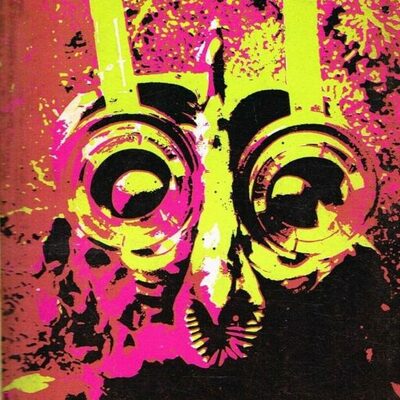
Short Book Reviews: Harry Harrison’s Captive Universe (1969), John Christopher’s The Death of Grass (1956), Nancy Kress’ An Alien Light (1987), and Joe Haldeman’s Mindbridge (1976)
My “to review” pile is growing and my memory of them is fading… hence short—far less analytical—reviews.
1. Mindbridge, Joe Haldeman (1976)
(Josh Kirby’s cover for the 1977 edition)
4.5/5 (Very Good)
Nominated for the 1977 Hugo Award
Joe Haldeman never struck me as an author who experimented with New Wave methods of telling. Mindbridge (1976) shatters my misconception. Imagine the basic plot of his masterpiece The Forever War (1975) combined with a fascinating experimental structure. The latter intrigued me far more than the former.
The Basic Plot: The Levant-Meyer Translation allows humans to instantaneously travel across the galaxy. The Tamer Agency sends its agents to investigate alien worlds. Of course, this is an incredibly dangerous activity…. The narrative follows Jacque Lefavre, a man with a troubled and violent past, who joins the organization. His team discovers a weird telepathic alien unleashing devastating consequences. I found the plot similar to that of The Forever War and someone bland. But…
The Way of Telling: Was Haldeman inspired to create a textual tapestry by John Brunner’s magisterial Stand on Zanzibar (1968)? Like Brunner, Haldeman integrates a myriad of invented textual fragments into the story. Sections from the Jacque’s autobiography, assignment rosters, personal reports, classroom dialogue transcriptions in play form, suit viewplate technical readouts, textbook excerpts, popular science books, statistical analyses, insurance manuals, news program transcripts, autopsy reports, schedules, filmic dialogue (simultaneous columns containing interpretations of facial expressions, interior thoughts, etc.), confidential briefings, songs with sheet music, animated cartoon scripts, instructions for camera movement, interviews, scientific articles with charts, far future speculations deduced by a psychic, advertisements, employee handbooks, memos stuffed in mailboxes, newspaper articles, psychiatric reports, etc. Imagine a historian collected all the relevant primary sources for a monograph—Haldeman explores all types of sources for his world-building and narrative….
In an usual way, Mindbridge most successfully conveys the realistic feel of a future bureaucracy—the reader really sees how the Tamer Agency is organized and its members evaluated. In the hands of most authors, this would weigh down the narrative’s forward movement. Haldeman’s use of micro-chapters help propel the story forward–it never felt bogged down by details.
A successful experiment!
I enjoyed this one far more than The Forever War (1975).
I have a handful of Haldeman novels and collections slated for this year. Recommended.
~
2. Captive Universe, Harry Harrison (1969)
(Paul Lehr’s cover for the 1st edition)
3.25/5 (Vaguely Good)
Harry Harrison’s Captive Universe (1969) contains a captivating premise: an Aztec society encased in an artificial world–the purpose and true nature of which is slowly uncovered. Harrison’s use of a limited perspective means that the reader learns about the world entirely through the eyes of the main character.
(*spoilers*)
The Fascinating: The narrative and the world! Chimal, the son of a disgraced Aztec father who slept with a woman from the wrong village, leads a tightly controlled existence in a valley cut-off from the rest of the world. He is expected to plant maize, perform the correct rituals, and find a wife. The world around him is a brutal one–the goddess Coatlicue with her “writhing serpent kirtle” kills those who defy the rules (7). The human priests kill the “abnormal” who must be possessed by an evil deity. Harrison’s Aztec world is a finely wrought one–it’s more evocative than the sequences that follow.
Chimal, chaffing against what is imposed upon him, questions his existence and the rules of his society. Defying the high priest’s command to marry, he discovers the true nature of Coatlicue, whose snakes are no longer animate when she disappears into the valley wall at night. Chimal discovers a door—the world outside his valley is even more confusing than the world inside.
The Less Fascinating: This is a rushed/short novel even by 1960s standards (160~ pages). The parts are all here but Harrison’s reluctance to dwell on the implications of the world weakens the effect. I am all for withholding information until our hero discovers it. However, when it is revealed, Chimal is utterly transformed and seems to understand everything (which, considering his upbringing, is impossible).
As with many stories of this subgenre, the reason for the voyage in the first place remains murky: Harrison suggests it was the delusional brainchild of an unnamed Earth dictator. Harrison’s big reveal, is sensible in a perverse way–and makes Chimal’s discoveries all more bittersweet.
Worth a purchase for fans of Harry Harrison and generation ships.
~
3. An Alien Light, Nancy Kress (1987)
(Ron Walotsky’s cover for the 1st edition)
4.5/5 (Very Good)
My first exposure to Nancy Kress’ SF is her first SF novel–An Alien Light (1987). It’s an impressive and controlled debut. A claustrophobic rumination on the nature of violence, Kress posits a sinister alien experiment where humans from diametrically opposed societies are forced to interact. An unrelenting and bleak novel–not for the faint-hearted!
On the planet Qom, over many generations two human societies–derived from one ancient colony—developed with distinct cultures. The first, Delysia, is a land of merchants and artisans. The second, Jela, is a warrior society with distinct social roles. In Jela, women fall into three categories: female warriors interact with only women (both homosocial and often, homosexual). Female prostitutes service male soldiers. And select women are chosen to birth the new generation of warriors.
The arrival of a mysterious alien structure, an impenetrable wall interrupts the continuous warfare between the city-states. At certain points the wall opens letting both Jelites and Delysians inside with promises of great wealth and new weapons. A certain breed of human makes the journey—those with traumatic pasts who seek new beginnings. The Ged built the wall and the enclosure inside to understand the nature of human violence. The experiment’s results might yield the Ged salvation in the face of an invasion fleet that threatens their home vessels.
Rarely have I been pulled into the lives of characters as much as An Alien Light. The story follows Ayrys, ostracized from Delysia and Jehane, a young Jelite warrior. In addition, the Ged are not presented as cruel alien overseers—understand the humans is a question of survival. Kress gives no easy answers.
Recommended. I will be tracking down more of her work.
3. The Death of Grass (variant title: No Blade of Grass), John Christopher (1956)
(Uncredited cover for the 1979 edition)
3/5 (Average)
I’ve struggled to formulate my thoughts on John Christopher’s The Death of Grass (variant title: No Blade of Grass) (1956) for months now. This is in part because I read and enjoyed Christopher’s A Wrinkle in the Skin (variant title: The Ragged Edge) (1965), which for whatever reason, remains far less known. And the far better novel….
I suspect The Death of Grass‘ plot is known to most SF fans: an uncontrollable disease devastates the world’s wheat population and any related grass species causing a world-crippling famine. The narrative follows John Custance (and his family and family friend) as he attempts to make his way across a lawless and violent England in order to read his brother’s farmstead. They encounter horrific violence. They practice horrific violence. They bemoan the lack of laws and the end of civilization but participate in all they bemoan. Christopher reveals his pessimistic world-view—the elites lie to the people and the people act like animals. This viewpoint mellows a bit with A Wrinkle in the Skin (1965), which I found to be a far more complex view of ethics in the post-apocalypse.
I am a fan of the post-apocalyptic subgenre. And I don’t have an easy explanation for my dislike of this early, and influential, text. But, check out the before-mentioned A Wrinkle in the Skin and Wilson Tucker’s stunning The Long Loud Silence (1952, revised 1969) first.
~
For more book reviews consult the INDEX
#1960s #1970s #1980s #aliens #avantGarde #bookReviews2 #experimental #harryHarrison #joeHaldeman #johnChristopher #nancyKress #paperbacks #sciFi #scienceFiction