#mathematics — Public Fediverse posts
Live and recent posts from across the Fediverse tagged #mathematics, aggregated by home.social.
-
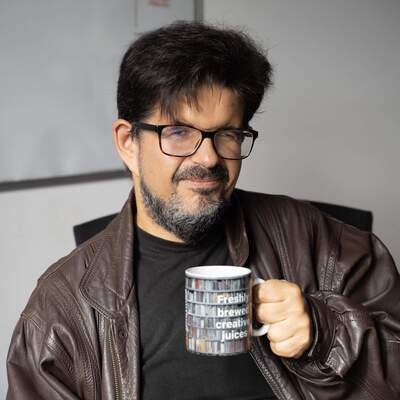
I really think mathematicians are convinced that they OWN Mathematics... This is bullshit!! OpenAI released the manuscripts that it believed to contain solutions to a set of famous difficult problems. It´s up to the academic community to really review these manuscripts and publish papers based on them. Bottom-line: "Damned if you do; Damned if you don't." Question: Are mathematicians really interested in the advancement of their field of knowledge or do they really just want to let the public know who owns Mathematics? Tsk, tsk, tsk...
"Mathematicians have a particular vision of progress that is informed by history and field-specific considerations. We reject OpenAI's assertion that this release advances our subject, and we urge mathematicians and the public to view the value of this publication model with due skepticism."
-

Color rings of nested circles in a spiral pattern in Python
https://rodstephensbooks.com/nested_circles_spiral.html
(I thought this was going to be my last digression into nested circles, but I've got one more coming, plus a digression to the digression.)
-

On the unreasonable effectiveness of mathematics. 🌱
https://athinkerinnature.substack.com/p/mathematics-invention-or-discovery
-

Problem for October 13th from the 2026 AMS Daily Epsilon of Math Calendar
@DailyEpsilon
#math #maths #mathematics #mathstodon -

Just released version 10.8.13 of 🐙passagemath, the pip-installable modularized portable compatible full-featured fork of #SageMath; a comprehensive #OpenSource #Mathematics system in #Python.
github.com/passagemath/...
Release passagemath-10.8.13 · ... -

You Truly Don't Understand What Just Happened to #Mathematics
-

Did you solve it? The treacherous puzzle of the round table
By Alex BellosThe solutions to today’s puzzles
-

"By relieving the brain of all unnecessary work, a good notation sets it free to concentrate on more advanced problems, and in effect, increases the mental power." – Alfred North Whitehead (1861–1947)
#quote #mathematics #math #maths #notation -

The usual definition of conditional probability, P(A∩B) = P(A|B) P(B), is necessary but not sufficient. Someone forgot to point out that P(A|B) is a probability measure on B. Let's fix that and see what new we learn.
https://www.skewray.com/articles/the-definition-of-conditional-probability-can-be-improved
-

A question about solitary waves to test your intuition before I show what we found.
The family of long-wave equations
\[ u_t - u_{xxt} = -u_x - u\,u_x + \alpha\,(u\,u_{xxx} + 2u_x u_{xx}) \]
contains the Benjamin-Bona-Mahony (BBM) equation of 1972 at \(\alpha = 0\). Every member has solitary waves \(u(x - ct)\), and in every member the crest of such a wave has height \(3(c-1)\), whatever \(\alpha\) is: at the crest, the first integral \((c - \alpha u)\,u'^2 = (c-1)\,u^2 - u^3/3\) leaves only \(u = 3(c-1)\).Now let a tall solitary wave (height 1.2, speed 1.4) overtake a small one (height 0.3, speed 1.1) on a periodic channel. In most members the two waves come out of the collision slightly changed, and a train of small ripples stays behind. For which \(\alpha\) do they come out clean, with no ripples at all?
Vote with your intuition. The answer, with pictures and the theorem behind it, comes on Tuesday.
-

I wish more programmers understood that while #mathematics is done for humans to read, and that proofs are a worthy result in that they allow techniques to be developed and shared and more maths to be created, writing code (I’m not saying software engineering) has no goal other than talking to a machine.
When we talk about software engineering outside of the context of shipping something, we don’t use “code” as we think of what we do daily. We write blogs, talk to each other, share diagrams and pseudocode, and the more precise we try to be when _talking to humans_, the more our communication starts to look like maths (coincidence? I don’t think so) or design briefs/systems/prototypes/… (which is where our software meets the real world).
This fetishization of code as if somehow being able to know which library to import to do X is why we haven’t really progressed in terms of software design and talking about it since the 60ies or so (being a bit hyperbolic here, and I’m not talking about academia because I don’t really know much about it). We have some design patterns that slowly trickle into practice, we have a bunch of category pilled concepts seeping through here and there, a few minimally more inventive type systems, but we haven’t really made any progress, the easiest way to build elegant software is still to hide a lisp interpreter / compiler somewhere in the stack.
I can’t but welcome a world where we can elevate how we talk and share thinking about software engineering / design. I am collaborating with a designer who hasn’t coded until last year, and we share plenty of ideas _every day_ because all of the menial coding stuff is gone. We invent CAD compilers and design systems for CAD compilers which we then turn into a skateboard game which is then used as the base physics engine for further work, and we focus on what matters / what advances our discourse. Attaching a few links and screenshots.
I contribute some knowledge about say, numerical algorithms or other concepts he can explore, I get back something looking great and integrating concepts I ways I didn’t think of, often in very nuanced ways that transcend code.
These are all tiny 200kB html.
-

Logic for Programmers by Hillel Wayne is on sale on Leanpub! Its suggested price is $49.99; get it for $36.00 with this coupon: https://leanpub.com/logic/c/LeanpubWeeklySale20261006 #software_engineering #automated_software_testing #mathematics
-

I have been studying the #Antikythera Mechanism—the ancient Greek #computer—for many years. More recently, I built virtual and mechanical #moon phase calculators myself, based on the #mathematics and #astronomy of #antiquity. „Meton“ correctly predicts a solar eclipse for February 6, 2027.
https://www.thomasweibel.ch/meton/
The University of Applied Sciences St. Pölten has published the paper about my projects.
https://phaidra.ustp.at/detail/o:7821
#opendata #openglam #history #sciencehistory #digitalhumanities
-
A falling object produces a consequence whether or not the organism has a concept of gravity. So the organism is continuously pressured to compress recurring relationships in the world into forms that allow prediction.
That is already mathematics in embryo. 🌱
https://athinkerinnature.substack.com/p/mathematics-invention-or-discovery -
Theorem of the Day (October 12, 2026) : Karp’s Theorem (Detail)
Source : Theorem of the Day / Robin Whitty
pdf : https://www.theoremoftheday.org/LogicAndComputerScience/VCNPC/TotDVCNPC.pdf
notes : https://www.theoremoftheday.org/Resources/TheoremNotes.htm#187 -

Class 9th Mathematics — Chapter 1: Number Systems
1. Chapter Overview & Executive Summary In Class 9 Mathematics, Chapter 1, "Number Systems," synthesizes all previous arithmetic learning into the complete continuum of Real Numbers. While previous grades established natural numbers (N), whole numbers (W), integers (Z), and rational numbers (Q), this chapter formally introduces Irrational Numbers—quantities that cannot be written in the fractional form p/q. Together, rational and irrational numbers completely populate the continuous […]https://thebrokencap.wordpress.com/2026/10/12/class-9th-mathematics-chapter-1-number-systems/
-
कक्षा 8 गणित अध्याय 1: एक वर्ग और एक घन — संपूर्ण हिंदी नोट्स, सूत्र, उदाहरण और प्रश्न-उत्तर
गणित में कुछ संख्याएँ ऐसी होती हैं जिन्हें किसी संख्या को स्वयं से गुणा करके प्राप्त किया जाता है। उदाहरण के लिए, 5 को 5 से गुणा करने पर 25 प्राप्त होता है। इसी प्रकार 4 को तीन बार गुणा करने पर 64 […]https://thebrokencap.wordpress.com/2026/10/12/class-8-maths-chapter-1-ek-varg-aur-ek-ghan/
-

Can you solve it? The treacherous riddle of the round table https://www.theguardian.com/science/2026/oct/12/can-you-solve-it-the-treacherous-riddle-of-the-round-table #Mathematics #Mathematics #Education #Science
-
Can you solve it? The treacherous riddle of the round table
By Alex BellosA puzzle for the ages
#Mathematics #Mathematics #Education #Science #TheGuardian #AlexBellos
-
Problem for October 12th from the 2026 AMS Daily Epsilon of Math Calendar
@DailyEpsilon
#math #maths #mathematics #mathstodon -
Mastering Differential Calculus & Curve Tracing for JEE Advanced
Master Differential Calculus and Curve Tracing for JEE Advanced with rigorous theory, series expansions, LMVT applications, and step-by-step solved problems. -

-
In fact I cared SO MUCH that I was able to face the adversity (and ngl, I wasn't showing the best behaviour either), that I spent nights reading up on ways to make my games better, to make them go faster, to make them more fun. Do you think LLMs are going to change anything about that drive especially kids have to explore and (at least back then) for boys and lesser extent girls (thanks society) to one--up each other?
No, of course it won't. What is going to kill that innate curiosity and willingness to put effort into it is bullying and nihilism.
Please please please check yourself, we need solidarity and reflection now more than ever. Please look at how the #mathematics community handles their current moment.
-

OpenAI’s math solutions aren’t meeting the field’s standards yet
OpenAI’s flood of proofs deviated from the guidelines set by a group of mathematical researchers consulted by the frontier lab.
https://justpaste.in/news/openais-math-solutions-arent-meeting-the-fields-standards-yet/
-

Recursively draw rings of nested circles in Python
-

Italian mathematician Vito Volterra, who died OTD in 1940, is known for his contributions to mathematical biology and integral equations, and being one of the founders of functional analysis https://cromwell-intl.com/travel/italy/trains/?s=mb #travel #Italy #mathematics
-
I think I can wrap this up.
1) Assert P(A|B) is a probability measure on B.
2) The relevant σ-algebra on B is {∅,A∩B,Aᶜ∩B,B}.
3) Any probability measure on B must satisfy:
• P(∅|B) = 0
• P(B|B) = 1
• P(A∩B|B) + P(Aᶜ∩B|B) = 14) Therefore, even if P(B) = 0,
• B⊆A ⇒ P(A|B) = 1
• B⊆Aᶜ ⇒ P(A|B) = 0
• P(A|B) + P(Aᶜ|B) = 15) Any violation of (4) implies P(A|B) is not a probability measure.
-
"Without [the language of mathematical analysis], most of the intimate analogies of things would have remained forever unknown to us ; and we should forever have been ignorant of the internal harmony of the world." – Henri Poincaré (1854-1912)
#quote #mathematics #math #maths -

"I'm scared that I've lost the math I love. I'm scared that this has taken away the things that make me love doing these subjects".
A great perspective. I feel the same way about software engineering, with the addition that the ecological / energy impacts take a great place in the way I personally see things.
