Search
1000 results for “fluiddyn”
-

Rip Currents and Hurricanes
When it comes to the beach, looks can be deceiving. That calm-looking water to the side of big crashing waves may actually be a rip current that carries water back out to the ocean. Rip currents are a result of conservation of mass; just as waves carry water to the shore, something has to carry that incoming water back out to the ocean. Depending on the local topography, that outflow could be below the water surface, creating an undertow, or along the surface, as a rip current.
Even when far offshore, hurricanes can trigger unexpected and strong rip currents, largely because they create bigger waves that travel shoreward. Those waves can also change the depth and layout of the underwater shoreline, potentially exacerbating rip currents.
For more on rip currents, including the latest guidance on how to escape one, check out this article. (Image credit: A. Marlowe; via SciAm)
#conservationOfMass #fluidDynamics #hurricanes #ocean #oceanWaves #physics #ripCurrents #science
-

Rip Currents and Hurricanes
When it comes to the beach, looks can be deceiving. That calm-looking water to the side of big crashing waves may actually be a rip current that carries water back out to the ocean. Rip currents are a result of conservation of mass; just as waves carry water to the shore, something has to carry that incoming water back out to the ocean. Depending on the local topography, that outflow could be below the water surface, creating an undertow, or along the surface, as a rip current.
Even when far offshore, hurricanes can trigger unexpected and strong rip currents, largely because they create bigger waves that travel shoreward. Those waves can also change the depth and layout of the underwater shoreline, potentially exacerbating rip currents.
For more on rip currents, including the latest guidance on how to escape one, check out this article. (Image credit: A. Marlowe; via SciAm)
#conservationOfMass #fluidDynamics #hurricanes #ocean #oceanWaves #physics #ripCurrents #science
-

“Trinity”
Inspired by the film Oppenheimer, artist Thomas Blanchard created “Trinity,” a short film imagining a nuclear explosion with macro-scale fluid motion. There’s clever video editing and compositing in this video, but no CGI. Instead, Blanchard filmed fire, sparklers, alcohol inks, pigments and more up close and in stunning detail. As always, his work is a reminder of the amazing possibilities of analog-based art. (Video and image credit: T. Blanchard)
#droplets #fluidDynamics #fluidsAsArt #marangoniEffect #physics #science #turbulence
-

Fascinating shots of the shockwaves of two supersonic jets taken by NASA.
-

I've made a poster for next week's #AGU meeting in Chicago. It is about my ongoing (and still exploratory) work on #TorsionalOscillations in the #FluidOuterCore of the #Earth.
#FluidDynamics #WhatAboutMagneticFields -

What Makes a Dune?
Wind and water can form sandy ripples in a matter of minutes. Most will be erased, but some can grow to meter-scale and beyond. What distinguishes these two fates? Researchers used a laser scanner to measure early dune growth in the Namib Desert to see. They found that the underlying surface played a big role in whether sand gathered or disappeared from a given spot. Surfaces like gravel, rock, or moistened sand were better for starting a dune than loose sand was. Each of these surface types affected how much sand the wind could carry off, as well as whether grains bounced or stuck where they landed. Every trapped sand grain made the surface a little rougher, increasing the chances of trapping the next sand grain. Over time, the gathering sand forms a bump that affects the wind flow nearby, further shaping the proto-dune. As long as the wind isn’t strong enough to scour the surface clean, it will keep gathering sand as the process continues. (Image credit: M. Gheidarlou; research credit: C. Rambert et al.; via Eos)
#aeolianProcesses #fluidDynamics #geophysics #physics #planetaryScience #sand #sandDunes #sandRipples #science
-
Soaring Through the Pillars of Creation
The Pillars of Creation are an iconic feature nestled within the Eagle Nebula. For decades, the public has admired Hubble’s images of this stellar nursery, and, in this video, we get to fly between the pillars, shifting between Hubble’s visible light imagery and JWST’s infrared views. In visible light, glowing dust obscures the interior of the pillars, drawing our eyes instead to the dusty shapes eroded by the stellar winds of these young stars. In infrared wavelengths, we see further into the pillars, revealing individual stars burning at the ends of the pillars’ fingers. Being able to peer at the same problem through different techniques — here visible and infrared light — reveals more to scientists than either mode can on its own. (Image/video credit: G. Bacon et al.; via Gizmodo)
A mosaic of Hubble and JWST’s views of the Pillars of Creation, in visible and infrared light, respectively.#experimentalFluidDynamics #fluidDynamics #fluidsAsArt #nebula #physics #science #turbulence
-
Fractal Fingers
As bizarre as the branching fractal fingers of the Saffman-Taylor instability look, they’re quite a common phenomenon. In his video, Steve Mould demonstrates how to make them by sandwiching a viscous liquid like school glue between two acrylic sheets and then pulling them apart. The more formal lab-version of this is the Hele-Shaw cell, which he also demonstrates. But you may have come across the effect when pealing up a screen protector or in dealing with a cracked phone screen. In all of these cases, a less viscous fluid — specifically air — is forcing its way into a more viscous fluid, something that it cannot manage without the fluid interface fracturing. (Video and image credit: S. Mould)
#flowVisualization #fluidDynamics #fractals #HeleShawCell #instability #physics #SaffmanTaylorInstability #science #viscousFingering
-
“The Ballet of Colors”
Thomas Blanchard’s short film “The Ballet of Colors” plunges viewers into a warm spectrum of roiling oil and paint. Fluid dynamically speaking, it could be subtitled “the Plateau-Rayleigh instability” thanks to its focus on retracting paint ruptures and ligaments breaking into droplets. Unlike some other videos of this genre, Blanchard uses a high-speed camera here, filming the action at 1,000 frames per second, and the result is smooth, crisply focused, and absolutely delectable. (Video and image credit: T. Blanchard et al.)
#droplets #fluidDynamics #fluidsAsArt #instability #physics #PlateauRayleighInstability #science
-
“Spines”
Water droplets cling to spine-covered plant life in this series from photographer Tom Leighton. The hairs are hydrophobic — notice how spherical the drops appear. Many plants make parts of their leaves and stems hydrophobic in order to redirect water toward their roots, where it can be taken in. Others use hair-like awns to collect and draw in dew that supplements their water capture. (Image credit: T. Leighton; via Colossal)
#biology #fluidDynamics #fluidsAsArt #hydrophobic #physics #plants #science
-

Friday means time for #FieldPhotoFriday (or if you prefer #FridayFieldworkPhoto #FridayFieldPhoto)
These were some of the first #IceFlowers I ever saw on #SeaIce this spring. Made me realise there was more going on in that part of the #Cryosphere than I'd imagined and I should pay it more attention!
Astonishingly beautiful and fragile, they grow on #SeaIceleads by evaporation+ condensation. Fascinating #FluidDynamics and surprisingly #salty tasting!
-

Friday means time for #FieldPhotoFriday (or if you prefer #FridayFieldworkPhoto #FridayFieldPhoto)
These were some of the first #IceFlowers I ever saw on #SeaIce this spring. Made me realise there was more going on in that part of the #Cryosphere than I'd imagined and I should pay it more attention!
Astonishingly beautiful and fragile, they grow on #SeaIceleads by evaporation+ condensation. Fascinating #FluidDynamics and surprisingly #salty tasting!
-
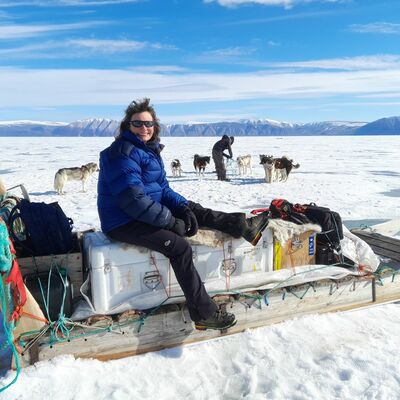
Friday means time for #FieldPhotoFriday (or if you prefer #FridayFieldworkPhoto #FridayFieldPhoto)
These were some of the first #IceFlowers I ever saw on #SeaIce this spring. Made me realise there was more going on in that part of the #Cryosphere than I'd imagined and I should pay it more attention!
Astonishingly beautiful and fragile, they grow on #SeaIceleads by evaporation+ condensation. Fascinating #FluidDynamics and surprisingly #salty tasting!
-

Friday means time for #FieldPhotoFriday (or if you prefer #FridayFieldworkPhoto #FridayFieldPhoto)
These were some of the first #IceFlowers I ever saw on #SeaIce this spring. Made me realise there was more going on in that part of the #Cryosphere than I'd imagined and I should pay it more attention!
Astonishingly beautiful and fragile, they grow on #SeaIceleads by evaporation+ condensation. Fascinating #FluidDynamics and surprisingly #salty tasting!
-

Liquid analog play captured with my macro lens. Still learning, still enjoying the spontaneity of water.
#fluidart #fluiddynamics #audiovisualart #visualart #newmediaart #liquidlight #liquid #water #scifiart #macrophotography #analog #techno #vj #ink #space #cosmos
-

This Ball is Impossible to Hit - YouTube
https://www.youtube.com/watch?v=T9xsTO6ujqM&t=14s&ab_channel=MarkRober
#MarkRober #WiffleBall #Aerodynamics #FluidDynamics #Physics -

In 1904, Ludwig Prandtl simplified calculations of aerodynamic flow by separating the part of the flow where it is affected by drag. #Poetry #Science #History #FluidDynamics #Prandtl (https://sharpgiving.com/thebookofscience/items/p1904g.html)
-

“Soap Bubble Bonanza
This video offers an artistic look at a soap bubble bursting. The process is captured with high-speed video combined with schlieren photography, a technique that makes visible subtle density variations in the air. The bubbles all pop spontaneously, once enough of their cap drains or evaporates away for a hole to form. That hole retracts quickly; the acceleration of the liquid around the bubble’s spherical shape makes the retracting film break into droplets, seen as falling streaks near the bottom of the bubble. The retraction also affects air inside the bubble, making the air that touched the film curl up on itself, creating turbulence. Then, as the film completes its retraction, it pushes a plume of the once-interior air upward, as if the interior of the bubble is turning itself inside out. (Video and image credit: D. van Gils)
#flowVisualization #fluidDynamics #fluidsAsArt #physics #schlierenPhotography #science #soapBubbles
-
“Soap Bubble Bonanza
This video offers an artistic look at a soap bubble bursting. The process is captured with high-speed video combined with schlieren photography, a technique that makes visible subtle density variations in the air. The bubbles all pop spontaneously, once enough of their cap drains or evaporates away for a hole to form. That hole retracts quickly; the acceleration of the liquid around the bubble’s spherical shape makes the retracting film break into droplets, seen as falling streaks near the bottom of the bubble. The retraction also affects air inside the bubble, making the air that touched the film curl up on itself, creating turbulence. Then, as the film completes its retraction, it pushes a plume of the once-interior air upward, as if the interior of the bubble is turning itself inside out. (Video and image credit: D. van Gils)
#flowVisualization #fluidDynamics #fluidsAsArt #physics #schlierenPhotography #science #soapBubbles
-
“Soap Bubble Bonanza
This video offers an artistic look at a soap bubble bursting. The process is captured with high-speed video combined with schlieren photography, a technique that makes visible subtle density variations in the air. The bubbles all pop spontaneously, once enough of their cap drains or evaporates away for a hole to form. That hole retracts quickly; the acceleration of the liquid around the bubble’s spherical shape makes the retracting film break into droplets, seen as falling streaks near the bottom of the bubble. The retraction also affects air inside the bubble, making the air that touched the film curl up on itself, creating turbulence. Then, as the film completes its retraction, it pushes a plume of the once-interior air upward, as if the interior of the bubble is turning itself inside out. (Video and image credit: D. van Gils)
#flowVisualization #fluidDynamics #fluidsAsArt #physics #schlierenPhotography #science #soapBubbles
-
Ultra-Soft Solids Flow By Turning Inside Out
Can a solid flow? What would that even look like? Researchers explored these questions with an ultra-soft gel (think 100,000 times softer than a gummy bear) pumped through a ring-shaped annular pipe. Despite its elasticity — that tendency to return to an original shape that distinguishes solids from fluids — the gel does flow. But after a short distance, furrows form and grow along the gel’s leading edge.
Front view of an ultra-soft solid flowing through an annular pipe. The furrows forming along the face of the gel are places where the gel is essentially turning itself inside out.Since the gel alongside the pipe’s walls can’t slide due to friction, the gel flows by essentially turning itself inside out. Inner portions of the gel flow forward and then split off toward one of the walls as they reach the leading edge. This eversion builds up lots of internal stress in the gel, and furrowing — much like crumpling a sheet of paper — relieves that stress. (Image and research credit: J. Hwang et al.; via APS News)
#flowVisualization #fluidDynamics #instability #physics #pipeFlow #science #softMatter #solidMechanics #stress
-
Ultra-Soft Solids Flow By Turning Inside Out
Can a solid flow? What would that even look like? Researchers explored these questions with an ultra-soft gel (think 100,000 times softer than a gummy bear) pumped through a ring-shaped annular pipe. Despite its elasticity — that tendency to return to an original shape that distinguishes solids from fluids — the gel does flow. But after a short distance, furrows form and grow along the gel’s leading edge.
Front view of an ultra-soft solid flowing through an annular pipe. The furrows forming along the face of the gel are places where the gel is essentially turning itself inside out.Since the gel alongside the pipe’s walls can’t slide due to friction, the gel flows by essentially turning itself inside out. Inner portions of the gel flow forward and then split off toward one of the walls as they reach the leading edge. This eversion builds up lots of internal stress in the gel, and furrowing — much like crumpling a sheet of paper — relieves that stress. (Image and research credit: J. Hwang et al.; via APS News)
#flowVisualization #fluidDynamics #instability #physics #pipeFlow #science #softMatter #solidMechanics #stress
-
Ultra-Soft Solids Flow By Turning Inside Out
Can a solid flow? What would that even look like? Researchers explored these questions with an ultra-soft gel (think 100,000 times softer than a gummy bear) pumped through a ring-shaped annular pipe. Despite its elasticity — that tendency to return to an original shape that distinguishes solids from fluids — the gel does flow. But after a short distance, furrows form and grow along the gel’s leading edge.
Front view of an ultra-soft solid flowing through an annular pipe. The furrows forming along the face of the gel are places where the gel is essentially turning itself inside out.Since the gel alongside the pipe’s walls can’t slide due to friction, the gel flows by essentially turning itself inside out. Inner portions of the gel flow forward and then split off toward one of the walls as they reach the leading edge. This eversion builds up lots of internal stress in the gel, and furrowing — much like crumpling a sheet of paper — relieves that stress. (Image and research credit: J. Hwang et al.; via APS News)
#flowVisualization #fluidDynamics #instability #physics #pipeFlow #science #softMatter #solidMechanics #stress
-

We are delighted to announce that the ESI Medal for the year 2023 will be conferred on Prof Isabelle Gallagher from
École normale supérieure, who is honoured for her numerous groundbreaking and highly significant achievements in the #MathematicalTheory of #FluidDynamics.The #AwardCeremony will take place on 9th November 2023 at the
@ESIVienna.Stay tuned on our website:
👉 https://esi.ac.at/news/n37
https://esi.ac.at/esi-medal 👈#AtmosphericSciences #atmosphere #OceanicSciences #oceanography #Oceans
-

Fractal Fingers
As bizarre as the branching fractal fingers of the Saffman-Taylor instability look, they’re quite a common phenomenon. In his video, Steve Mould demonstrates how to make them by sandwiching a viscous liquid like school glue between two acrylic sheets and then pulling them apart. The more formal lab-version of this is the Hele-Shaw cell, which he also demonstrates. But you may have come across the effect when pealing up a screen protector or in dealing with a cracked phone screen. In all of these cases, a less viscous fluid — specifically air — is forcing its way into a more viscous fluid, something that it cannot manage without the fluid interface fracturing. (Video and image credit: S. Mould)
#flowVisualization #fluidDynamics #fractals #HeleShawCell #instability #physics #SaffmanTaylorInstability #science #viscousFingering
-
Fractal Fingers
As bizarre as the branching fractal fingers of the Saffman-Taylor instability look, they’re quite a common phenomenon. In his video, Steve Mould demonstrates how to make them by sandwiching a viscous liquid like school glue between two acrylic sheets and then pulling them apart. The more formal lab-version of this is the Hele-Shaw cell, which he also demonstrates. But you may have come across the effect when pealing up a screen protector or in dealing with a cracked phone screen. In all of these cases, a less viscous fluid — specifically air — is forcing its way into a more viscous fluid, something that it cannot manage without the fluid interface fracturing. (Video and image credit: S. Mould)
#flowVisualization #fluidDynamics #fractals #HeleShawCell #instability #physics #SaffmanTaylorInstability #science #viscousFingering
-
Fractal Fingers
As bizarre as the branching fractal fingers of the Saffman-Taylor instability look, they’re quite a common phenomenon. In his video, Steve Mould demonstrates how to make them by sandwiching a viscous liquid like school glue between two acrylic sheets and then pulling them apart. The more formal lab-version of this is the Hele-Shaw cell, which he also demonstrates. But you may have come across the effect when pealing up a screen protector or in dealing with a cracked phone screen. In all of these cases, a less viscous fluid — specifically air — is forcing its way into a more viscous fluid, something that it cannot manage without the fluid interface fracturing. (Video and image credit: S. Mould)
#flowVisualization #fluidDynamics #fractals #HeleShawCell #instability #physics #SaffmanTaylorInstability #science #viscousFingering
-
Flow Behind Viscous Fingers
Nature is full of branching patterns: trees, lighting, rivers, and more. In fluid dynamics, our prototypical branching pattern is the Saffman-Taylor instability, created when a less viscous fluid is injected into a more viscous one in an confined space. Most attention in this problem has gone to the branching interface where the two fluids meet, but recently, a team has examined the flow away from the fingers by alternately injecting dyed and undyed fluid to visualize what goes on. That’s what we see here. Notice how the central dye rings, far from the branching fingers, still appear circular. Yet, even a few centimeters away from the fingers, the dye is starting to show ripples that correspond to the fingers. That’s an indication that the pressure gradient generated at the tips of the fingers is pretty far-reaching! (Image and research credit: S. Gowen et al.)
#flowVisualization #fluidDynamics #HeleShawCell #physics #SaffmanTaylorInstability #science #surfaceTension
-
Flow Behind Viscous Fingers
Nature is full of branching patterns: trees, lighting, rivers, and more. In fluid dynamics, our prototypical branching pattern is the Saffman-Taylor instability, created when a less viscous fluid is injected into a more viscous one in an confined space. Most attention in this problem has gone to the branching interface where the two fluids meet, but recently, a team has examined the flow away from the fingers by alternately injecting dyed and undyed fluid to visualize what goes on. That’s what we see here. Notice how the central dye rings, far from the branching fingers, still appear circular. Yet, even a few centimeters away from the fingers, the dye is starting to show ripples that correspond to the fingers. That’s an indication that the pressure gradient generated at the tips of the fingers is pretty far-reaching! (Image and research credit: S. Gowen et al.)
#flowVisualization #fluidDynamics #HeleShawCell #physics #SaffmanTaylorInstability #science #surfaceTension
-
Flow Behind Viscous Fingers
Nature is full of branching patterns: trees, lighting, rivers, and more. In fluid dynamics, our prototypical branching pattern is the Saffman-Taylor instability, created when a less viscous fluid is injected into a more viscous one in an confined space. Most attention in this problem has gone to the branching interface where the two fluids meet, but recently, a team has examined the flow away from the fingers by alternately injecting dyed and undyed fluid to visualize what goes on. That’s what we see here. Notice how the central dye rings, far from the branching fingers, still appear circular. Yet, even a few centimeters away from the fingers, the dye is starting to show ripples that correspond to the fingers. That’s an indication that the pressure gradient generated at the tips of the fingers is pretty far-reaching! (Image and research credit: S. Gowen et al.)
#flowVisualization #fluidDynamics #HeleShawCell #physics #SaffmanTaylorInstability #science #surfaceTension