#mesopotamia — Public Fediverse posts
Live and recent posts from across the Fediverse tagged #mesopotamia, aggregated by home.social.
-

Nimrud’s hidden city comes into view, revealing life beyond the Assyrian royal center
For nearly 180 years, archaeologists studying Nimrud in northern Iraq have focused on palaces, temples, and royal buildings. A new project is shifting attention to the vast lower city, where most of the Assyrian capital’s people lived...
More information: https://archaeologymag.com/2026/09/nimruds-hidden-city-comes-into-view/
Follow @archaeology
#archaeology #archeology #archaeologynews #nimrud #Assyrian #mesopotamia
-

Nimrud’s hidden city comes into view, revealing life beyond the Assyrian royal center
For nearly 180 years, archaeologists studying Nimrud in northern Iraq have focused on palaces, temples, and royal buildings. A new project is shifting attention to the vast lower city, where most of the Assyrian capital’s people lived...
More information: https://archaeologymag.com/2026/09/nimruds-hidden-city-comes-into-view/
Follow @archaeology
#archaeology #archeology #archaeologynews #nimrud #Assyrian #mesopotamia
-

Nimrud’s hidden city comes into view, revealing life beyond the Assyrian royal center
For nearly 180 years, archaeologists studying Nimrud in northern Iraq have focused on palaces, temples, and royal buildings. A new project is shifting attention to the vast lower city, where most of the Assyrian capital’s people lived...
More information: https://archaeologymag.com/2026/09/nimruds-hidden-city-comes-into-view/
Follow @archaeology
#archaeology #archeology #archaeologynews #nimrud #Assyrian #mesopotamia
-

Nimrud’s hidden city comes into view, revealing life beyond the Assyrian royal center
For nearly 180 years, archaeologists studying Nimrud in northern Iraq have focused on palaces, temples, and royal buildings. A new project is shifting attention to the vast lower city, where most of the Assyrian capital’s people lived...
More information: https://archaeologymag.com/2026/09/nimruds-hidden-city-comes-into-view/
Follow @archaeology
#archaeology #archeology #archaeologynews #nimrud #Assyrian #mesopotamia
-

Nimrud’s hidden city comes into view, revealing life beyond the Assyrian royal center
For nearly 180 years, archaeologists studying Nimrud in northern Iraq have focused on palaces, temples, and royal buildings. A new project is shifting attention to the vast lower city, where most of the Assyrian capital’s people lived...
More information: https://archaeologymag.com/2026/09/nimruds-hidden-city-comes-into-view/
Follow @archaeology
#archaeology #archeology #archaeologynews #nimrud #Assyrian #mesopotamia
-

TIL the first museum of ancient Mesopotamian archeology was in... Ancient Mesopotamia
(It was also the first _museum_)
https://mymodernmet.com/ennigaldi-nanna-founded-the-first-museum-in-the-world/
-

TIL the first museum of ancient Mesopotamian archeology was in... Ancient Mesopotamia
(It was also the first _museum_)
https://mymodernmet.com/ennigaldi-nanna-founded-the-first-museum-in-the-world/
-

TIL the first museum of ancient Mesopotamian archeology was in... Ancient Mesopotamia
(It was also the first _museum_)
https://mymodernmet.com/ennigaldi-nanna-founded-the-first-museum-in-the-world/
-

TIL the first museum of ancient Mesopotamian archeology was in... Ancient Mesopotamia
(It was also the first _museum_)
https://mymodernmet.com/ennigaldi-nanna-founded-the-first-museum-in-the-world/
-

TIL the first museum of ancient Mesopotamian archeology was in... Ancient Mesopotamia
(It was also the first _museum_)
https://mymodernmet.com/ennigaldi-nanna-founded-the-first-museum-in-the-world/
-

🔥 TRENDING NOW: Sumerian Tablets: A Deeper Understanding of the Oldest Known Written Language
📈 Trending with 100K+ readers! The truth is stranger than fiction! ✨
https://www.ancient-origins.net/artifacts-ancient-writings/sumerian-tablets-0011895
#AncientOrigins #History #Archaeology #Sumerians #Mesopotamia #Artifacts #Archaeological #HumanOrigins #Evolution #Fascinating -

-

Women’s #Cooperatives: a glimpse into #Rojava ’s economic model – Co-operation in #Mesopotamia
https://mesopotamia.coop/womens-cooperatives-a-glimpse-into-rojavas-economic-model/
-
🗿 ARCHAEOLOGICAL BREAKTHROUGH: Zecharia Sitchin and the Mistranslation of Sumerian Texts
📈 Trending with 100K+ readers! What do you think? 🤔
https://www.ancient-origins.net/human-origins-religions/zecharia-sitchin-and-mistranslation-sumerian-texts-009442
#AncientOrigins #History #Archaeology #Sumerians #Mesopotamia #HumanOrigins #Evolution #DidYouKnow #Civilization #Amazing -

Poema de Gilgamesh, Anónimo
Si tienen ganas de leer la aventura más antigua de la humanidad, este relato épico escrito en tablillas de arcilla hace más de 4000 años en Mesopotamia es una parada obligatoria. La historia nos cuenta la vida de Gilgamesh, el poderoso pero arrogante rey de la ciudad de Uruk, quien se creía invencible hasta que los dioses deciden crear a Enkidu, un hombre salvaje que vive en los bosques con los animales, para que sea su rival y le ponga un freno a su orgullo. Con un estilo de narración directo y muy ameno que se siente como una plática entre conocidos, el texto nos lleva por el viaje de estos dos personajes que pasan de ser enemigos a convertirse en los mejores amigos, enfrentándose juntos a monstruos gigantescos y a los caprichos de las deidades.
El verdadero corazón de este relato llega con la pérdida, cuando Enkidu enferma y muere por un castigo divino, dejando a Gilgamesh completamente destrozado y con un miedo terrible a seguir el mismo camino. A partir de ese momento, la historia deja a un lado las batallas de héroes para convertirse en una búsqueda desesperada por los confines de la Tierra, donde el rey busca el secreto de la inmortalidad para escapar de la muerte. Es una lectura sumamente indispensable porque retrata de forma genial las mismas preocupaciones, dolores y dudas sobre el destino humano que seguimos teniendo hoy en día, viendo que abajo de las capas de polvo de la historia, las personas de hace milenios sentían y sufrían exactamente igual que nosotros.
— A. Eldritch, Periodista, Locutor, podcaster y bloger del fediverso
Alt text via @altbot y @TeLoDescribot
#RecomendaciónLiteraria #Historia #Mitología #Mesopotamia #Libros
-

Luchadores de bronce sumerios del periodo dinástico temprano IIIa (2600-2370 a.C.) encontrados en el templo de la diosa madre Nintu de la antigua Tutub. Se trataba de un combate realizado durante el festival Akitu de Año Nuevo. Parece que debían tirar el recipiente de la cabeza del rival. 🏛️Museo Nacional de Irak #sumeria #sumer #mesopotamia
-
¿Sabían que el Imperio Acadio unificó a diferentes pueblos bajo un mismo gobierno y creó el primer sistema postal regulado de la historia?
Esta gran civilización se estableció en la Mesopotamia central durante el siglo XXIV antes de nuestra era, gracias a las campañas militares de su fundador, el rey Sargón de Acad. Al unificar las ciudades-estado sumerias y extender sus fronteras, la administración imperial se topó con el reto de mantener comunicadas a las provincias lejanas con la capital. Para solucionar este problema, el gobierno diseñó una red organizada de mensajeros que recorrían los caminos del territorio llevando escritos oficiales sobre tablillas de arcilla cocida.
Para garantizar que el contenido de los mensajes fuera confidencial y no sufriera alteraciones en el camino, los escribas inventaron un método sumamente ingenioso que funcionaba como los sobres de papel que conocemos hoy en día. Envolvían la tablilla original del mensaje con una fina capa externa de arcilla fresca, grababan el nombre del destinatario en el exterior y estampaban el sello cilíndrico personal del rey o del gobernador correspondiente. Al endurecerse, este recubrimiento exterior protegía el texto interno, obligando a romper la costra de arcilla para poder leer la carta y asegurando que solo la persona indicada tuviera acceso a la información gubernamental.
— A. Eldritch, Periodista, Locutor, podcaster y bloger del fediverso
Alt text via @altbot y @TeLoDescribot
#datocurioso #Historia #Acadios #Mesopotamia #Antigüedad #Cultura
-
-

Writing was invented by accountants, not poets.
The earliest known scripts were record keeping, things like the size of a harvest. That makes sense once you see what writing actually does: it breaks the data processing limit of the human mind. Our working memory holds roughly 7 items, plus or minus 2, and it did so in Mesopotamia five thousand years ago too.
-
🌟 INCREDIBLE FIND: The Sumerian King List Reveals the Origin of Mesopotamian Kingship
🔥 Over 500K people have read this incredible story! This will blow your mind! 🤯
https://www.ancient-origins.net/artifacts-ancient-writings/sumerian-king-list-001287
#AncientOrigins #History #Archaeology #Sumerians #Mesopotamia #Artifacts #Archaeological #HumanOrigins #Evolution #Incredible -
💫 AMAZING REVELATION: The Origins of Human Beings According to Ancient Sumerian Texts
🔥 Over 500K people have read this incredible story! The truth is stranger than fiction! ✨
https://www.ancient-origins.net/human-origins-folklore/sumerian-texts-0065
#AncientOrigins #History #Archaeology #Sumerians #Mesopotamia #HumanOrigins #Evolution #Heritage #DidYouKnow #Civilization -
Archaeologists generally regard Mesopotamia as "the beginning of civilization" but shocking new evidence that defies comprehension clearly suggests that highly advanced civilizations existed in pre-history.
https://shop.ancient-origins.net/collections/videos/products/ancient-origins-artifacts-and-anomalies
#Archaeology #Civilization #AncientHistory #Mesopotamia #Prehistory #Artifacts #Documentary -
?? TRENDING NOW: Reading the So-Called Sumerian Seals Relating to Gods from Outer Space
?? Trending with 100K+ readers! Prepare to be amazed! ??
https://www.ancient-origins.net/artifacts-ancient-writings/reading-so-called-sumerian-seals-relating-gods-outer-space-009737
#AncientOrigins #History #Archaeology #Sumerians #Mesopotamia #Artifacts #Archaeological #HumanOrigins #Evolution #Civilization -
-
-

History and mystery intertwine.
The Apkallu, seven ancient sages believed to have imparted knowledge to humanity, are authentic figures mentioned in genuine Mesopotamian texts. Archaeologists and Assyriologists study their existence.
The evidence confirms their existence, but their true nature, whether real individuals, survivors of an earlier civilization, or mythical beings, remains speculative.
-
-
?? AMAZING REVELATION: What Was Life Like in Sumer, History's First Civilization?
?? Trending with 100K+ readers! The past holds incredible secrets! ??
https://www.ancient-origins.net/history-important-events/life-sumer-sumerian-history-civilization-0010079
#AncientOrigins #History #Archaeology #Sumerians #Mesopotamia #LostCivilizations #AncientCultures #HumanOrigins #Evolution #Heritage -
?? EXPLOSIVE DISCOVERY: Sumer: Where Written Language, Arithmetic and Civilization Were Born
?? Trending with 100K+ readers! Ancient wisdom meets modern discovery! ??
https://www.ancient-origins.net/ancient-places-asia/sumerian-civilization-0011932
#AncientOrigins #History #Archaeology #Sumerians #Mesopotamia #LostCivilizations #AncientCultures #HumanOrigins #Evolution #MustRead -

Hammurabi going to war in a chariot drawn by donkeys (Roger Payne)
-
Babylonian frog-shaped weight, Iraq, 2000-1600 BCE
https://piefed.social/c/historyartifacts/p/2047537/babylonian-frog-shaped-weight-iraq-2000-1600-bce
-
Gold Babylonian pendants and beads, Iraq, 18th-17th century BCE
-

A Dur Kurigalzu, lo scheletro del grande tempio che dialoga col vento dell’antica Mesopotamia
https://www.jacoporanieri.com/blog/?p=44175#civiltà #sovrani #Baghdad #iraq #costruzioni #ziggurat #templi #siti #archeologia #capitali #storia #mesopotamia #dinastie #babilonia #luoghi #viaggi #dal mondo #punti di riferimento #torri #mattoni
-

MESOPOTAMIA: LA STORIA DI YANAR MOHAMMED, FEMMINISTA IRACHENA ASSASSINATA A BAGHDAD https://www.radiondadurto.org/2026/03/14/mesopotamia-la-storia-di-yanar-mohammed-femminista-irachena-assassinata-a-baghdad/ #OrganizzazioneperlalibertàdelledonneinIraq #liberazionedelledonne #rivoluzionedelledonne #yanarmohammed #MedioOriente #assassinata #mesopotamia #assassinio #Femminismo #femminista #irachena #omicidio #baghdad #donne #News #Iraq #OWFI
-

"My words are well weighed, my deeds have no equal!"
I think I'm a bit in love with #King #Hammurabi & his #law #code.
The code is oddly #fair.
For example, if a soldier is conscripted by the ruler & later ransomed, he may pay his ransom himself.
If he can't pay himself, the temple shall.
If the temple can't, the rich of the city must.
The soldier's property ("field, orchard, house") stays untouchable.
-
Did you know that the demonic entity in The #Exorcist is based on a Mesopotamian #god?
In 1973, Regan MacNeil is possessed by 'Captain Howdy', a demon born of a statue.
Captain Howdy was exorcised through sacrifice.
This #demon is the god of the westerly wind in #Mesopotamia. Pazuzu brings the plague on the ill winds - but he also protects pregnant women & infants from other demons.
To invoke his protection, his likeness should be placed on a wall or worn as an amulet.
-

Haven't done one of these in a while. Let's talk about calendars of the ancient Near East.
1/?
#Caledar #Calendars #History #Timekeeping #Sumer #Assyria #Babylon #Anatolia #Mesopotamia #Babylonia
-

The Sumerians: Humanity’s First Blueprint for Civilization
How a forgotten people between two rivers invented everything we take for granted today
#TheSumerians #History #AncientHistory #AncientCivilization #AncientSocieties #Culture #Lifestyle #Mesopotamia #ManiaCulture #ManiaAfrica
https://maniainc.com/lifestyle/the-sumerians-humanitys-first-blueprint-for-civilization/
-
 Spirituality & Religious Studies @spiritualityreligiousstudies.wordpress.com@spiritualityreligiousstudies.wordpress.com ·
Apotheosis
This is also called divinization or deification. It’s from the Latin deificato, meaning “making divine.” This is the glorification of a subject to divine levels & commonly, the treatment of a human being, any other living thing, or an abstract idea in the likeness of a deity.
The original sense of apotheosis relates to religion & is the subject of many works of art. Figuratively “apotheosis” may be used in almost any context for “the deification, glorification, or exaltation of a principle, practice, etc.” So normally attached to an abstraction of some sort.
In religion, apotheosis was a feature of many religions in the ancient world. Some that are active today. It requires a belief that there’s a possibility of newly created God’s, so a polytheistic belief system.
The Abrahamic religions of Christianity, Islam, & Judaism don’t allow this. Though many recognize minor sacred categories such as saints. They’re created by a process called canonization. In Christian theology, there’s a concept of the faithful becoming god-like, called divinization or in Eastern Christianity theosis.
In Hinduism, there’s some range for new deities. A human may be deified by becoming regarded as an avatar of an established deity, usually a major one, or by being regarded as a new, independent deity (usually a minor one), or a mix of the 2.
In art, an apotheosis scene usually shows the subject in the Heavens or rising towards them. They’re often partnered by a number of angels, putti, personifications of virtues, or similar figures.
Especially from Baroque art onwards apotheosis scenes may show rulers, generals, or artists purely as an honorific symbol. In many cases, the “religious” context is classical Greco-Roman pagan religion, like The Apotheosis of Voltaire, which features Apollo. The Apotheosis of Washington (1865) sits high in the dome of the United States of America Capitol Building is another example. Personification of places or abstractions are also shown receiving an apotheosis. The classic composition was suited for artistic placement on ceilings or inside domes.
Before the Hellenistic period, imperial cults were known in ancient Egypt (pharaohs) & Mesopotamia (from Naran-Sin through Hammurabi). In the New Kingdom of Egypt, all deceased pharaohs were deified as the god Osiris, having been identified as Horus while on the throne. They were sometimes referred to as the “son” of other various deities.
The architect Imhotep was defied after his passing away. Though the process seems to have been gradual. This took over 1,000 years, by which time he had become associated with medicine. About a dozen non-royal ancient Egyptians became regarded as deities.
Ancient Greek & Roman religions have many characters who were born as humans but became gods. Like Disney’s Hercules. They’re usually made divine by 1 of the main deities, the 12 Olympians. In the Roman story of Cupid & Psyche, Zeus gave the ambrosia of the gods to the mortal Psyche. This transformed her into a goddess herself.
In the case of the Hellenistic queen Berenice II of Egypt was deified like other rulers of the Ptolemaic dynasty. The court dispersed a myth that her hair, that was cut off to fulfill a vow, had its own apotheosis before becoming the Coma Berenices, a group of stars that still bear her name.
In the Greek world, the 1st leader who granted himself diving honors was Philip II of Macedon. At the wedding to his 6th wife, Philip’s enthroned image was carried in procession among the Olympian gods. Such Hellenistic state leaders might be raised to a status equal to the gods before death, like Alexander the Great, or afterwards, like members of the Ptolemaic dynasty.
A heroic cult status that’s similar to apotheosis was also an honor given to a few reversed artists of the distant past, such as Homer.
Up to the end of the Roman Republic, the god Quirinus was the only 1 the Romans accepted as having undergone apotheosis, for his identification/syncretism with Romulus. Syncretism is the practice of meshing together different beliefs & various schools of thought. Eventually apotheosis in Ancient Rome was a process whereby a deceased ruler was recognized as divine by their successors. This was usually done by a decree of the Senate & popular consent.
The 1st of these cases was the posthumous deification of the last Roman dictator Julius Caesar in 42 BC by his adopted son, the triumvir Caesar Octavian. In addition to showing respect, the present ruler often deified a popular predecessor to legitimize himself & gain popularity himself & gain popularity with the people.
A vote in the Roman Senate, in the later Empire confirming an imperial decree, was the normal official process. But this sometimes followed a period with the unofficial use of deific language or imagery for the individual. This was often done rather discreetly within the imperial circle.
There was then a public ceremony, called a consecratio, including the release of an eagle which flew high. This represents the ascent of the deified person’s soul to Heaven. Imagery featuring the ascent, sometimes using a chariot, was common on coins & in other art.
The largest & most famous example in art in a relief on the base of the Column of Antoninus Pius, showing the emperor & his wife, Faustina the Elder, being carried up by a much larger winged figure, described as representing “Eternity,” as the personifications of “Roma” & the Campus Martius sit below, & eagles fly above. The imperial couple are represented as Jupiter & Juno (or Zeus & Hera).
The historian Dio Cassius, who said he was present, gives a detailed description of the large, & lavish, public consecratio of Perinax, emperor for 3 months in 193, ordered by Septimius Severus.
At the height of the imperial cult during the Roman Empire, sometimes the emperor’s deceased loved ones (heirs, empresses, or lovers) like Hadrian’s Antinous were deified as well.
Deified people were posthumously given the title ‘Divus’ for men & ‘Diva’ for women to their names to signify their divinity. Traditional Roman religion distinguished between a deus (god) & divus (a mortal who became divine or deified), though not consistently. Temple & columns were erected to provide a space for worship.
The imperial cult was mainly popular in the provinces. Especially in the Eastern Empire, where many cultures were well used to deified rulers, & less popular in Rome itself, & among traditionalists & intellectuals.
Some privately, & cautiously, ridiculed the apotheosis of inept & feeble emperors, as in the satire The Pumkinification of (the Divine) Claudius. This is usually attributed to Seneca.
Numerous mortals have been deified into the Taoist pantheon. Examples are Guan Yi, Iron-crutch Li, & Fan Kuai. Song dynasty general Yue Fei was deified during the Ming dynasty. He’s considered by some practitioners to be 1 of the 3 highest-ranking heavenly generals. The Ming dynasty epic Investiture of the Gods deals heavily with deification legends.
In the complicated, & variable, conceptions of deity in Buddhism, the achievement of Buddhahood may be regarded as an achievable goal for the faithful. Many significant deities are considered to have begun as normal people, from Gautama Buddha (the original Buddha & the creator of Buddhism) downwards. Most of these are seen as avatars or re-births of earlier figures.
Some significant Hindu deities, in particular Rama, were also born as humans. He’s seen as an avatar of Vishnu. In more modern times, Swaminarayan is an undoubted & well-documented historical figure, who’s regarded by some Hindus as an avatar of Vishnu, or as being a still more elevated deity. Bharat Mata (Mother India) began as a national personification devised by a group of Bengali intellectuals in the late 19th century. But now it receives some worship.
Various Hindu & Buddhist rulers in the past have been represented as deities, especially after death, from India to Indonesia. Jayavarman VII, King of the Khmer Empire the 1st Buddhist king of Cambodia, had his own features used for the many statues of Buddha/Avalokitevara he erected.
The extreme personality cult instituted by the founder of North Korea, Kim Il-Sung, has been to represent a deification. And continues to this day with the current leader. Even the nation is admittedly atheist.
In Christian theology, instead of the word “apotheosis,” they use the words “deification” or “divinization” or the Greek word “theosis.” Pre-Reformation, & mainstream theology, in both East & West, views Jesus Christ as the preexisting God who undertook mortal existence. Not as a mortal being who attained divinity. A view known as adoptionism. Adoptionism is an early Christian non-Trinitarian doctrine that holds that Jesus was born a mere human being. But Jesus was later adopted by God as His son, usually at Jesus’ baptism or resurrection, rather than being divine from eternity.
It holds that he has made it possible for human beings to be raised to the level of sharing the divine nature as II Peter 1:4 states that he became human to make humans “partakers of the divine nature.”
In John 10:34, Jesus referenced Psalm 82:6 when he stated: “Is it not written in your Law, I have said you are gods?” Other authors stated: “For this is why the Word became man, & the Son of God became the Son of man: so that Man, by entering into communion with the Word & thus receiving divine sonship, might be made God.” Accusations of self deification to some degree may have been placed on heretical such as the Waldensians.
The language of II Peter is taken up by St. Irenaeus, in his famous phrase, “if the Word has been made man, it is so that men may be made gods.” It becomes the standard in Greek theology. In the 14th century, St. Athanasius repeats Irenaeus almost word for word. In the 5th century, St. Cyril of Alexandria says that we shall become sons “by participation” (Greek methexis). Methexis is “group sharing,” where the audience actively participates in the performance.
Deification is the central idea in the spirituality of St. Maximus the Confessor. For whom the doctrine is the result of the Incarnation: “Deification, briefly, is the encompassion & fulfillment of all times and ages.”
The Roman Catholic Church doesn’t use the term “apotheosis” in its theology. This is equivalent to the Greek word theosis are Latin-derived words “divinization” & deification” used in the Latin tradition of the Catholic Church.
The concept has been given less prominence in Western theology than in that of the Eastern Catholic Churches. But is present in the Latin Church’s liturgical prayer.
Despite the theological differences, in the Catholic church art depictions of the Assumption of the Virgin Mary in art & the Ascension of Jesus in Christian art do share many similarities in composition to apotheosis subjects. As there are many images of saints being raised into Heaven.
Anthropolatry is the deification & worship of humans. It was practiced in ancient Japan towards their emperors. Followers of Socinianism were later accused of practicing anthropolatry.
Make a one-time donation
Your contribution is appreciated.
Donate
Make a monthly donation
Your contribution is appreciated.
Donate monthly
Make a yearly donation
Your contribution is appreciated.
Donate yearly
Rate this:
#1865 #193 #42BC #4thCentury #5thCentury #AbrahamicReligions #Adoptionism #AlexanderTheGreat #Ambrosia #AncientRome #Angels #Anthropolatry #Antinous #Apollo #Apotheosis #AscensionOfJesus #AssumptionOfTheVirginMary #Atheist #Avalokiteshvara #Avatar #Avatars #BaroqueArt #bengali #BereniceIIOfEgypt #BharatMata #Buddha #BuddhaGautama #Buddhahood #Buddhism #CaesarOctavian #Cambodia #CampusMartius #canonization #CatholicChurch #Christianity #ColumnOfAntoninusPius #ComaBerenices #Consecratio #Cupid #Deification #Deity #Deus #DioCassius #Disney #DIva #Divinization #Divus #EasternCatholicChurch #EasternChristianity #EasternEmpire #Egypt #Egyptians #Emperors #FanKuai #FaustinaTheElder #GrecoRoman #Greek #GuanYi #Hadrian #Hammurabi #Heaven #Hellenistic #Hera #Hercules #Hindu #Hinduism #Homer #Horus #IIPeter14 #Imhotep #ImperialCults #India #Indonesia #InvestitureOfTheGods #IronCrutchLi #Islam #Japan #JayavarmanVII #Jesus #John1034 #Judaism #JuliusCaesar #Juno #Jupiter #KhmerEmpire #KimIlSung #Krishna #Late19thCentury #Latin #LatinChurch #Mesopotamia #Methexis #MingDynasty #NaramSin #NewKingdom #NorthKorea #Olympians #Osiris #pagan #Pertinax #Pharaohs #PhilipIIOfMacedon #polytheistic #Psalm826 #Psyche #PtolemaicDynasty #Putti #Rama #Reformation #Roman #RomanCatholicChurch #RomanRepublic #RomanSenate #Romans #Romulus #Saints #Senate #Seneca #SeptimiusSeverus #Socinianism #StAthanasius #StCyrilOfAlexandria #StIrenaeus #StMaximusTheConfessor #Swaminarayan #Syncretism #Taoist #TaoistPantheon #Temple #ThePumpkinificationOfTheDivineClaudius #Theosis #Triumvir #USCapitolBuilding #Vishnu #Waldensians #YueFei #Zeus
-
 Spirituality & Religious Studies @spiritualityreligiousstudies.wordpress.com@spiritualityreligiousstudies.wordpress.com ·
Apotheosis
This is also called divinization or deification. It’s from the Latin deificato, meaning “making divine.” This is the glorification of a subject to divine levels & commonly, the treatment of a human being, any other living thing, or an abstract idea in the likeness of a deity.
The original sense of apotheosis relates to religion & is the subject of many works of art. Figuratively “apotheosis” may be used in almost any context for “the deification, glorification, or exaltation of a principle, practice, etc.” So normally attached to an abstraction of some sort.
In religion, apotheosis was a feature of many religions in the ancient world. Some that are active today. It requires a belief that there’s a possibility of newly created God’s, so a polytheistic belief system.
The Abrahamic religions of Christianity, Islam, & Judaism don’t allow this. Though many recognize minor sacred categories such as saints. They’re created by a process called canonization. In Christian theology, there’s a concept of the faithful becoming god-like, called divinization or in Eastern Christianity theosis.
In Hinduism, there’s some range for new deities. A human may be deified by becoming regarded as an avatar of an established deity, usually a major one, or by being regarded as a new, independent deity (usually a minor one), or a mix of the 2.
In art, an apotheosis scene usually shows the subject in the Heavens or rising towards them. They’re often partnered by a number of angels, putti, personifications of virtues, or similar figures.
Especially from Baroque art onwards apotheosis scenes may show rulers, generals, or artists purely as an honorific symbol. In many cases, the “religious” context is classical Greco-Roman pagan religion, like The Apotheosis of Voltaire, which features Apollo. The Apotheosis of Washington (1865) sits high in the dome of the United States of America Capitol Building is another example. Personification of places or abstractions are also shown receiving an apotheosis. The classic composition was suited for artistic placement on ceilings or inside domes.
Before the Hellenistic period, imperial cults were known in ancient Egypt (pharaohs) & Mesopotamia (from Naran-Sin through Hammurabi). In the New Kingdom of Egypt, all deceased pharaohs were deified as the god Osiris, having been identified as Horus while on the throne. They were sometimes referred to as the “son” of other various deities.
The architect Imhotep was defied after his passing away. Though the process seems to have been gradual. This took over 1,000 years, by which time he had become associated with medicine. About a dozen non-royal ancient Egyptians became regarded as deities.
Ancient Greek & Roman religions have many characters who were born as humans but became gods. Like Disney’s Hercules. They’re usually made divine by 1 of the main deities, the 12 Olympians. In the Roman story of Cupid & Psyche, Zeus gave the ambrosia of the gods to the mortal Psyche. This transformed her into a goddess herself.
In the case of the Hellenistic queen Berenice II of Egypt was deified like other rulers of the Ptolemaic dynasty. The court dispersed a myth that her hair, that was cut off to fulfill a vow, had its own apotheosis before becoming the Coma Berenices, a group of stars that still bear her name.
In the Greek world, the 1st leader who granted himself diving honors was Philip II of Macedon. At the wedding to his 6th wife, Philip’s enthroned image was carried in procession among the Olympian gods. Such Hellenistic state leaders might be raised to a status equal to the gods before death, like Alexander the Great, or afterwards, like members of the Ptolemaic dynasty.
A heroic cult status that’s similar to apotheosis was also an honor given to a few reversed artists of the distant past, such as Homer.
Up to the end of the Roman Republic, the god Quirinus was the only 1 the Romans accepted as having undergone apotheosis, for his identification/syncretism with Romulus. Syncretism is the practice of meshing together different beliefs & various schools of thought. Eventually apotheosis in Ancient Rome was a process whereby a deceased ruler was recognized as divine by their successors. This was usually done by a decree of the Senate & popular consent.
The 1st of these cases was the posthumous deification of the last Roman dictator Julius Caesar in 42 BC by his adopted son, the triumvir Caesar Octavian. In addition to showing respect, the present ruler often deified a popular predecessor to legitimize himself & gain popularity himself & gain popularity with the people.
A vote in the Roman Senate, in the later Empire confirming an imperial decree, was the normal official process. But this sometimes followed a period with the unofficial use of deific language or imagery for the individual. This was often done rather discreetly within the imperial circle.
There was then a public ceremony, called a consecratio, including the release of an eagle which flew high. This represents the ascent of the deified person’s soul to Heaven. Imagery featuring the ascent, sometimes using a chariot, was common on coins & in other art.
The largest & most famous example in art in a relief on the base of the Column of Antoninus Pius, showing the emperor & his wife, Faustina the Elder, being carried up by a much larger winged figure, described as representing “Eternity,” as the personifications of “Roma” & the Campus Martius sit below, & eagles fly above. The imperial couple are represented as Jupiter & Juno (or Zeus & Hera).
The historian Dio Cassius, who said he was present, gives a detailed description of the large, & lavish, public consecratio of Perinax, emperor for 3 months in 193, ordered by Septimius Severus.
At the height of the imperial cult during the Roman Empire, sometimes the emperor’s deceased loved ones (heirs, empresses, or lovers) like Hadrian’s Antinous were deified as well.
Deified people were posthumously given the title ‘Divus’ for men & ‘Diva’ for women to their names to signify their divinity. Traditional Roman religion distinguished between a deus (god) & divus (a mortal who became divine or deified), though not consistently. Temple & columns were erected to provide a space for worship.
The imperial cult was mainly popular in the provinces. Especially in the Eastern Empire, where many cultures were well used to deified rulers, & less popular in Rome itself, & among traditionalists & intellectuals.
Some privately, & cautiously, ridiculed the apotheosis of inept & feeble emperors, as in the satire The Pumkinification of (the Divine) Claudius. This is usually attributed to Seneca.
Numerous mortals have been deified into the Taoist pantheon. Examples are Guan Yi, Iron-crutch Li, & Fan Kuai. Song dynasty general Yue Fei was deified during the Ming dynasty. He’s considered by some practitioners to be 1 of the 3 highest-ranking heavenly generals. The Ming dynasty epic Investiture of the Gods deals heavily with deification legends.
In the complicated, & variable, conceptions of deity in Buddhism, the achievement of Buddhahood may be regarded as an achievable goal for the faithful. Many significant deities are considered to have begun as normal people, from Gautama Buddha (the original Buddha & the creator of Buddhism) downwards. Most of these are seen as avatars or re-births of earlier figures.
Some significant Hindu deities, in particular Rama, were also born as humans. He’s seen as an avatar of Vishnu. In more modern times, Swaminarayan is an undoubted & well-documented historical figure, who’s regarded by some Hindus as an avatar of Vishnu, or as being a still more elevated deity. Bharat Mata (Mother India) began as a national personification devised by a group of Bengali intellectuals in the late 19th century. But now it receives some worship.
Various Hindu & Buddhist rulers in the past have been represented as deities, especially after death, from India to Indonesia. Jayavarman VII, King of the Khmer Empire the 1st Buddhist king of Cambodia, had his own features used for the many statues of Buddha/Avalokitevara he erected.
The extreme personality cult instituted by the founder of North Korea, Kim Il-Sung, has been to represent a deification. And continues to this day with the current leader. Even the nation is admittedly atheist.
In Christian theology, instead of the word “apotheosis,” they use the words “deification” or “divinization” or the Greek word “theosis.” Pre-Reformation, & mainstream theology, in both East & West, views Jesus Christ as the preexisting God who undertook mortal existence. Not as a mortal being who attained divinity. A view known as adoptionism. Adoptionism is an early Christian non-Trinitarian doctrine that holds that Jesus was born a mere human being. But Jesus was later adopted by God as His son, usually at Jesus’ baptism or resurrection, rather than being divine from eternity.
It holds that he has made it possible for human beings to be raised to the level of sharing the divine nature as II Peter 1:4 states that he became human to make humans “partakers of the divine nature.”
In John 10:34, Jesus referenced Psalm 82:6 when he stated: “Is it not written in your Law, I have said you are gods?” Other authors stated: “For this is why the Word became man, & the Son of God became the Son of man: so that Man, by entering into communion with the Word & thus receiving divine sonship, might be made God.” Accusations of self deification to some degree may have been placed on heretical such as the Waldensians.
The language of II Peter is taken up by St. Irenaeus, in his famous phrase, “if the Word has been made man, it is so that men may be made gods.” It becomes the standard in Greek theology. In the 14th century, St. Athanasius repeats Irenaeus almost word for word. In the 5th century, St. Cyril of Alexandria says that we shall become sons “by participation” (Greek methexis). Methexis is “group sharing,” where the audience actively participates in the performance.
Deification is the central idea in the spirituality of St. Maximus the Confessor. For whom the doctrine is the result of the Incarnation: “Deification, briefly, is the encompassion & fulfillment of all times and ages.”
The Roman Catholic Church doesn’t use the term “apotheosis” in its theology. This is equivalent to the Greek word theosis are Latin-derived words “divinization” & deification” used in the Latin tradition of the Catholic Church.
The concept has been given less prominence in Western theology than in that of the Eastern Catholic Churches. But is present in the Latin Church’s liturgical prayer.
Despite the theological differences, in the Catholic church art depictions of the Assumption of the Virgin Mary in art & the Ascension of Jesus in Christian art do share many similarities in composition to apotheosis subjects. As there are many images of saints being raised into Heaven.
Anthropolatry is the deification & worship of humans. It was practiced in ancient Japan towards their emperors. Followers of Socinianism were later accused of practicing anthropolatry.
Make a one-time donation
Your contribution is appreciated.
Donate
Make a monthly donation
Your contribution is appreciated.
Donate monthly
Make a yearly donation
Your contribution is appreciated.
Donate yearly
Rate this:
#1865 #193 #42BC #4thCentury #5thCentury #AbrahamicReligions #Adoptionism #AlexanderTheGreat #Ambrosia #AncientRome #Angels #Anthropolatry #Antinous #Apollo #Apotheosis #AscensionOfJesus #AssumptionOfTheVirginMary #Atheist #Avalokiteshvara #Avatar #Avatars #BaroqueArt #bengali #BereniceIIOfEgypt #BharatMata #Buddha #BuddhaGautama #Buddhahood #Buddhism #CaesarOctavian #Cambodia #CampusMartius #canonization #CatholicChurch #Christianity #ColumnOfAntoninusPius #ComaBerenices #Consecratio #Cupid #Deification #Deity #Deus #DioCassius #Disney #DIva #Divinization #Divus #EasternCatholicChurch #EasternChristianity #EasternEmpire #Egypt #Egyptians #Emperors #FanKuai #FaustinaTheElder #GrecoRoman #Greek #GuanYi #Hadrian #Hammurabi #Heaven #Hellenistic #Hera #Hercules #Hindu #Hinduism #Homer #Horus #IIPeter14 #Imhotep #ImperialCults #India #Indonesia #InvestitureOfTheGods #IronCrutchLi #Islam #Japan #JayavarmanVII #Jesus #John1034 #Judaism #JuliusCaesar #Juno #Jupiter #KhmerEmpire #KimIlSung #Krishna #Late19thCentury #Latin #LatinChurch #Mesopotamia #Methexis #MingDynasty #NaramSin #NewKingdom #NorthKorea #Olympians #Osiris #pagan #Pertinax #Pharaohs #PhilipIIOfMacedon #polytheistic #Psalm826 #Psyche #PtolemaicDynasty #Putti #Rama #Reformation #Roman #RomanCatholicChurch #RomanRepublic #RomanSenate #Romans #Romulus #Saints #Senate #Seneca #SeptimiusSeverus #Socinianism #StAthanasius #StCyrilOfAlexandria #StIrenaeus #StMaximusTheConfessor #Swaminarayan #Syncretism #Taoist #TaoistPantheon #Temple #ThePumpkinificationOfTheDivineClaudius #Theosis #Triumvir #USCapitolBuilding #Vishnu #Waldensians #YueFei #Zeus
-
 Spirituality & Religious Studies @spiritualityreligiousstudies.wordpress.com@spiritualityreligiousstudies.wordpress.com ·
Apotheosis
This is also called divinization or deification. It’s from the Latin deificato, meaning “making divine.” This is the glorification of a subject to divine levels & commonly, the treatment of a human being, any other living thing, or an abstract idea in the likeness of a deity.
The original sense of apotheosis relates to religion & is the subject of many works of art. Figuratively “apotheosis” may be used in almost any context for “the deification, glorification, or exaltation of a principle, practice, etc.” So normally attached to an abstraction of some sort.
In religion, apotheosis was a feature of many religions in the ancient world. Some that are active today. It requires a belief that there’s a possibility of newly created God’s, so a polytheistic belief system.
The Abrahamic religions of Christianity, Islam, & Judaism don’t allow this. Though many recognize minor sacred categories such as saints. They’re created by a process called canonization. In Christian theology, there’s a concept of the faithful becoming god-like, called divinization or in Eastern Christianity theosis.
In Hinduism, there’s some range for new deities. A human may be deified by becoming regarded as an avatar of an established deity, usually a major one, or by being regarded as a new, independent deity (usually a minor one), or a mix of the 2.
In art, an apotheosis scene usually shows the subject in the Heavens or rising towards them. They’re often partnered by a number of angels, putti, personifications of virtues, or similar figures.
Especially from Baroque art onwards apotheosis scenes may show rulers, generals, or artists purely as an honorific symbol. In many cases, the “religious” context is classical Greco-Roman pagan religion, like The Apotheosis of Voltaire, which features Apollo. The Apotheosis of Washington (1865) sits high in the dome of the United States of America Capitol Building is another example. Personification of places or abstractions are also shown receiving an apotheosis. The classic composition was suited for artistic placement on ceilings or inside domes.
Before the Hellenistic period, imperial cults were known in ancient Egypt (pharaohs) & Mesopotamia (from Naran-Sin through Hammurabi). In the New Kingdom of Egypt, all deceased pharaohs were deified as the god Osiris, having been identified as Horus while on the throne. They were sometimes referred to as the “son” of other various deities.
The architect Imhotep was defied after his passing away. Though the process seems to have been gradual. This took over 1,000 years, by which time he had become associated with medicine. About a dozen non-royal ancient Egyptians became regarded as deities.
Ancient Greek & Roman religions have many characters who were born as humans but became gods. Like Disney’s Hercules. They’re usually made divine by 1 of the main deities, the 12 Olympians. In the Roman story of Cupid & Psyche, Zeus gave the ambrosia of the gods to the mortal Psyche. This transformed her into a goddess herself.
In the case of the Hellenistic queen Berenice II of Egypt was deified like other rulers of the Ptolemaic dynasty. The court dispersed a myth that her hair, that was cut off to fulfill a vow, had its own apotheosis before becoming the Coma Berenices, a group of stars that still bear her name.
In the Greek world, the 1st leader who granted himself diving honors was Philip II of Macedon. At the wedding to his 6th wife, Philip’s enthroned image was carried in procession among the Olympian gods. Such Hellenistic state leaders might be raised to a status equal to the gods before death, like Alexander the Great, or afterwards, like members of the Ptolemaic dynasty.
A heroic cult status that’s similar to apotheosis was also an honor given to a few reversed artists of the distant past, such as Homer.
Up to the end of the Roman Republic, the god Quirinus was the only 1 the Romans accepted as having undergone apotheosis, for his identification/syncretism with Romulus. Syncretism is the practice of meshing together different beliefs & various schools of thought. Eventually apotheosis in Ancient Rome was a process whereby a deceased ruler was recognized as divine by their successors. This was usually done by a decree of the Senate & popular consent.
The 1st of these cases was the posthumous deification of the last Roman dictator Julius Caesar in 42 BC by his adopted son, the triumvir Caesar Octavian. In addition to showing respect, the present ruler often deified a popular predecessor to legitimize himself & gain popularity himself & gain popularity with the people.
A vote in the Roman Senate, in the later Empire confirming an imperial decree, was the normal official process. But this sometimes followed a period with the unofficial use of deific language or imagery for the individual. This was often done rather discreetly within the imperial circle.
There was then a public ceremony, called a consecratio, including the release of an eagle which flew high. This represents the ascent of the deified person’s soul to Heaven. Imagery featuring the ascent, sometimes using a chariot, was common on coins & in other art.
The largest & most famous example in art in a relief on the base of the Column of Antoninus Pius, showing the emperor & his wife, Faustina the Elder, being carried up by a much larger winged figure, described as representing “Eternity,” as the personifications of “Roma” & the Campus Martius sit below, & eagles fly above. The imperial couple are represented as Jupiter & Juno (or Zeus & Hera).
The historian Dio Cassius, who said he was present, gives a detailed description of the large, & lavish, public consecratio of Perinax, emperor for 3 months in 193, ordered by Septimius Severus.
At the height of the imperial cult during the Roman Empire, sometimes the emperor’s deceased loved ones (heirs, empresses, or lovers) like Hadrian’s Antinous were deified as well.
Deified people were posthumously given the title ‘Divus’ for men & ‘Diva’ for women to their names to signify their divinity. Traditional Roman religion distinguished between a deus (god) & divus (a mortal who became divine or deified), though not consistently. Temple & columns were erected to provide a space for worship.
The imperial cult was mainly popular in the provinces. Especially in the Eastern Empire, where many cultures were well used to deified rulers, & less popular in Rome itself, & among traditionalists & intellectuals.
Some privately, & cautiously, ridiculed the apotheosis of inept & feeble emperors, as in the satire The Pumkinification of (the Divine) Claudius. This is usually attributed to Seneca.
Numerous mortals have been deified into the Taoist pantheon. Examples are Guan Yi, Iron-crutch Li, & Fan Kuai. Song dynasty general Yue Fei was deified during the Ming dynasty. He’s considered by some practitioners to be 1 of the 3 highest-ranking heavenly generals. The Ming dynasty epic Investiture of the Gods deals heavily with deification legends.
In the complicated, & variable, conceptions of deity in Buddhism, the achievement of Buddhahood may be regarded as an achievable goal for the faithful. Many significant deities are considered to have begun as normal people, from Gautama Buddha (the original Buddha & the creator of Buddhism) downwards. Most of these are seen as avatars or re-births of earlier figures.
Some significant Hindu deities, in particular Rama, were also born as humans. He’s seen as an avatar of Vishnu. In more modern times, Swaminarayan is an undoubted & well-documented historical figure, who’s regarded by some Hindus as an avatar of Vishnu, or as being a still more elevated deity. Bharat Mata (Mother India) began as a national personification devised by a group of Bengali intellectuals in the late 19th century. But now it receives some worship.
Various Hindu & Buddhist rulers in the past have been represented as deities, especially after death, from India to Indonesia. Jayavarman VII, King of the Khmer Empire the 1st Buddhist king of Cambodia, had his own features used for the many statues of Buddha/Avalokitevara he erected.
The extreme personality cult instituted by the founder of North Korea, Kim Il-Sung, has been to represent a deification. And continues to this day with the current leader. Even the nation is admittedly atheist.
In Christian theology, instead of the word “apotheosis,” they use the words “deification” or “divinization” or the Greek word “theosis.” Pre-Reformation, & mainstream theology, in both East & West, views Jesus Christ as the preexisting God who undertook mortal existence. Not as a mortal being who attained divinity. A view known as adoptionism. Adoptionism is an early Christian non-Trinitarian doctrine that holds that Jesus was born a mere human being. But Jesus was later adopted by God as His son, usually at Jesus’ baptism or resurrection, rather than being divine from eternity.
It holds that he has made it possible for human beings to be raised to the level of sharing the divine nature as II Peter 1:4 states that he became human to make humans “partakers of the divine nature.”
In John 10:34, Jesus referenced Psalm 82:6 when he stated: “Is it not written in your Law, I have said you are gods?” Other authors stated: “For this is why the Word became man, & the Son of God became the Son of man: so that Man, by entering into communion with the Word & thus receiving divine sonship, might be made God.” Accusations of self deification to some degree may have been placed on heretical such as the Waldensians.
The language of II Peter is taken up by St. Irenaeus, in his famous phrase, “if the Word has been made man, it is so that men may be made gods.” It becomes the standard in Greek theology. In the 14th century, St. Athanasius repeats Irenaeus almost word for word. In the 5th century, St. Cyril of Alexandria says that we shall become sons “by participation” (Greek methexis). Methexis is “group sharing,” where the audience actively participates in the performance.
Deification is the central idea in the spirituality of St. Maximus the Confessor. For whom the doctrine is the result of the Incarnation: “Deification, briefly, is the encompassion & fulfillment of all times and ages.”
The Roman Catholic Church doesn’t use the term “apotheosis” in its theology. This is equivalent to the Greek word theosis are Latin-derived words “divinization” & deification” used in the Latin tradition of the Catholic Church.
The concept has been given less prominence in Western theology than in that of the Eastern Catholic Churches. But is present in the Latin Church’s liturgical prayer.
Despite the theological differences, in the Catholic church art depictions of the Assumption of the Virgin Mary in art & the Ascension of Jesus in Christian art do share many similarities in composition to apotheosis subjects. As there are many images of saints being raised into Heaven.
Anthropolatry is the deification & worship of humans. It was practiced in ancient Japan towards their emperors. Followers of Socinianism were later accused of practicing anthropolatry.
Make a one-time donation
Your contribution is appreciated.
Donate
Make a monthly donation
Your contribution is appreciated.
Donate monthly
Make a yearly donation
Your contribution is appreciated.
Donate yearly
Rate this:
#1865 #193 #42BC #4thCentury #5thCentury #AbrahamicReligions #Adoptionism #AlexanderTheGreat #Ambrosia #AncientRome #Angels #Anthropolatry #Antinous #Apollo #Apotheosis #AscensionOfJesus #AssumptionOfTheVirginMary #Atheist #Avalokiteshvara #Avatar #Avatars #BaroqueArt #bengali #BereniceIIOfEgypt #BharatMata #Buddha #BuddhaGautama #Buddhahood #Buddhism #CaesarOctavian #Cambodia #CampusMartius #canonization #CatholicChurch #Christianity #ColumnOfAntoninusPius #ComaBerenices #Consecratio #Cupid #Deification #Deity #Deus #DioCassius #Disney #DIva #Divinization #Divus #EasternCatholicChurch #EasternChristianity #EasternEmpire #Egypt #Egyptians #Emperors #FanKuai #FaustinaTheElder #GrecoRoman #Greek #GuanYi #Hadrian #Hammurabi #Heaven #Hellenistic #Hera #Hercules #Hindu #Hinduism #Homer #Horus #IIPeter14 #Imhotep #ImperialCults #India #Indonesia #InvestitureOfTheGods #IronCrutchLi #Islam #Japan #JayavarmanVII #Jesus #John1034 #Judaism #JuliusCaesar #Juno #Jupiter #KhmerEmpire #KimIlSung #Krishna #Late19thCentury #Latin #LatinChurch #Mesopotamia #Methexis #MingDynasty #NaramSin #NewKingdom #NorthKorea #Olympians #Osiris #pagan #Pertinax #Pharaohs #PhilipIIOfMacedon #polytheistic #Psalm826 #Psyche #PtolemaicDynasty #Putti #Rama #Reformation #Roman #RomanCatholicChurch #RomanRepublic #RomanSenate #Romans #Romulus #Saints #Senate #Seneca #SeptimiusSeverus #Socinianism #StAthanasius #StCyrilOfAlexandria #StIrenaeus #StMaximusTheConfessor #Swaminarayan #Syncretism #Taoist #TaoistPantheon #Temple #ThePumpkinificationOfTheDivineClaudius #Theosis #Triumvir #USCapitolBuilding #Vishnu #Waldensians #YueFei #Zeus
-
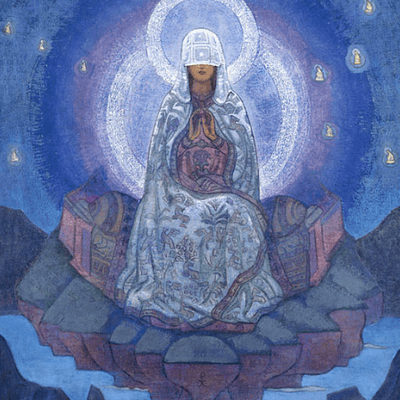 Spirituality & Religious Studies @spiritualityreligiousstudies.wordpress.com@spiritualityreligiousstudies.wordpress.com ·
Apotheosis
This is also called divinization or deification. It’s from the Latin deificato, meaning “making divine.” This is the glorification of a subject to divine levels & commonly, the treatment of a human being, any other living thing, or an abstract idea in the likeness of a deity.
The original sense of apotheosis relates to religion & is the subject of many works of art. Figuratively “apotheosis” may be used in almost any context for “the deification, glorification, or exaltation of a principle, practice, etc.” So normally attached to an abstraction of some sort.
In religion, apotheosis was a feature of many religions in the ancient world. Some that are active today. It requires a belief that there’s a possibility of newly created God’s, so a polytheistic belief system.
The Abrahamic religions of Christianity, Islam, & Judaism don’t allow this. Though many recognize minor sacred categories such as saints. They’re created by a process called canonization. In Christian theology, there’s a concept of the faithful becoming god-like, called divinization or in Eastern Christianity theosis.
In Hinduism, there’s some range for new deities. A human may be deified by becoming regarded as an avatar of an established deity, usually a major one, or by being regarded as a new, independent deity (usually a minor one), or a mix of the 2.
In art, an apotheosis scene usually shows the subject in the Heavens or rising towards them. They’re often partnered by a number of angels, putti, personifications of virtues, or similar figures.
Especially from Baroque art onwards apotheosis scenes may show rulers, generals, or artists purely as an honorific symbol. In many cases, the “religious” context is classical Greco-Roman pagan religion, like The Apotheosis of Voltaire, which features Apollo. The Apotheosis of Washington (1865) sits high in the dome of the United States of America Capitol Building is another example. Personification of places or abstractions are also shown receiving an apotheosis. The classic composition was suited for artistic placement on ceilings or inside domes.
Before the Hellenistic period, imperial cults were known in ancient Egypt (pharaohs) & Mesopotamia (from Naran-Sin through Hammurabi). In the New Kingdom of Egypt, all deceased pharaohs were deified as the god Osiris, having been identified as Horus while on the throne. They were sometimes referred to as the “son” of other various deities.
The architect Imhotep was defied after his passing away. Though the process seems to have been gradual. This took over 1,000 years, by which time he had become associated with medicine. About a dozen non-royal ancient Egyptians became regarded as deities.
Ancient Greek & Roman religions have many characters who were born as humans but became gods. Like Disney’s Hercules. They’re usually made divine by 1 of the main deities, the 12 Olympians. In the Roman story of Cupid & Psyche, Zeus gave the ambrosia of the gods to the mortal Psyche. This transformed her into a goddess herself.
In the case of the Hellenistic queen Berenice II of Egypt was deified like other rulers of the Ptolemaic dynasty. The court dispersed a myth that her hair, that was cut off to fulfill a vow, had its own apotheosis before becoming the Coma Berenices, a group of stars that still bear her name.
In the Greek world, the 1st leader who granted himself diving honors was Philip II of Macedon. At the wedding to his 6th wife, Philip’s enthroned image was carried in procession among the Olympian gods. Such Hellenistic state leaders might be raised to a status equal to the gods before death, like Alexander the Great, or afterwards, like members of the Ptolemaic dynasty.
A heroic cult status that’s similar to apotheosis was also an honor given to a few reversed artists of the distant past, such as Homer.
Up to the end of the Roman Republic, the god Quirinus was the only 1 the Romans accepted as having undergone apotheosis, for his identification/syncretism with Romulus. Syncretism is the practice of meshing together different beliefs & various schools of thought. Eventually apotheosis in Ancient Rome was a process whereby a deceased ruler was recognized as divine by their successors. This was usually done by a decree of the Senate & popular consent.
The 1st of these cases was the posthumous deification of the last Roman dictator Julius Caesar in 42 BC by his adopted son, the triumvir Caesar Octavian. In addition to showing respect, the present ruler often deified a popular predecessor to legitimize himself & gain popularity himself & gain popularity with the people.
A vote in the Roman Senate, in the later Empire confirming an imperial decree, was the normal official process. But this sometimes followed a period with the unofficial use of deific language or imagery for the individual. This was often done rather discreetly within the imperial circle.
There was then a public ceremony, called a consecratio, including the release of an eagle which flew high. This represents the ascent of the deified person’s soul to Heaven. Imagery featuring the ascent, sometimes using a chariot, was common on coins & in other art.
The largest & most famous example in art in a relief on the base of the Column of Antoninus Pius, showing the emperor & his wife, Faustina the Elder, being carried up by a much larger winged figure, described as representing “Eternity,” as the personifications of “Roma” & the Campus Martius sit below, & eagles fly above. The imperial couple are represented as Jupiter & Juno (or Zeus & Hera).
The historian Dio Cassius, who said he was present, gives a detailed description of the large, & lavish, public consecratio of Perinax, emperor for 3 months in 193, ordered by Septimius Severus.
At the height of the imperial cult during the Roman Empire, sometimes the emperor’s deceased loved ones (heirs, empresses, or lovers) like Hadrian’s Antinous were deified as well.
Deified people were posthumously given the title ‘Divus’ for men & ‘Diva’ for women to their names to signify their divinity. Traditional Roman religion distinguished between a deus (god) & divus (a mortal who became divine or deified), though not consistently. Temple & columns were erected to provide a space for worship.
The imperial cult was mainly popular in the provinces. Especially in the Eastern Empire, where many cultures were well used to deified rulers, & less popular in Rome itself, & among traditionalists & intellectuals.
Some privately, & cautiously, ridiculed the apotheosis of inept & feeble emperors, as in the satire The Pumkinification of (the Divine) Claudius. This is usually attributed to Seneca.
Numerous mortals have been deified into the Taoist pantheon. Examples are Guan Yi, Iron-crutch Li, & Fan Kuai. Song dynasty general Yue Fei was deified during the Ming dynasty. He’s considered by some practitioners to be 1 of the 3 highest-ranking heavenly generals. The Ming dynasty epic Investiture of the Gods deals heavily with deification legends.
In the complicated, & variable, conceptions of deity in Buddhism, the achievement of Buddhahood may be regarded as an achievable goal for the faithful. Many significant deities are considered to have begun as normal people, from Gautama Buddha (the original Buddha & the creator of Buddhism) downwards. Most of these are seen as avatars or re-births of earlier figures.
Some significant Hindu deities, in particular Rama, were also born as humans. He’s seen as an avatar of Vishnu. In more modern times, Swaminarayan is an undoubted & well-documented historical figure, who’s regarded by some Hindus as an avatar of Vishnu, or as being a still more elevated deity. Bharat Mata (Mother India) began as a national personification devised by a group of Bengali intellectuals in the late 19th century. But now it receives some worship.
Various Hindu & Buddhist rulers in the past have been represented as deities, especially after death, from India to Indonesia. Jayavarman VII, King of the Khmer Empire the 1st Buddhist king of Cambodia, had his own features used for the many statues of Buddha/Avalokitevara he erected.
The extreme personality cult instituted by the founder of North Korea, Kim Il-Sung, has been to represent a deification. And continues to this day with the current leader. Even the nation is admittedly atheist.
In Christian theology, instead of the word “apotheosis,” they use the words “deification” or “divinization” or the Greek word “theosis.” Pre-Reformation, & mainstream theology, in both East & West, views Jesus Christ as the preexisting God who undertook mortal existence. Not as a mortal being who attained divinity. A view known as adoptionism. Adoptionism is an early Christian non-Trinitarian doctrine that holds that Jesus was born a mere human being. But Jesus was later adopted by God as His son, usually at Jesus’ baptism or resurrection, rather than being divine from eternity.
It holds that he has made it possible for human beings to be raised to the level of sharing the divine nature as II Peter 1:4 states that he became human to make humans “partakers of the divine nature.”
In John 10:34, Jesus referenced Psalm 82:6 when he stated: “Is it not written in your Law, I have said you are gods?” Other authors stated: “For this is why the Word became man, & the Son of God became the Son of man: so that Man, by entering into communion with the Word & thus receiving divine sonship, might be made God.” Accusations of self deification to some degree may have been placed on heretical such as the Waldensians.
The language of II Peter is taken up by St. Irenaeus, in his famous phrase, “if the Word has been made man, it is so that men may be made gods.” It becomes the standard in Greek theology. In the 14th century, St. Athanasius repeats Irenaeus almost word for word. In the 5th century, St. Cyril of Alexandria says that we shall become sons “by participation” (Greek methexis). Methexis is “group sharing,” where the audience actively participates in the performance.
Deification is the central idea in the spirituality of St. Maximus the Confessor. For whom the doctrine is the result of the Incarnation: “Deification, briefly, is the encompassion & fulfillment of all times and ages.”
The Roman Catholic Church doesn’t use the term “apotheosis” in its theology. This is equivalent to the Greek word theosis are Latin-derived words “divinization” & deification” used in the Latin tradition of the Catholic Church.
The concept has been given less prominence in Western theology than in that of the Eastern Catholic Churches. But is present in the Latin Church’s liturgical prayer.
Despite the theological differences, in the Catholic church art depictions of the Assumption of the Virgin Mary in art & the Ascension of Jesus in Christian art do share many similarities in composition to apotheosis subjects. As there are many images of saints being raised into Heaven.
Anthropolatry is the deification & worship of humans. It was practiced in ancient Japan towards their emperors. Followers of Socinianism were later accused of practicing anthropolatry.
Make a one-time donation
Your contribution is appreciated.
Donate
Make a monthly donation
Your contribution is appreciated.
Donate monthly
Make a yearly donation
Your contribution is appreciated.
Donate yearly
Rate this:
#1865 #193 #42BC #4thCentury #5thCentury #AbrahamicReligions #Adoptionism #AlexanderTheGreat #Ambrosia #AncientRome #Angels #Anthropolatry #Antinous #Apollo #Apotheosis #AscensionOfJesus #AssumptionOfTheVirginMary #Atheist #Avalokiteshvara #Avatar #Avatars #BaroqueArt #bengali #BereniceIIOfEgypt #BharatMata #Buddha #BuddhaGautama #Buddhahood #Buddhism #CaesarOctavian #Cambodia #CampusMartius #canonization #CatholicChurch #Christianity #ColumnOfAntoninusPius #ComaBerenices #Consecratio #Cupid #Deification #Deity #Deus #DioCassius #Disney #DIva #Divinization #Divus #EasternCatholicChurch #EasternChristianity #EasternEmpire #Egypt #Egyptians #Emperors #FanKuai #FaustinaTheElder #GrecoRoman #Greek #GuanYi #Hadrian #Hammurabi #Heaven #Hellenistic #Hera #Hercules #Hindu #Hinduism #Homer #Horus #IIPeter14 #Imhotep #ImperialCults #India #Indonesia #InvestitureOfTheGods #IronCrutchLi #Islam #Japan #JayavarmanVII #Jesus #John1034 #Judaism #JuliusCaesar #Juno #Jupiter #KhmerEmpire #KimIlSung #Krishna #Late19thCentury #Latin #LatinChurch #Mesopotamia #Methexis #MingDynasty #NaramSin #NewKingdom #NorthKorea #Olympians #Osiris #pagan #Pertinax #Pharaohs #PhilipIIOfMacedon #polytheistic #Psalm826 #Psyche #PtolemaicDynasty #Putti #Rama #Reformation #Roman #RomanCatholicChurch #RomanRepublic #RomanSenate #Romans #Romulus #Saints #Senate #Seneca #SeptimiusSeverus #Socinianism #StAthanasius #StCyrilOfAlexandria #StIrenaeus #StMaximusTheConfessor #Swaminarayan #Syncretism #Taoist #TaoistPantheon #Temple #ThePumpkinificationOfTheDivineClaudius #Theosis #Triumvir #USCapitolBuilding #Vishnu #Waldensians #YueFei #Zeus


